There's something deeply comforting about a bowl of wheat halwa—rich, aromatic, and sweetened with jaggery instead of refined sugar, making it feel almost virtuous despite being an indulgent dessert. This isn't just any sweet; it's a beautifully textured halwa where wheat flour is roasted in ghee until it releases that incredible nutty aroma, combined with roasted moong dal powder for added depth, then brought together with a glossy jaggery syrup and studded with crunchy nuts and plump raisins. Each spoonful delivers warmth from the cardamom, richness from the ghee, the earthy sweetness of jaggery, and those delightful bursts of nuts and raisins throughout.
Wheat halwa is the kind of dessert that feels like tradition—the kind grandmothers make for special occasions, festivals, or when someone needs a little extra comfort. It's substantial enough to satisfy, wholesome enough to feel good about, and delicious enough to make everyone ask for seconds. Serve it warm for the best experience, when the ghee is still glistening and the aroma fills the room.
The Story Behind This Traditional Sweet
Halwa has a long and storied history across the Middle East, Central Asia, and the Indian subcontinent, with each region developing its own variations. In India, wheat-based halwas like atte ka halwa or godhumai halwa have been traditional offerings at temples, festivals, and special celebrations for centuries. The combination of wheat flour and jaggery connects this dessert to wholesome, traditional ingredients that have nourished people for generations.
What makes this version special is the addition of roasted moong dal powder, which adds protein, a subtle nuttiness, and an interesting textural complexity you don't find in plain wheat halwa. The use of jaggery instead of white sugar isn't just about tradition—it adds a deeper, more complex sweetness with hints of caramel and molasses that refined sugar simply can't provide. This is comfort food with soul, where every ingredient has a purpose and contributes to the whole.
Breaking Down Your Flavor Builders
Wheat Flour – Your base ingredient that provides substance, a pleasantly grainy texture, and that characteristic nutty flavor when roasted in ghee.
Moong Dal – Roasted and ground into powder, it adds protein, nuttiness, and a subtle complexity that elevates the halwa beyond basic wheat flour versions.
Jaggery Powder – Unrefined cane sugar that brings deep, caramel-like sweetness with hints of molasses. It's more complex and nuanced than white sugar.
Water – Mixed with jaggery to create the syrup that sweetens and binds everything together.
Ghee – The golden elixir that makes everything taste rich and aromatic. It's essential for roasting the flour and adds that characteristic halwa flavor.
Cardamom Powder – Warm, floral, aromatic spice that makes the halwa smell incredible and adds sophisticated flavor.
Cashew Nuts – Buttery, rich, and they add wonderful crunch and visual appeal.
Almonds – Nutty crunch and nutrition, plus they look beautiful scattered throughout.
Pistachio – Adds color, crunch, and a slightly sweet, delicate nutty flavor.
Raisins – Plump, sweet bursts of concentrated fruit flavor that contrast beautifully with the nuts.
How This All Comes Together
Start by roasting your moong dal because it needs to cool before grinding. Heat a dry pan over medium flame and add your moong dal. Stir it constantly for about 2-3 minutes until it turns aromatic and slightly darker. You'll smell that wonderful roasted lentil aroma—that's your signal. Transfer it immediately to a plate to cool. Once it's completely cool, grind it into a fine powder using a spice grinder or blender. Set this aside—it's going to add wonderful complexity to your halwa.
Now let's make the jaggery syrup. In a saucepan, combine your jaggery powder with water in a 2:1 ratio—for every cup of jaggery, use half a cup of water. Heat this mixture over medium flame, stirring occasionally until the jaggery completely melts and the mixture begins to boil. You might see some impurities floating on top—that's normal with jaggery. Strain the syrup through a fine mesh strainer to remove any impurities, and keep it aside. The syrup should be smooth and glossy.
💡 Pro Tip: Straining the jaggery syrup removes any impurities or undissolved particles, giving you a smooth, lump-free halwa. Don't skip this step—it makes a real difference in the final texture.
Roughly chop your cashews, almonds, and pistachios. You want them in visible pieces, not ground fine—those chunks of nuts are what give the halwa textural interest and visual appeal.
Heat some ghee in a pan and add your cashew nuts first. Roast them for about a minute until they start turning golden, then add your almonds, pistachios, and raisins. Keep stirring and roast until all the nuts are golden and the raisins have plumped up. The ghee will be infused with all that nutty aroma. Transfer everything—nuts, raisins, and that flavored ghee—to a plate and set aside.
Now comes the most important part—roasting the wheat flour. In a wide pan (preferably heavy-bottomed to prevent burning), heat a generous amount of ghee over medium-low heat. Add your wheat flour and start stirring. This is not a step where you can walk away—you need to stir continuously to ensure even roasting and prevent burning. Keep stirring for about 8-10 minutes until the flour turns aromatic and slightly darker in color. The smell will be incredible—nutty, toasted, and inviting. The flour should flow freely and not stick together in clumps.
💡 Pro Tip: Roasting the wheat flour properly is the soul of good halwa. Don't rush this step by using high heat—medium-low heat and continuous stirring ensure even roasting without burning. The flour should smell deeply nutty and toasted, not burnt.
Add your roasted moong dal powder to the wheat flour. Mix it in well and continue roasting everything together for another 2-3 minutes. This allows the moong dal to toast slightly more and blend its flavor with the wheat flour. The mixture should be smooth and aromatic.
Now slowly pour in your prepared jaggery syrup while stirring continuously. This is crucial—if you dump it all at once or stop stirring, you'll get lumps. Pour it in a steady stream while stirring constantly. The mixture will sizzle and steam, and the flour will start absorbing the liquid. Keep stirring as it thickens.
Continue cooking and stirring until the halwa thickens considerably and starts leaving the sides of the pan. This means it's cooked properly and has reached the right consistency. The halwa should have a glossy appearance from the ghee and jaggery, and it should come together as a cohesive mass.
💡 Pro Tip: The halwa is ready when it starts leaving the sides of the pan and forms a cohesive mass. If it's still sticking all over or looks wet, keep cooking and stirring. Proper cooking ensures the halwa sets to the right consistency.
Mix in all your roasted nuts and raisins, along with any ghee they were sitting in. Add a good pinch of cardamom powder—this is what makes the halwa smell heavenly. Stir everything together well so the nuts and raisins are evenly distributed throughout. Turn off the heat.
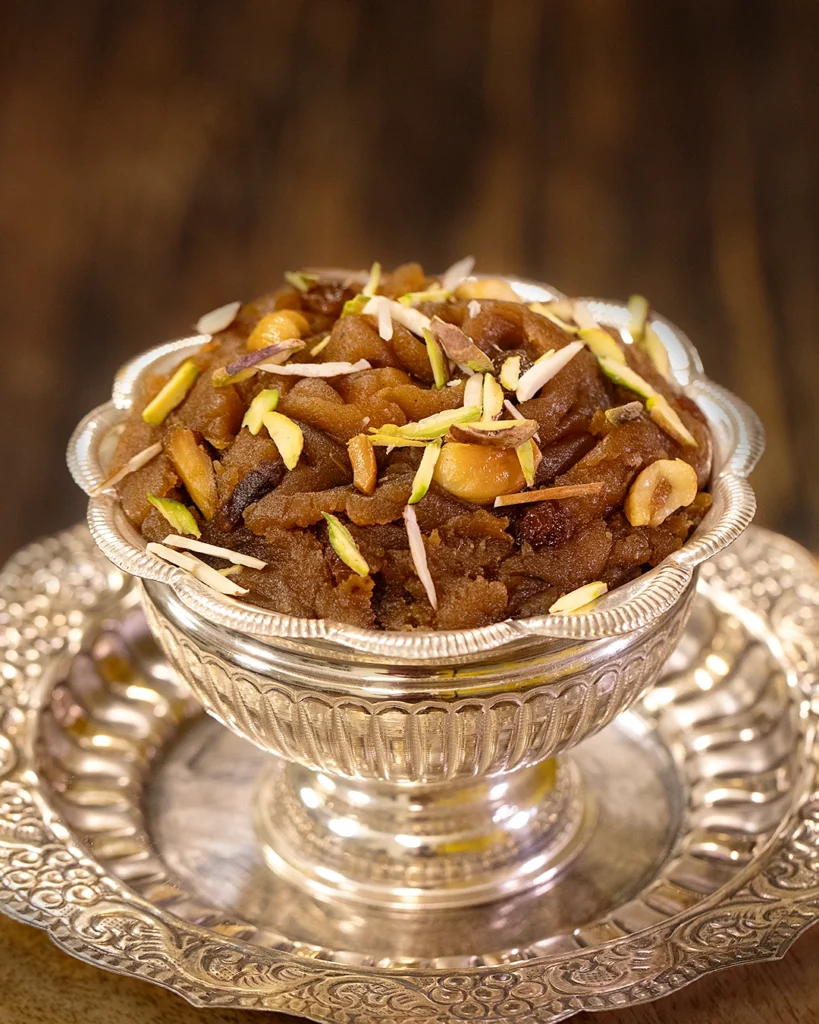
Your wheat halwa is ready—glossy, aromatic, studded with nuts, and absolutely irresistible. Transfer it to a serving bowl while it's still warm.
https://www.youtube.com/watch?v=_-h8TGodFq4
What Goes Along
Wheat halwa is rich and substantial enough to be served on its own as a dessert. It's traditionally served warm, though some people enjoy it at room temperature or even chilled. A scoop of vanilla ice cream on the side creates a wonderful hot-cold contrast. Some people enjoy it with a glass of milk. It's often served at festivals, religious ceremonies, or as prasad (temple offering).
How to Serve Wheat Halwa
Serve wheat halwa warm for the best experience—that's when the ghee is glistening, the aroma is strongest, and the texture is at its most appealing. Scoop it into individual serving bowls and garnish with a few extra nuts on top if you like. If serving at a special occasion, you can serve it in small portions since it's quite rich. A sprinkle of slivered pistachios or almonds on top makes it look festive and inviting.
How to Store Wheat Halwa
Wheat halwa stores beautifully at room temperature for 2-3 days in an airtight container, or in the refrigerator for up to a week. The ghee content acts as a natural preservative. As it cools, it will firm up considerably—this is normal. Refrigerated halwa becomes quite solid and firm.
How to Reheat Wheat Halwa
To serve stored halwa, you can reheat it gently in a microwave for 30-45 seconds until it softens and becomes warm again. You can also reheat it on the stovetop over low heat with a tiny bit of extra ghee, stirring until it's warmed through and reaches the desired consistency. Some people actually prefer it at room temperature or slightly chilled, especially in warmer weather.
Common Substitutions
If you don't have moong dal, you can skip it and make plain wheat halwa—just use all wheat flour. The halwa will be slightly less complex but still delicious. No jaggery? You can use brown sugar or even white sugar, though you'll lose that characteristic caramel depth. Reduce the water slightly with white sugar since it dissolves more easily. Instead of ghee, you could use clarified butter or even coconut oil for a different flavor profile, though ghee is traditional and gives the best taste. If you're allergic to nuts, you can make this without them or use seeds like sunflower and pumpkin seeds instead.
Packing Wheat Halwa for Parties / Bulk Preparation
Wheat halwa is excellent for bulk preparation because it stores well and can be made completely ahead of time. For festivals or large gatherings, you can easily double or triple the recipe—just use a larger, heavy-bottomed pan for roasting the flour. Make it a day ahead and store it in the refrigerator, then bring it to room temperature or reheat gently before serving.
For prasad or religious offerings, this halwa is traditional and can be made in large quantities, then portioned into small containers or cups for distribution. It travels well and doesn't require refrigeration for short periods, making it practical for taking to temples or sharing with neighbors during festivals.
If you're gifting this halwa during Diwali or other festivals, pack it in decorative boxes or containers with a layer of parchment paper. It looks beautiful, tastes amazing, and is a thoughtful homemade gift that people genuinely appreciate.
Meal Prep Ideas
While halwa is typically thought of as a dessert, having it prepared ahead means you can enjoy a small portion as a sweet treat after meals throughout the week. Make a batch on the weekend and store it in the refrigerator in an airtight container. Portion out small amounts as needed.
The roasted moong dal powder can be made in bulk and stored in an airtight container for months, making future batches of halwa even quicker to prepare. Similarly, you can pre-roast and chop all your nuts and store them together, ready to add to any halwa you make.
Some people enjoy a small portion of wheat halwa as a pre-workout or post-workout snack since it provides quick energy from the jaggery and carbohydrates from the wheat, plus protein from the moong dal and nuts. In small portions, it's actually quite nutritious despite being a sweet dish.
You can also experiment with variations—add cocoa powder for chocolate wheat halwa, or use different nuts like walnuts or hazelnuts. The basic technique remains the same, so once you've mastered this recipe, you can play with flavors and create your own signature
ThisThis wheat halwa (atta halwa) is a warm, rich, and comforting Indian dessert made with wheat flour, ghee, jaggery, moong dal, and crunchy dry fruits. It’s a quick sweet recipe that comes together in just 25 minutes, making it perfect for festivals, celebrations, or even sudden sweet cravings. The jaggery gives it a natural sweetness, the ghee adds richness, and the roasted moong dal enhances the flavor with a nutty aroma. Garnished with roasted cashews, almonds, pistachios, and raisins, this halwa is not only delicious but also wholesome and satisfying. is a warm, rich, and comforting Indian dessert made with wheat flour, ghee, jaggery, moong dal, and crunchy dry fruits. It’s a quick sweet recipe that comes together in just 25 minutes, making it perfect for festivals, celebrations, or even sudden sweet cravings. The jaggery gives it a natural sweetness, the ghee adds richness, and the roasted moong dal enhances the flavor with a nutty aroma. Garnished with roasted cashews, almonds, pistachios, and raisins, this halwa is not only delicious but also wholesome and satisfying.
Ingredients
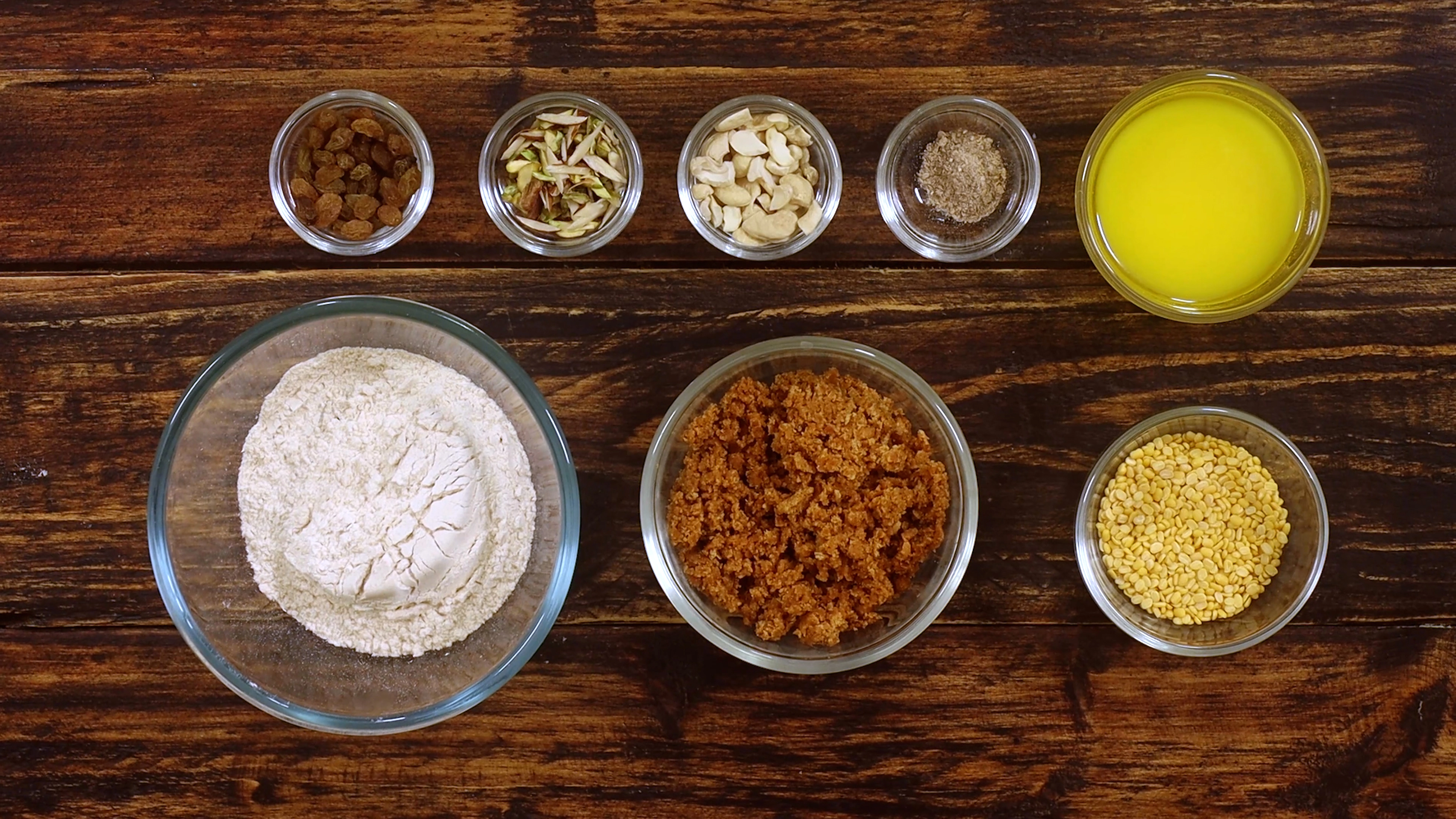
1cup wheat flour
1/4cup moong dal
1cup jaggery powder
1/2cup water
3tbsp ghee (as needed)
1tsp cardamom powder (as needed)
1small cup cashew nuts (as needed)
1small cup almonds (as needed)
1small cup pistachio (as needed)
1small cup raisins (as needed)
Instructions
Prep Work
1
Roast the moong dal
In a pan, dry roast the moong dal for 2-3 minutes until it turns aromatic. Transfer to a plate to cool.
2
Grind the moong dalOnce cooled, grind the roasted moong dal into a fine powder. Keep it aside.
3
Prepare the jaggery syrupIn a saucepan, mix powdered jaggery with water ( 2:1 ratio). Heat until it melts and begins to boil. Strain and keep aside.
4
Chop the dry fruitsRoughly chop the cashews, almonds, and pistachios.
Method
5
Roast the nuts
Heat some ghee in a pan, add cashew nuts, roast for a minute, then add almonds, pistachios, and raisins. Roast until golden. Transfer to a plate.
6
Roast the wheat flourIn a wide pan, heat more ghee and add wheat flour. Stir continuously and roast until it turns aromatic.
7
Add moong dal flourAdd the roasted moong dal powder to the wheat flour .Mix well and continue roasting for awell for 2- 3 minutes.
8
Mix with jaggery syrupSlowly pour in the jaggery syrup while stirring continuously to avoid lumps.
9
Stir and cookKeep stirring until the halwa thickens and starts leaving the sides of the pan.
10
Add roasted nuts
Mix in the roasted dry fruits and a pinch of cardamom powder. Stir well and turn off the heat.
11
ServeTransfer the halwa to a serving bowl and enjoy warm!
Nutrition Facts
Servings 4
Amount Per Serving
Calories320kcal
% Daily Value *
Total Fat14g22%
Saturated Fat7g35%
Cholesterol20mg7%
Sodium5mg1%
Potassium180mg6%
Total Carbohydrate45g15%
Dietary Fiber2g8%
Sugars30g
Protein5g10%
Vitamin A 50 IU
Calcium 25 mg
Magnesium 30 mg
* Percent Daily Values are based on a 2,000 calorie diet. Your daily value may be higher or lower depending on your calorie needs.
Keywords:
wheat halwa, atta halwa, halwa, Indian Sweets
Stay Connected with Home Cooking Show!
Love our recipes? Follow us for more delicious cooking inspiration, tips, and behindthescenes fun!
Pin this recipe to share with your friends and followers.
Hema Subramanian
Food and Lifestyle Blogger
I love to cook! And through Home Cooking Show, I hope to make cooking fun, easy, and approachable for everyone.
My way of sharing recipes is all about keeping it simple and delicious—no complicated steps, no fancy ingredients, just real home-cooked food that anyone can make. Cooking should be a joy, not a chore! Whether you’re a beginner or a seasoned cook, you’ll find something here to inspire you. If you love good food made with love, then you’re in the right place!

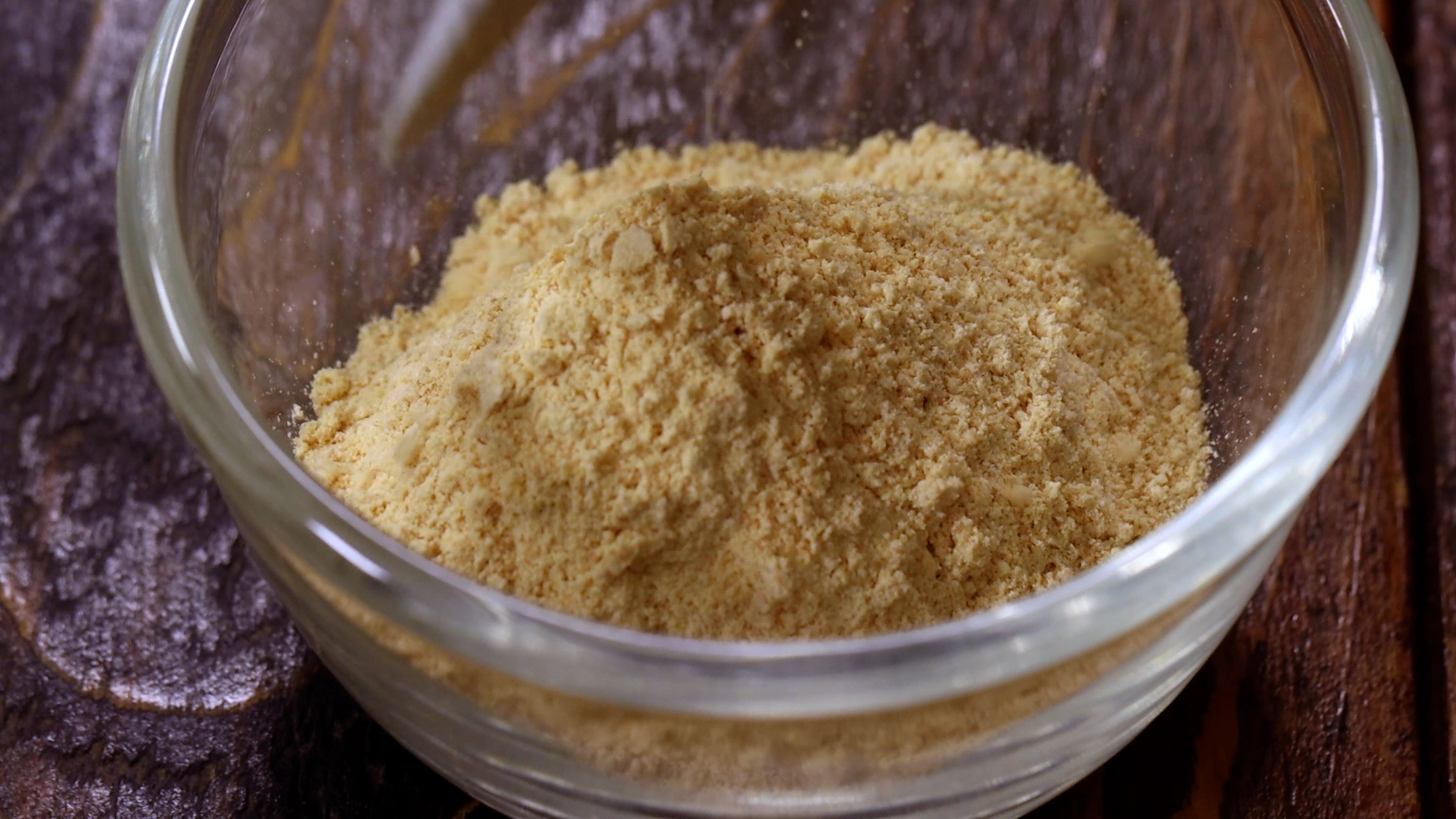 Once cooled, grind the roasted moong dal into a fine powder. Keep it aside.
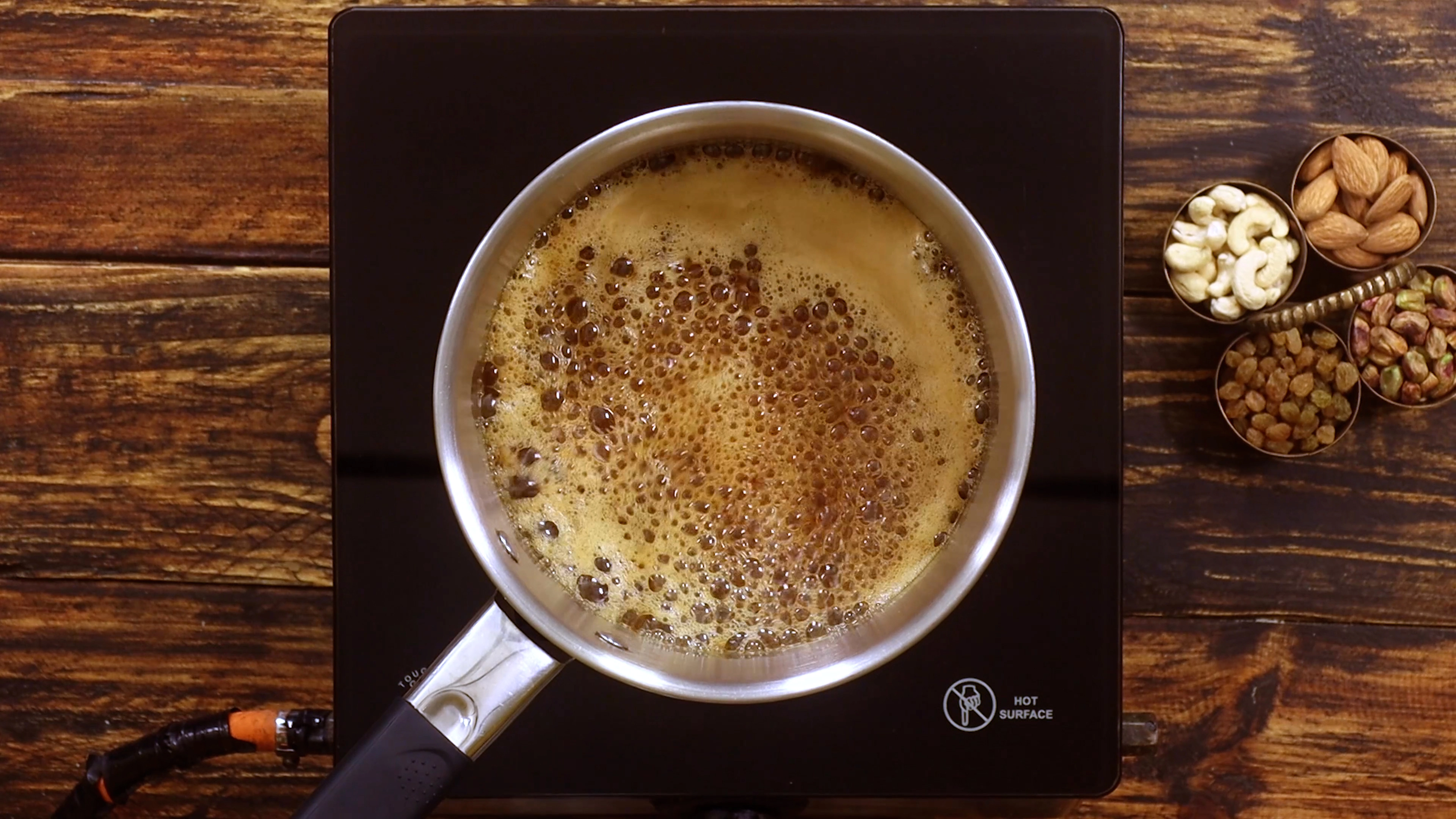 In a saucepan, mix powdered jaggery with water ( 2:1 ratio). Heat until it melts and begins to boil. Strain and keep aside.
 Roughly chop the cashews, almonds, and pistachios.
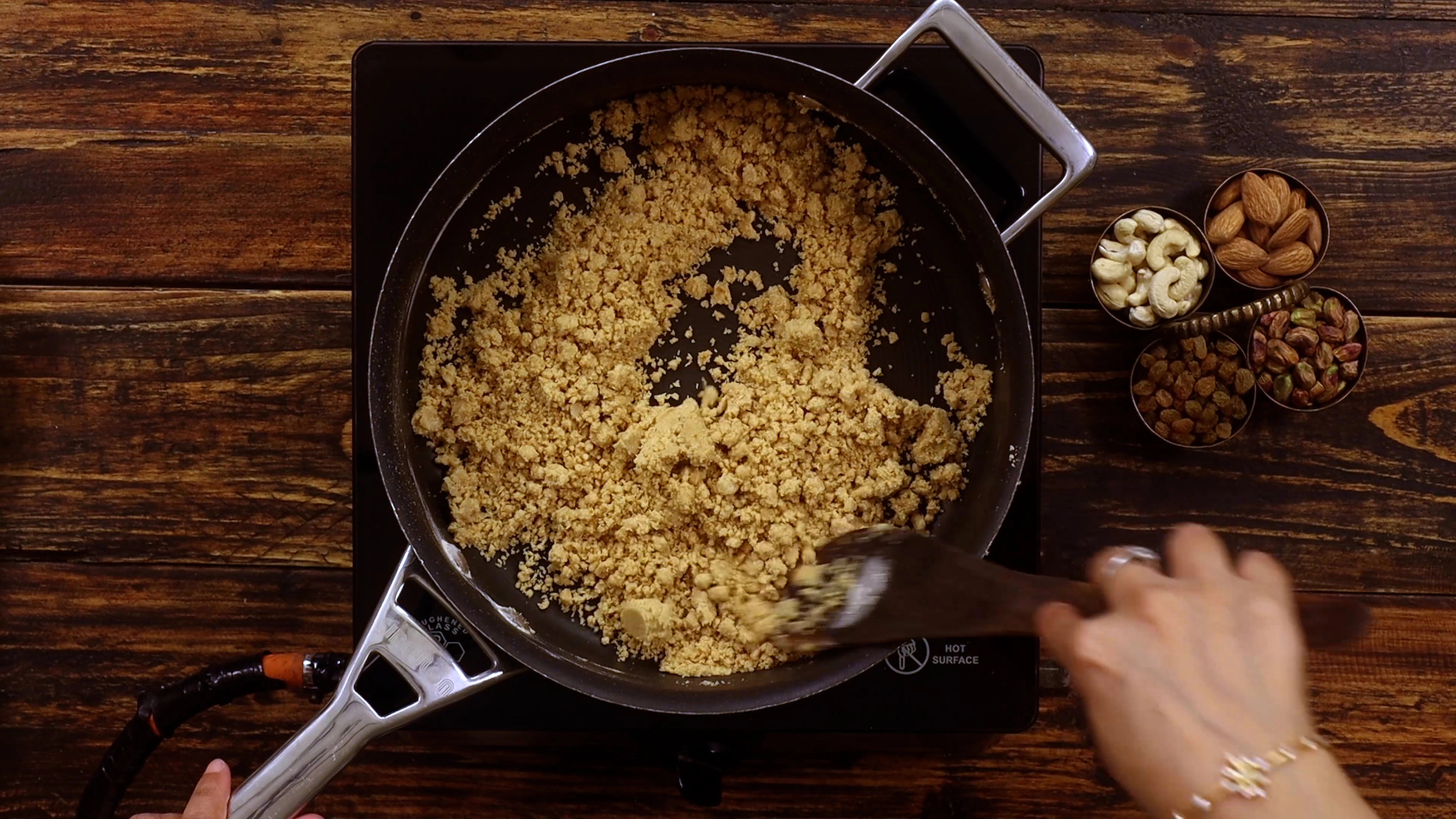 Add the roasted moong dal powder to the wheat flour .Mix well and continue roasting for awell for 2- 3 minutes.
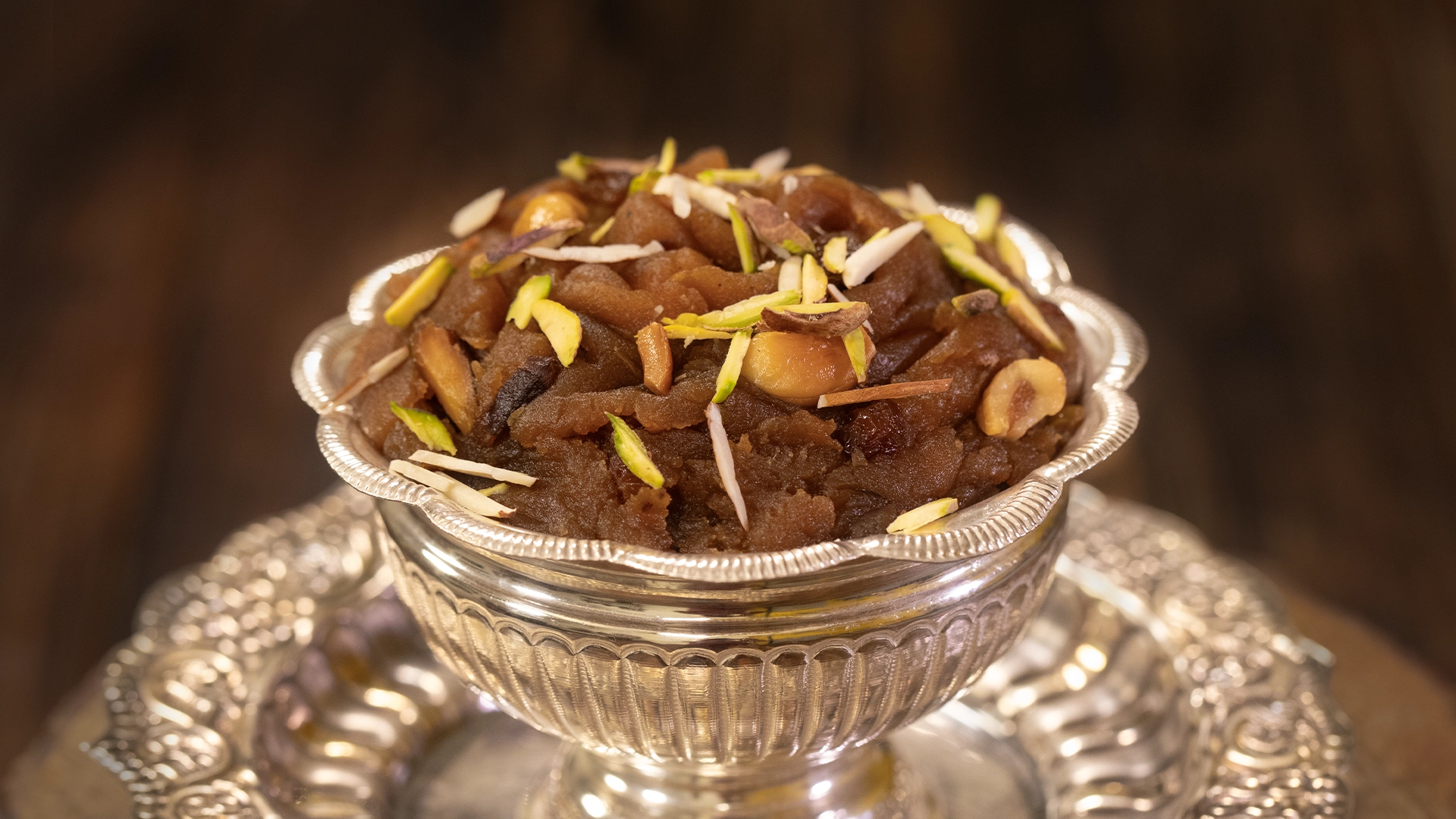 Transfer the halwa to a serving bowl and enjoy warm!