

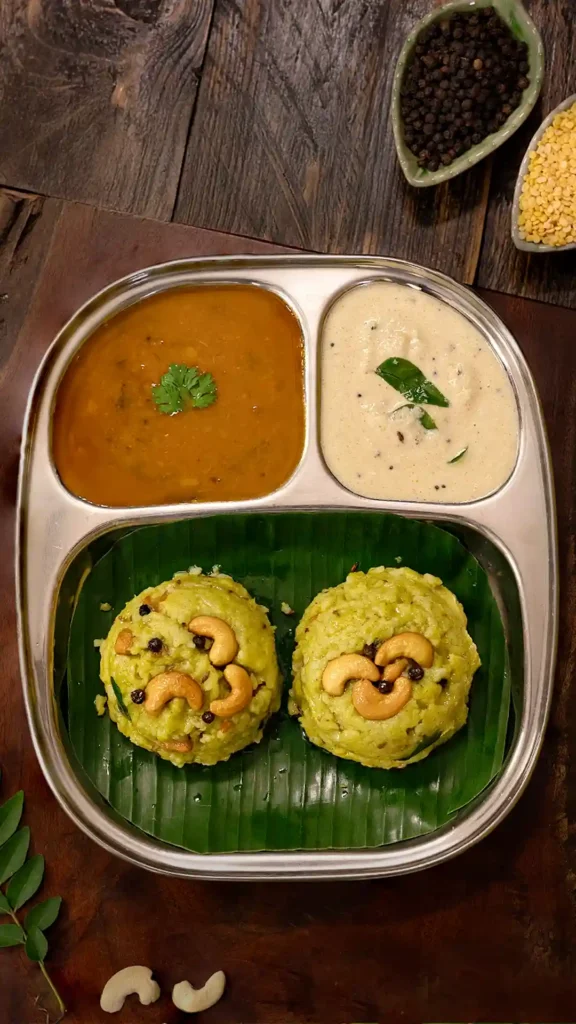

Ever feel bored with the same plain ven pongal but still crave that comforting, soft South Indian breakfast?
That’s exactly where Coriander Pongal comes in. It’s familiar, comforting, yet refreshingly different, aromatic, mildly spiced, and bursting with fresh coriander flavor.
Think of this as ven pongal with a green, herby upgrade, perfect when you want something quick, nourishing, and not heavy.
What Is Coriander Pongal?
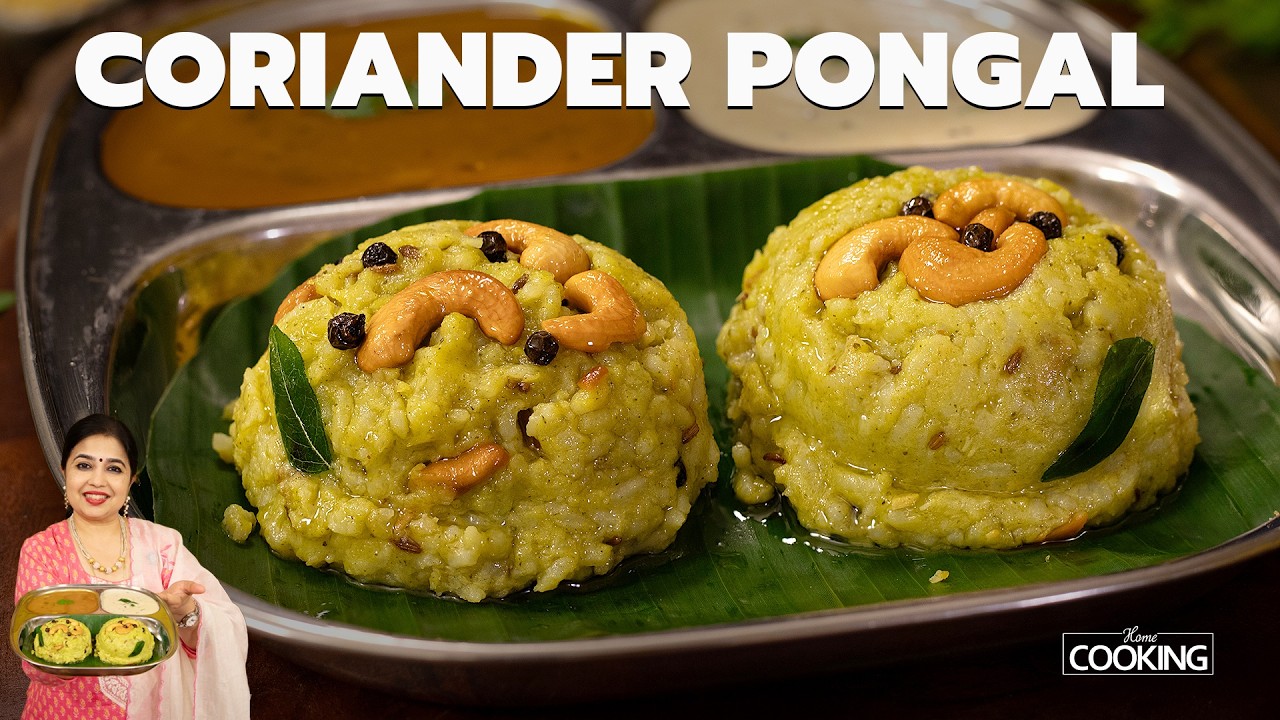
Coriander Pongal is a flavorful variation of traditional South Indian pongal, where fresh coriander leaves, curry leaves, and green chillies are ground and cooked along with rice and moong dal.
Unlike classic ven pongal that relies heavily on pepper and cumin, this version gets its personality from:
- Fresh herbs
- Mild green chilli heat
- A rich ghee tempering
The result? A fragrant, vibrant green pongal that tastes as good as it smells.
Why Coriander Pongal Deserves a Spot in Your Breakfast Rotation
This dish solves multiple everyday kitchen problems:
- Quick breakfast or tiffin – pressure cooker friendly
- Light yet filling – perfect for busy mornings
- Gut-friendly – moong dal + ginger + hing
- Naturally vegetarian & gluten-free
- Great way to use excess coriander
It’s especially ideal when you want something comforting but not bland.
Ingredients Breakdown:
- Raw Rice & Moong Dal: The classic pongal base—soft, creamy, and easy to digest. Moong dal adds plant protein and keeps the dish light.
- Coriander Leaves (with stalks): The hero ingredient. Stalks add intense aroma, while leaves give freshness and color. Coriander is also known to support digestion.
- Green Chillies: Adds gentle heat without overpowering. You can easily adjust based on who’s eating.
- Curry Leaves: Enhance South Indian flavor and bring subtle bitterness that balances the pongal’s richness.
- Ghee: Adds richness and that unmistakable pongal aroma. A little goes a long way.
- Pepper, Cumin, Ginger & Hing (Tempering): Classic digestive spices that make pongal soothing and comforting.
Vegan Swap 🌿: Replace ghee with coconut oil. You’ll still get a beautiful South Indian aroma.
How Coriander Pongal Comes Together
You start by washing raw rice and moong dal together, this ensures even cooking and that classic pongal texture. While that rests, you grind fresh coriander leaves (yes, include the stalks), curry leaves, green chillies, and a splash of water into a smooth, vibrant green paste. This paste is what transforms an ordinary pongal into something special.
Everything goes into the pressure cooker: rice, dal, water, turmeric, salt, the coriander paste, and a touch of ghee. Once pressure-cooked, the pongal turns soft, creamy, and aromatic. A quick stir brings it all together, and you can adjust the consistency with hot water depending on how soft you like it.
The magic finishing touch is the tempering. Ghee is heated until aromatic, cashews are roasted golden, and then peppercorns, cumin seeds, ginger, hing, and curry leaves go in. That sizzling tempering poured over hot pongal? Pure comfort.
Pro Tip 💡: Always add tempering at the end and mix gently, this keeps the flavors fresh and layered.
What Problems This Recipe Solves
- Don’t want to grind batter or ferment? ✔️
- Need a quick breakfast before work or school? ✔️
- Want a comfort meal for elders or kids? ✔️
- Looking for a light meal for digestive issues? ✔️
Coriander Pongal ticks all those boxes.
What Goes Along With Coriander Pongal
- Coconut chutney
- Onion chutney
- Mild vegetable sambar
- Papad or vadam
How to Serve Coriander Pongal
Serve piping hot, slightly loose in consistency, with extra ghee on top if you like it indulgent. Best enjoyed fresh.
Packing & Lunchbox Tips
- Ideal for office lunchboxes
- Pack slightly loose; pongal thickens as it cools
- Add tempering fresh if possible before packing
Party or Bulk Preparation Tips
- Can be easily scaled for large groups
- Prepare the pongal base in advance
- Add fresh tempering just before serving
How to Store Coriander Pongal
Coriander pongal stays fresh in the refrigerator for up to 24 hours when stored in an airtight container.
How to Reheat Coriander Pongal
Reheat on stovetop or microwave with:
- A splash of hot water
- A drizzle of ghee
Stir well to restore creaminess.
Substitutions & Diet-Friendly Options
- Low-ghee version: Reduce ghee and temper in oil
- No cashews: Skip or replace with peanuts
- Low spice: Reduce green chillies for kids
- Gluten-free: Naturally gluten-free (use gluten-free hing if required)
Common Pitfalls to Avoid
- Grinding coriander without stalks → less flavor
- Too little water → dry pongal
- Overcooking tempering → bitter spices
- Skipping hing → pongal feels heavy
Other Related Recipes You Might like:-
- Rava Pongal – quick and comforting pongal made with rava, perfect for breakfast.
- Millet Pongal – healthy pongal made with millets, light yet filling.
- Khara Bath – Karnataka-style spicy rava dish with similar tempering flavours.
- Rava Khichadi – soft, comforting tiffin item often served with chutney.
- Temple Style Curd Rice – cooling and soothing rice dish that balances spicy pongal.
- Coconut Chutney – classic side that pairs beautifully with pongal varieties.
- Pepper Rasam – light, peppery rasam commonly served with pongal meals.
- Idli Sambar – classic South Indian breakfast combo for a complete tiffin spread.
Browse Breakfast Recipes by Category
- All Breakfast Recipes
- Dosa Recipes
- South Indian Breakfast Recipes
- Healthy Breakfast Recipes
- North Indian Breakfast Recipes
Coriander Pongal
Description
This coriander pongal is a simple, comforting South Indian breakfast that’s full of fresh flavor and easy to make. Cooked in a pressure cooker, it comes together quickly with basic pantry ingredients and fresh coriander paste. There’s no onion or garlic, no deep frying, and it’s light yet filling thanks to the rice and moong dal combination. Perfect for busy mornings, meal prep, or when you just want a warm, nourishing bowl of homemade food.
Ingredients
To make coriander pongal
For tempering
Instructions
Prep Work
-
Wash rice and dal
Wash the raw rice and moong dal together until the water runs clear and keep aside
-
Grind coriander paste
Grind coriander leaves, curry leaves, green chilli, and water into a smooth paste
-
Chop ingredients
Chop ginger, green chilli, and keep curry leaves ready
Method
-
Add to cooker
Add rice, dal, water, turmeric, salt, coriander paste, and ghee to the pressure cooker and mix well

-
Pressure cook
Close the cooker and cook on medium flame for four whistles, then let pressure release naturally
-
Mash pongal
Open the cooker and mix well, adjusting consistency with hot water if needed -
Prepare tempering
Heat ghee, roast cashews, then add peppercorns, cumin seeds, ginger, asafoetida, and curry leaves -
Mix and serve
Pour the tempering over the pongal, mix well, and serve hot
Equipment

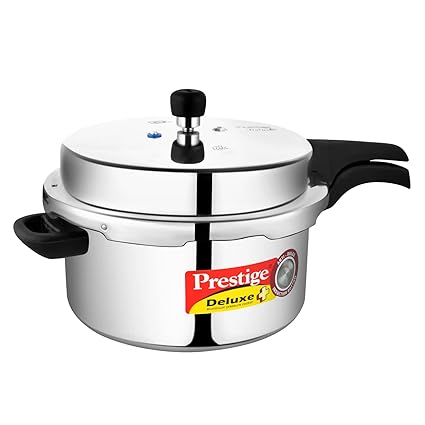
Affiliate Disclosure: This post contains Amazon affiliate links, i.e., when you buy any product using the links below, we get commissions. but it doesn’t cost you anything extra. If you do purchase any product using the given links, we thank you in advance!
Nutrition Facts
Servings 3
- Amount Per Serving
- Calories 310kcal
- % Daily Value *
- Total Fat 12g19%
- Saturated Fat 6g30%
- Cholesterol 22mg8%
- Sodium 480mg20%
- Potassium 290mg9%
- Total Carbohydrate 38g13%
- Dietary Fiber 5g20%
- Sugars 2g
- Protein 10g20%
- Vitamin A 620 IU
- Vitamin C 14 mg
- Calcium 52 mg
- Iron 2.6 mg
- Phosphorus 180 mg
- Magnesium 48 mg
- Zinc 1.4 mg
* Percent Daily Values are based on a 2,000 calorie diet. Your daily value may be higher or lower depending on your calorie needs.