
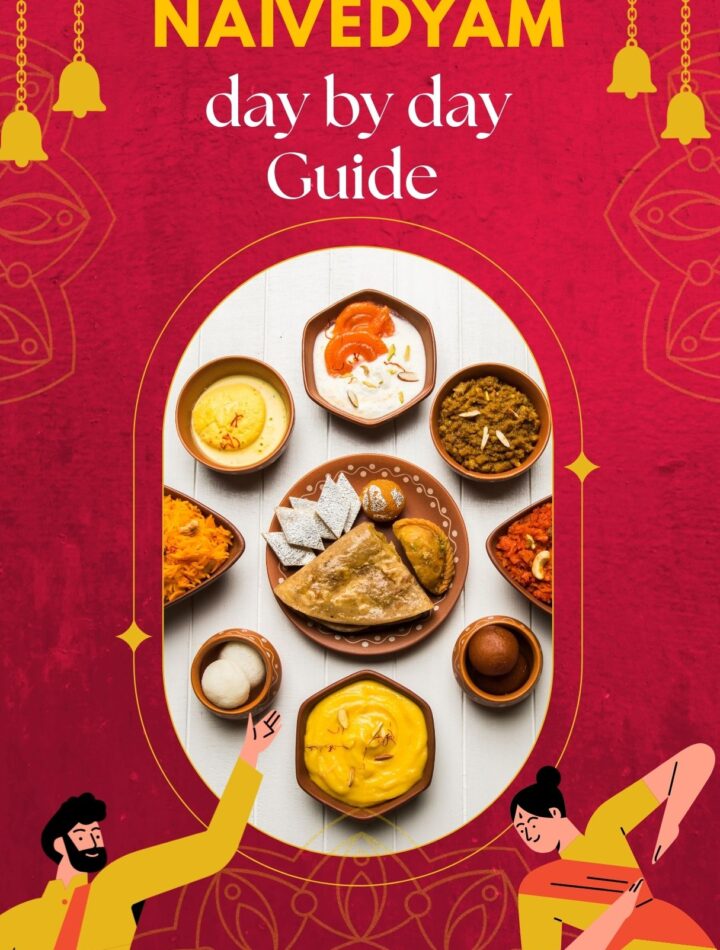
Vanakkam! Navaratri has always been one of my favorite times of the year, a season that fills my heart with joy, devotion, and gratitude. For me, it’s not just a festival — it’s a celebration of womanhood, inner strength, and the divine feminine energy that guides us through life. I still remember as a child, watching my mother and grandmother carefully set up the Golu, arranging dolls with such love and devotion, each step of the display carrying a story and a prayer. Today, I continue the same tradition, and every time I place a lamp or arrange a doll, I feel connected to the generations of women before me.
Navaratri is also the time for dressing up in vibrant sarees, adorning ourselves with flowers, sharing songs and bhajans with family and friends, and of course, cooking prasadam that is deeply rooted in our culture. What fascinates me most is how our customs have so beautifully lined up the ingredients for each day — not only offering devotion to the goddess of the day but also taking care of our body and mind through food. Each naivedyam and sundal has a meaning, a symbolism, and even a scientific role in nourishing us during this festive season.
This blend of devotion, tradition, and nutrition is what makes Navaratri so special to me. And in this blog, I want to take you through the nine days of Navaratri, sharing the naivedyam and sundal offerings, their significance, their health benefits, and of course, some delicious recipes from my kitchen that you can try at home.
Day 1 – Shailaputri (Strength & Purity)
Navaratri begins with the worship of Goddess Shailaputri, the daughter of the mountains. She is seen as the embodiment of strength, grounding, and purity — just like the Himalayas themselves. On this day, we pray for stability in our lives, the strength to overcome obstacles, and the purity of thought to walk the path of dharma.
Naivedyam Offering: Ghee
We start the festival by offering ghee, which holds a sacred place in our tradition. Spiritually, it represents clarity and divine light, as we use it to light lamps that burn steadily through the night. Scientifically, ghee plays a crucial role in kindling digestion, coating the stomach, and giving us steady energy throughout the day. It’s no wonder our ancestors wisely chose ghee to mark the beginning of Navaratri — it sets the tone for both health and devotion.
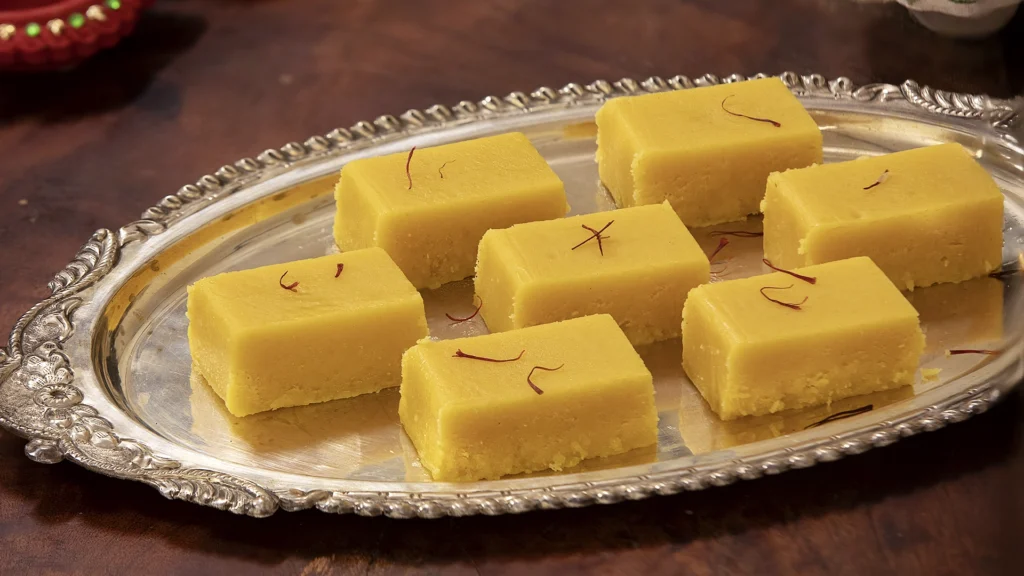
Made with ghee, sugar, and besan, Mysore Pak is a classic sweet that melts in your mouth. Its richness not only pleases the goddess but also gives us that perfect festive start.
Sundal Offering: White Channa (Chickpeas)
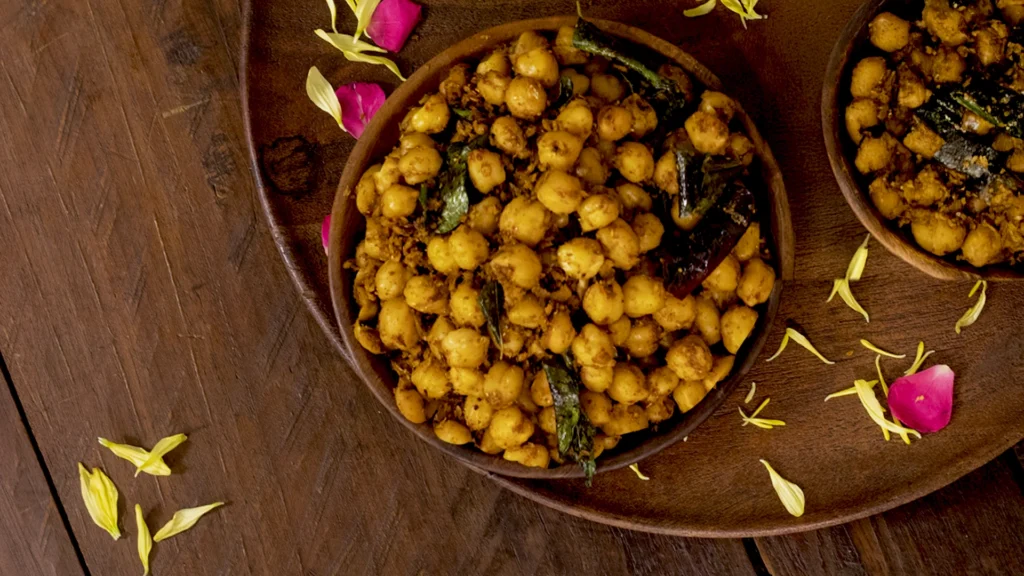
For the first day’s sundal, we prepare white channa sundal, symbolizing mountain-like strength and purity. White channa is rich in protein, folate, and iron — a powerhouse for energy and stamina, reminding us that just like Shailaputri, we too must build inner strength and resilience.
Though slightly different from the simple tempered sundal, chana masala is a comforting, protein-rich dish that pairs beautifully with rice or roti, making it a wholesome offering and meal.
Why Day 1 Matters
The combination of ghee and white channa sets the foundation for Navaratri. Ghee kindles the digestive fire, while channa provides sustained energy for the days of fasting and devotion ahead. Together, they remind us that true strength comes from purity — of both food and thought.
Day 2 – Brahmacharini (Austerity & Growth)
On the second day of Navaratri, we worship Goddess Brahmacharini, the form of Durga who signifies discipline, austerity, and devotion. She is often depicted walking barefoot, holding a japamala (rosary) in one hand and a kamandalu (water pot) in the other. This form of the goddess inspires us to embrace simplicity, patience, and perseverance in our daily lives.
Just as Brahmacharini is committed to her path with quiet strength, this day encourages us to ground ourselves, practice self-control, and nurture steady growth — spiritually, mentally, and physically.
Naivedyam Offering: Jaggery
The chosen ingredient of the day is jaggery, a natural sweetener revered in our tradition. Spiritually, it represents sweetness in devotion — a reminder to keep our prayers heartfelt and pure. Scientifically, jaggery is rich in iron, making it excellent for improving blood health. It also provides quick glucose, which helps sustain energy during fasting.
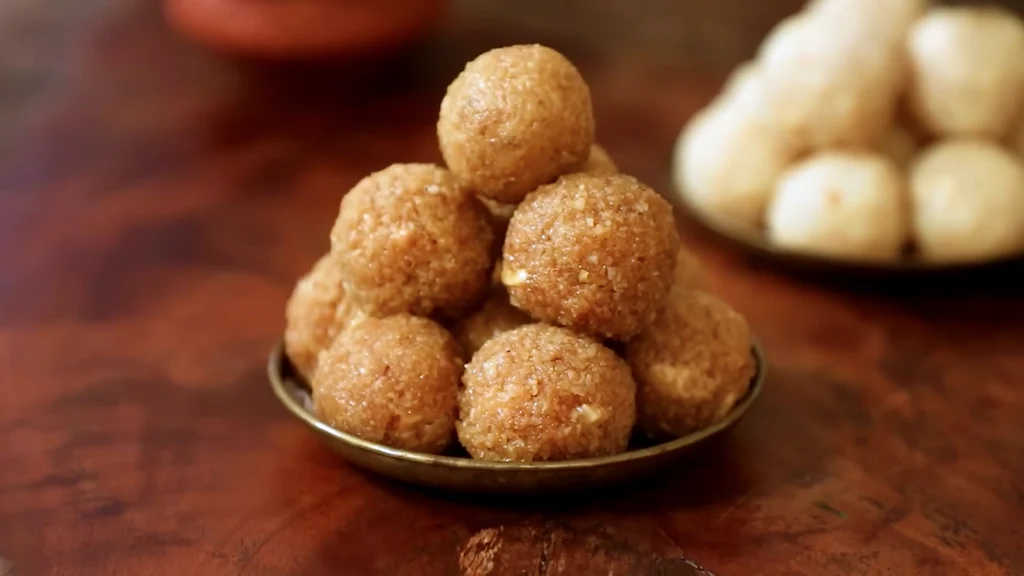
These laddoos are a divine combination of jaggery and coconut, offering not only sweetness but also healthy fats and fiber. They’re quick to prepare and perfect as naivedyam
Sundal Offering: Green Gram (Moong Dal)
The sundal for Day 2 is green gram (moong dal), symbolizing austerity and growth. Green gram is light, cooling, and extremely easy to digest. It cleanses the system and supports detoxification — a perfect food when we are observing rituals, prayers, and sometimes partial fasting.
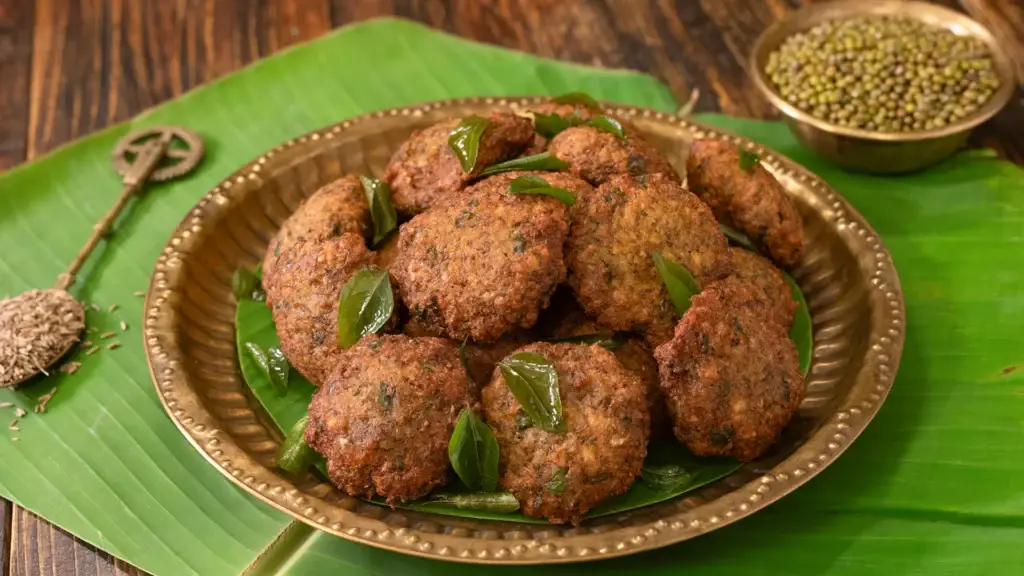
Crispy on the outside, soft on the inside, moong vadas are not only delicious but also nourishing. They bring in the balance of protein, fiber, and energy, keeping us light yet strong during the festival.
Why Day 2 Matters
The pairing of jaggery and moong dal is beautifully symbolic. Jaggery replenishes the body with iron and energy, while moong dal purifies and strengthens digestion. Together, they remind us that austerity doesn’t mean deprivation — it means mindful nourishment and balance.
Day 3 – Chandraghanta (Courage & Valor)
On the third day, we worship Goddess Chandraghanta, the warrior form of Durga who is adorned with a half-moon (chandra) shaped like a bell (ghanta) on her forehead. She rides a tiger and carries multiple weapons, symbolizing bravery, fearlessness, and the destruction of evil. Devotees believe that worshiping Chandraghanta removes obstacles and fills life with courage, calmness, and serenity.
This day inspires us to embrace life’s challenges with valor, while also learning to stay balanced and composed amidst difficulties.
Naivedyam Offering: Milk
Milk, the naivedyam of the day, is considered a pure and sattvic food in our tradition. Spiritually, it symbolizes calmness, nurturing energy, and divine motherly care. Scientifically, milk is cooling for the body, rich in calcium, and helps soothe acidity — a perfect offering to the goddess who represents peace amidst power.
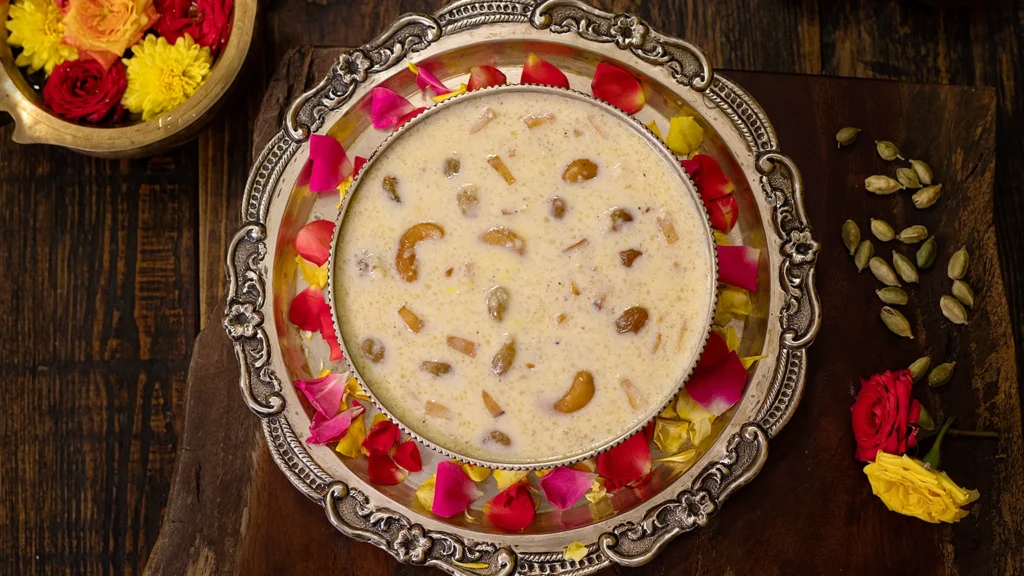
This creamy rice kheer blends the richness of milk with the aroma of cardamom, making it a comforting and auspicious treat for the goddess.
Sundal Offering: Red Cowpeas (Lobia / Karamani)
The sundal for Day 3 is red cowpeas (lobia). The red color represents courage, passion, and valor — perfectly aligned with the fierce yet protective nature of Chandraghanta. Nutritionally, red cowpeas are rich in iron, protein, and dietary fiber, helping build stamina and improving blood health.
Though the recipe uses white lobia, you can easily adapt it with red lobia. These vadas are crispy, tasty, and protein-packed, making them a wholesome prasadam and evening snack.
Why Day 3 Matters
The combination of milk and red lobia is symbolic of balance — milk calms the body while lobia builds strength and energy. Together, they remind us that true courage is not just about external power but also about inner stability and balance.
Day 4 – Kushmanda (Health & Creation)
On the fourth day, we worship Goddess Kushmanda, believed to be the creator of the universe through her radiant smile. The name Ku-shm-anda translates to “the one who created the cosmos with her small smile.” She represents energy, health, and vitality, blessing her devotees with strength and good health.
This day encourages us to embrace positivity, nourish ourselves, and radiate warmth to those around us — just like the goddess who brought light into darkness.
Naivedyam Offering: Pumpkin
Pumpkin (mathanga) is the chosen offering for Day 4. Spiritually, it is considered an auspicious vegetable that symbolizes nourishment and fertility. Scientifically, pumpkin is rich in antioxidants like beta-carotene, vitamins A and C, and is known for supporting immunity and cleansing the gut. It’s a wholesome, earthy vegetable that aligns beautifully with the goddess of creation.
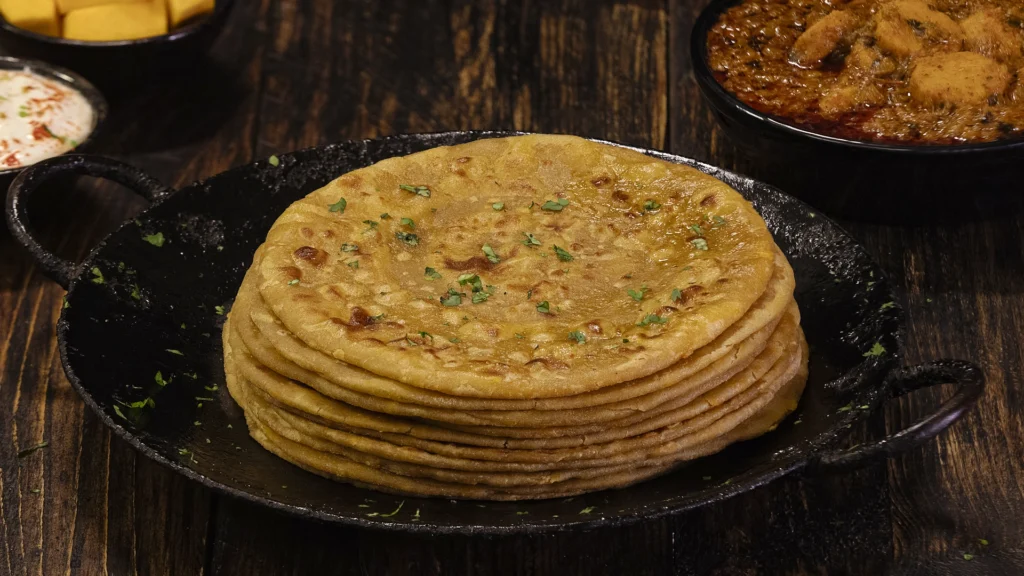
Soft, mildly sweet, and spiced with Indian flavors, this paratha makes for a comforting naivedyam while also being filling and nutritious.
Sundal Offering: Black Channa (Kala Channa)
The sundal for Day 4 is black channa, representing stability and grounding. Just as Kushmanda is the creator who brings balance to the universe, black channa provides stability to the body with its high protein and fiber content. It also supports gut health and gives sustained energy.
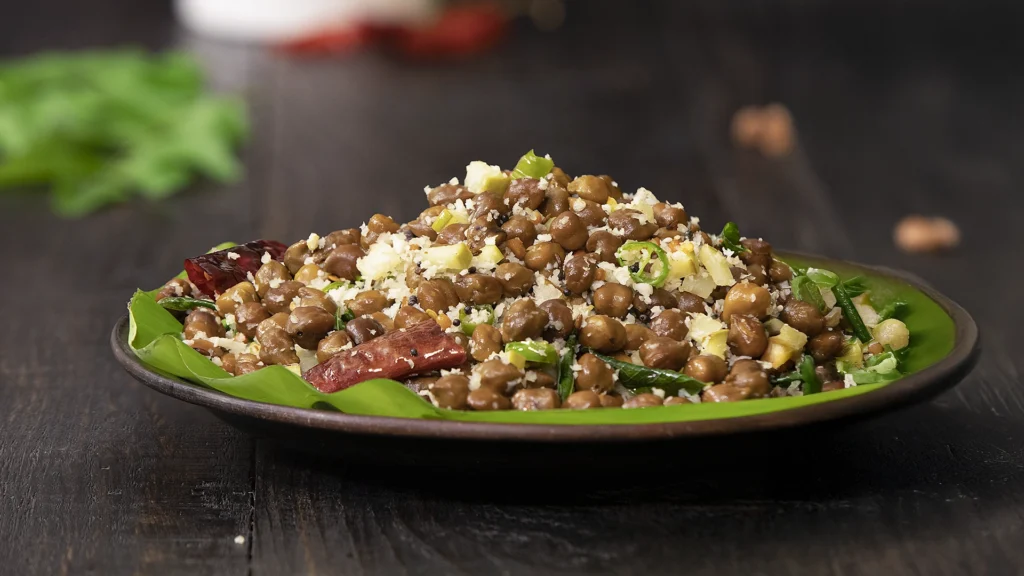
Recipe Suggestion: Black Channa Thalippu (boiled and tempered)
This is a simple yet soul-satisfying sundal made by boiling black channa and tempering it with coconut, curry leaves, and spices. A humble but powerful prasadam that ties devotion with nutrition.
Why Day 4 Matters
The pairing of pumpkin and black channa celebrates life itself. Pumpkin detoxifies and strengthens immunity, while black channa sustains and stabilizes energy. Together, they remind us of the goddess’s creative force — nourishing us both physically and spiritually.
Day 5 – Skandamata (Maternal Nourishment & Protection)
On the fifth day, we worship Goddess Skandamata, the mother of Lord Skanda (Kartikeya), the commander of the gods. She is the symbol of motherly love, care, and protection. Depicted carrying little Skanda in her lap, she blesses her devotees with compassion and strength. Worshiping her is said to bring both wisdom and prosperity, as well as the gentle, nurturing qualities of motherhood.
This day reminds us of the power of unconditional love and the nourishment a mother provides — physically, emotionally, and spiritually.
Naivedyam Offering: Banana
Banana is considered an auspicious fruit, offered in temples across India. Spiritually, it represents simplicity, fertility, and maternal abundance. Scientifically, bananas are a quick source of energy, rich in potassium, and excellent for restoring electrolytes, especially during fasting. They also aid digestion and keep the body light yet nourished.
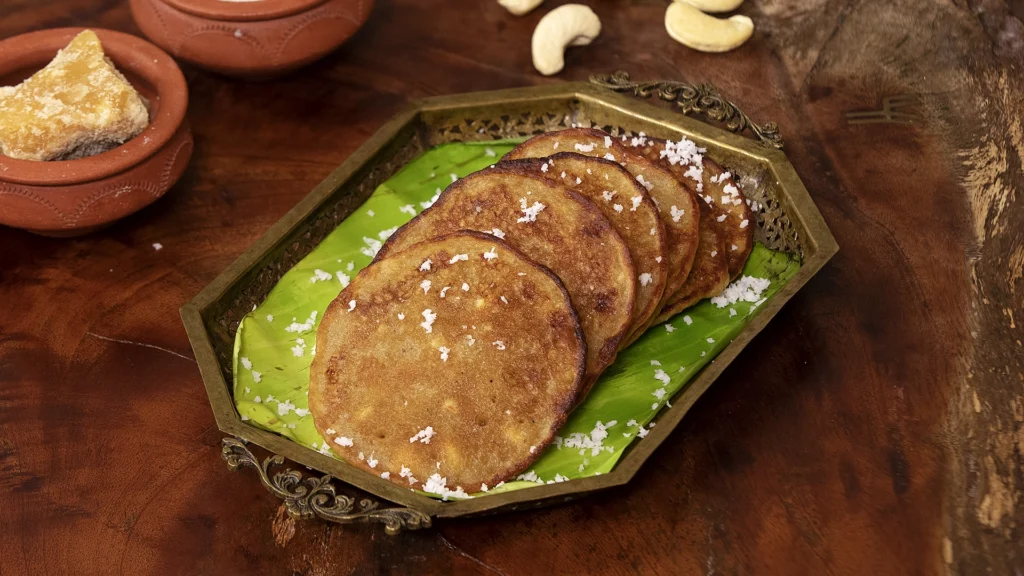
This soft, mildly sweet dosa made with banana is a beautiful blend of taste and health. It makes for a wholesome naivedyam and is loved by children and adults alike.
Sundal Offering: White Peas (Pattani)
The sundal for Day 5 is white peas, which are soft and nurturing — perfectly reflecting maternal care. Nutritionally, they are rich in B-vitamins, protein, and fiber, supporting overall health and energy. They are also known to improve digestion and provide a sense of satiety.
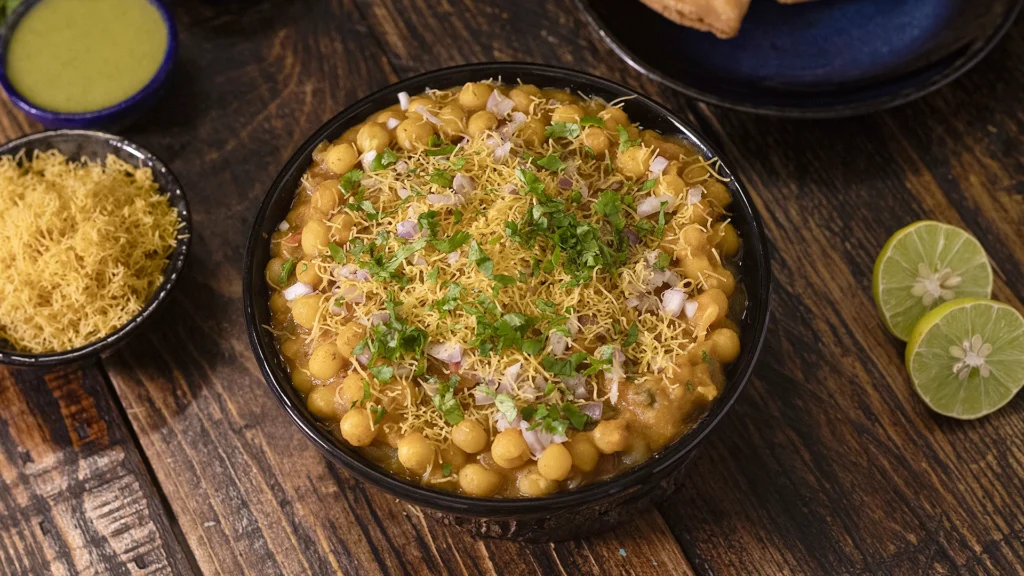
Recipe Suggestion: White Peas Salad
Light, refreshing, and protein-packed, this salad with white peas, fresh vegetables, and a gentle seasoning is a great prasadam as well as a healthy snack option for the family.
Why Day 5 Matters
The combination of bananas and white peas highlights nourishment and care. Bananas provide instant energy and keep the body balanced, while white peas offer deeper sustenance and support. Together, they honor Skandamata’s essence — the divine mother who nourishes and protects her children.
Day 6 – Katyayani (Warrior Spirit & Courage)
On the sixth day, we worship Goddess Katyayani, the fierce warrior form of Durga. She is often depicted riding a lion, holding weapons, and radiating immense power. Known as the destroyer of evil, she is also called the “bride form” of Durga, symbolizing strength, beauty, and courage. Devotees pray to her for removing obstacles in marriage and family life.
This day reminds us to embrace our inner strength — to be brave in the face of challenges and to balance determination with compassion.
Naivedyam Offering: Honey
Honey is the naivedyam for Day 6. Spiritually, honey represents purity, vitality, and the sweetness of divine blessings. Scientifically, it is antibacterial, antioxidant-rich, and known to improve immunity. Unlike refined sugars, honey provides slow-releasing energy that sustains vitality, making it ideal for fasting days.
Recipe Suggestion: Seasonal Fruit Juice with Honey
Fresh seasonal fruits blended with a drizzle of honey make a refreshing naivedyam drink. It’s hydrating, energizing, and aligns beautifully with the goddess’s vitality
Sundal Offering: Bengal Gram (Chana Dal)
The sundal for Day 6 is chana dal, symbolizing bravery with its golden-yellow color. Just as Katyayani embodies warrior strength, chana dal provides energy, stamina, and muscle support. Nutritionally, it balances blood sugar, improves satiety, and is rich in protein and fiber.
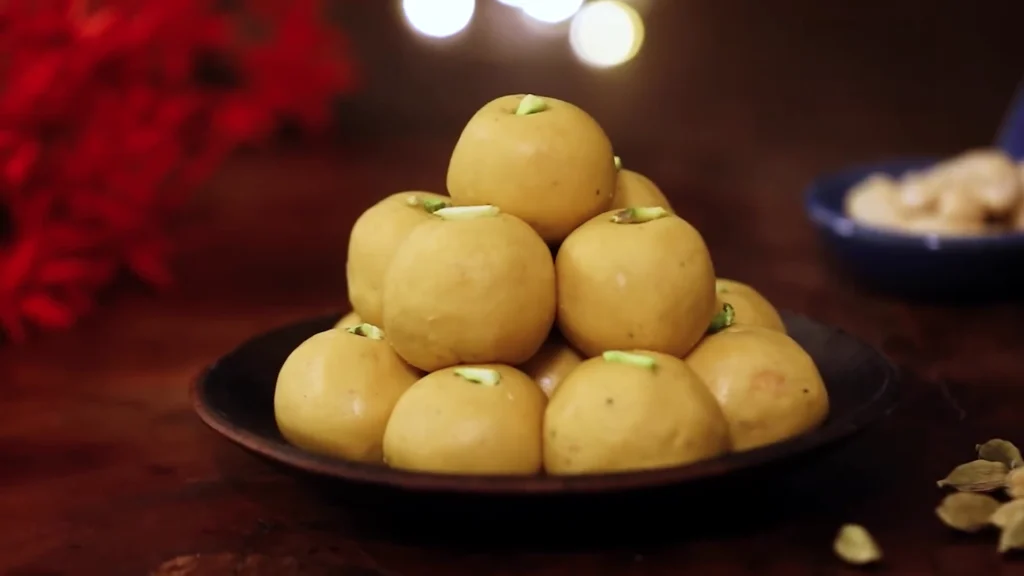
And alongside Besan ladoo, the humble yet flavorful chana dal sundal finds its place in the Navratri platter, simple in preparation, rich in tradition, and offered with devotion.
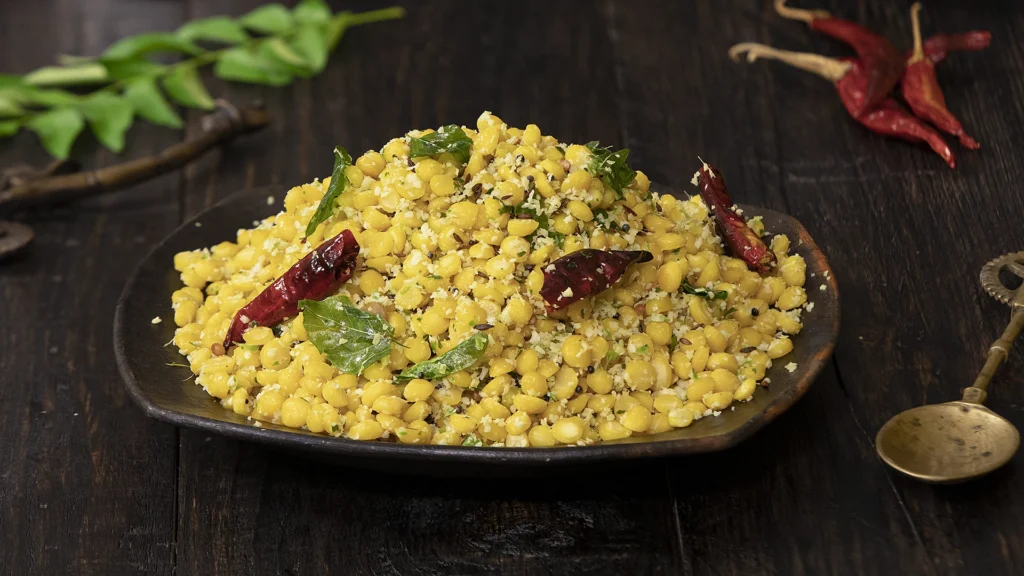
This protein-rich chana dal sundal, tempered with coconut and curry leaves, makes for a wholesome and sattvic Navratri offering.
Why Day 6 Matters
The combination of honey and chana dal is both symbolic and practical. Honey energizes and protects, while chana dal strengthens the body and balances energy levels. Together, they remind us that true courage requires both vitality and resilience.
Day 7 – Kalaratri (Power & Protection)
On the seventh day, we worship Goddess Kalaratri, the fiercest form of Durga. With a dark complexion, disheveled hair, and riding a donkey, she is both awe-inspiring and protective. She is the remover of darkness, fear, and ignorance, blessing her devotees with courage and protection. Though terrifying in appearance, she is deeply compassionate toward those who surrender to her.
This day reminds us that true strength sometimes comes in fierce forms — it’s about destroying negativity and protecting what is pure.
Naivedyam Offering: Jaggery + Sesame
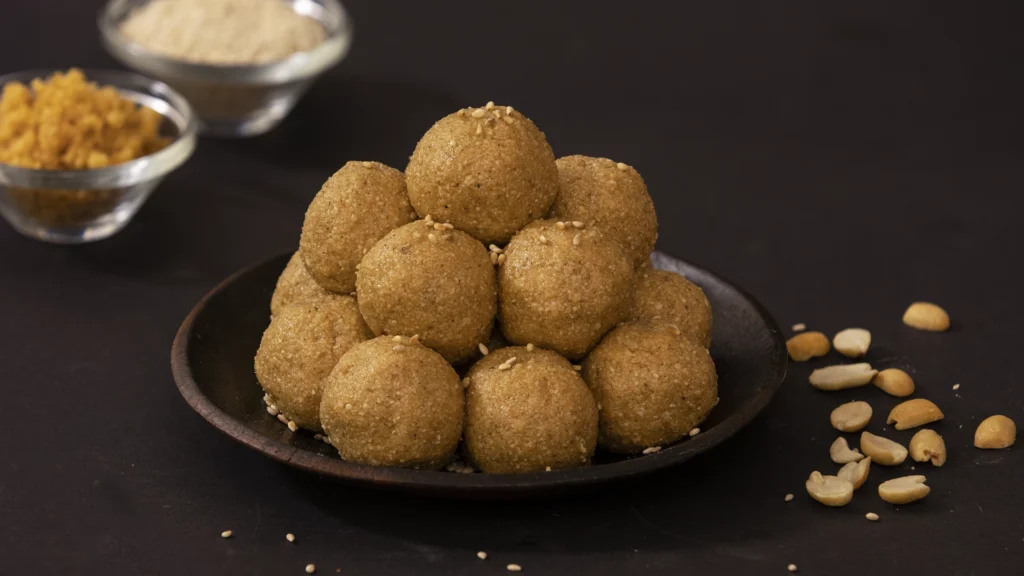
The offering for Day 7 is a combination of jaggery and sesame seeds. Spiritually, sesame represents endurance, while jaggery represents warmth and sweetness — together, they signify protection and stamina. Scientifically, sesame is rich in calcium, magnesium, and zinc, supporting bone health and immunity. Jaggery, high in iron, complements sesame perfectly, making this duo a power-packed naivedyam.
Sundal Offering: Black-Eyed Beans (Karamani / Lobia)
The sundal for Day 7 is black-eyed beans, symbolizing duality with their black-and-white appearance. Just as Kalaratri removes darkness and ushers in light, this sundal represents the balance of opposites. Nutritionally, black-eyed beans are rich in protein, fiber, magnesium, and folate, supporting stamina, bone health, and immunity.
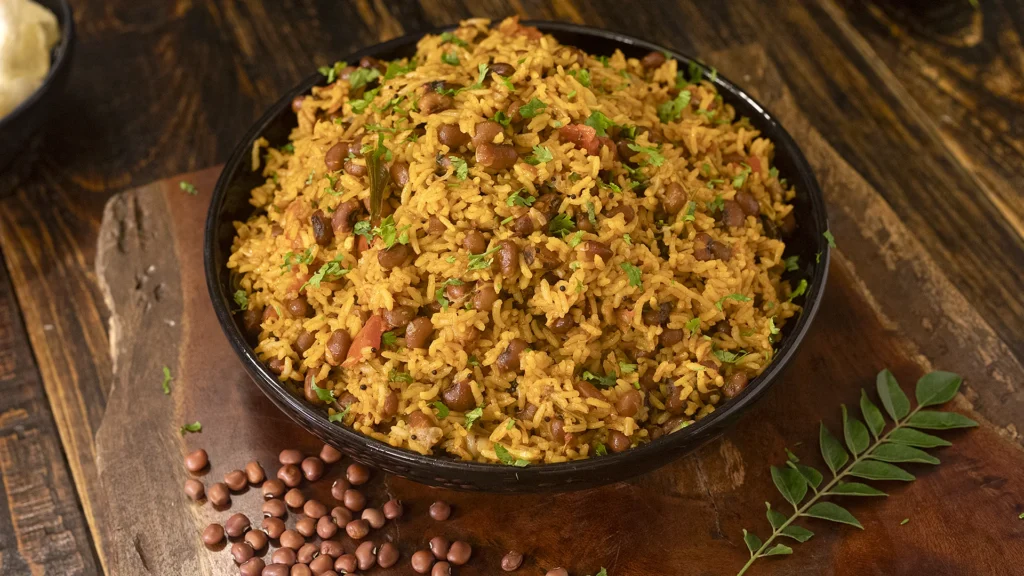
A wholesome dish where lobia is cooked with rice and spices, making it both filling and symbolic as prasadam.
Why Day 7 Matters
The combination of jaggery, sesame, and black-eyed beans is all about resilience. These foods provide warmth, strength, and deep nourishment, reflecting the goddess’s role as the destroyer of negativity and the protector of her devotees.
Day 8 – Mahagauri (Purity & Peace)
On the eighth day, we worship Goddess Mahagauri, the serene and compassionate form of Durga. Clad in white and radiating pure light, she represents purity, peace, and forgiveness. It is believed that her blessings wash away sins, purify the heart, and bring inner calm.
Mahagauri’s form inspires us to embrace simplicity and gentleness, letting go of negativity and moving toward clarity and peace.
Naivedyam Offering: Coconut
Coconut is a deeply auspicious offering in Indian tradition, often broken at temples as a symbol of surrender and purity. Spiritually, it represents cleansing and renewal. Scientifically, coconut is hydrating, cooling, and rich in healthy fats that support skin, hair, and overall wellness.

- Rava Coconut Ladoo – a quick sweet combining rava, coconut, and ghee.
- Coconut Therattipal – a rich, traditional preparation made with coconut and milk, perfect for naivedyam.
Sundal Offering: White Channa (Again)
On Day 8, white channa makes a return. Its repetition is symbolic — white represents purity, cleansing, and renewal. Nutritionally, white channa is protein-packed and pairs wonderfully with coconut, offering both energy and soothing balance.
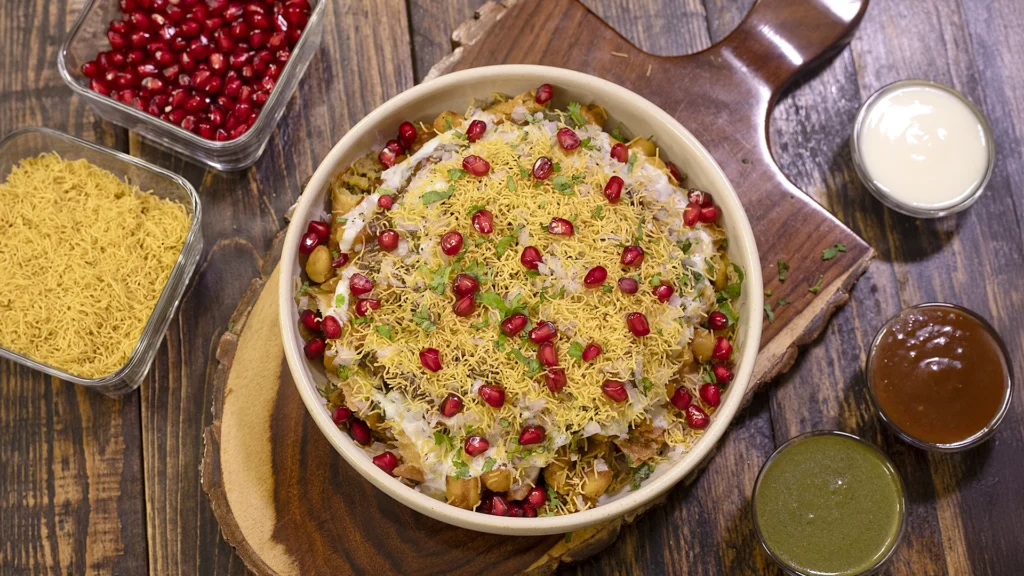
A festive twist to channa — spicy, tangy, and delicious. While not a traditional sundal, it captures the celebratory mood of Ashtami while still keeping channa at the heart of the dish.
Why Day 8 Matters
Coconut and white channa together bring calmness and balance. Coconut hydrates and cools, while channa provides strength and energy. They reflect Mahagauri’s essence — purity of body, mind, and soul.
Day 9 – Siddhidatri (Completion & Blessings)
The final day of Navaratri is dedicated to Goddess Siddhidatri, who bestows wisdom, prosperity, and divine blessings. She represents completion, fulfillment, and abundance — the perfect way to close the nine-day celebration.
- Naivedyam: Sesame Seeds (Ellu) – symbolic of wisdom and protection, rich in calcium, iron, and healthy fats. Ukadiche Modak makes a beautiful sweet finale.
- Sundal: Navadhanya Mix Nine grains signifying wholeness and prosperity, offering complete nutrition.
- Meal: Navratan Pulao serves as a colorful, festive meal to mark the conclusion.
As Navaratri ends, we celebrate with gratitude — for health, strength, and the divine feminine energy that sustains us all.
Navaratri is not just a festival — it is a journey of devotion, discipline, and celebration of womanhood. Each day, as we honor a different form of the goddess, we are reminded of the values she represents: strength, purity, courage, love, resilience, and wisdom. And through food, we connect with those values in the most nurturing way possible.
From ghee that kindles our digestive fire on Day 1, to the abundance of the navadhanya mix on Day 9, our ancestors designed these offerings with such beautiful intent — blending spirituality with science, devotion with nutrition.
For me, cooking during Navaratri is more than preparing naivedyam or sundal — it is about bringing the goddess into my home, sharing prasadam with loved ones, and celebrating the divine feminine energy within and around us.
As you celebrate this Navaratri, may your home be filled with light, health, and joy. And may every offering — big or small — be made with love, because that is the true essence of devotion.



thanks for this wonderful guide! I love how you explained each day so clearly and shared such beautiful recipes
this made me feel more connected to the festival
I can’t wait to try these dishes in my own home
You’ve truly made Navaratri even more special for me!
Thank you so much, Sashi! I’m so glad the guide helped you connect more with the festival. Wishing you a joyful and blessed Navaratri filled with delicious home cooking!
Awesome write up. how beautifully explained each day connect with Devi Happy Navratri to you dear Author Hema Sahiba 😇
Thank you so much, Maju! Your kind words mean a lot. Wishing you a blessed and joyful Navaratri too 🙏✨
Awesome write up. how beautifully explained each day connect with Devi. Happy Navratri to you dear Author Hema Sahiba 😇
Ah, Navaratri! Who knew nine days of worship could be such a delicious, well-organized diet plan? The goddesses are clearly fitness enthusiasts with excellent taste buds! From energizing iron boosts to serene coconut calming, each day offers a perfectly portioned spiritual snack. I particularly admire the strategic pairing – jaggery for strength, moong dal for purity, its like a balanced meal plan written by divinity itself. Honestly, Im already planning my Sundal strategy for next year. This isnt just reverence; its the ultimate guilt-free, culturally rich cleanse! Who knew fighting evil could taste so good?
What a delightful guide to Navaratri! Who knew such spiritual depth could be packed into daily naivedyam choices? I love the clever way jaggery and moong dal are paired – its like a nutritional dance-off for balance! And honey on Day 6? Perfect for when you need that sweet, sticky reminder of vitality. The science behind the spirituality is just brilliant, though I suspect my ancestors probably just thought it tasted nice. Cooking these days sounds like a delicious challenge, turning offerings into meals that nourish both body and soul. Honestly, it’s all just a pretext to eat various delicious sweets and savors, dressed up in divine reverence. Its a tasty way to connect with the gods!