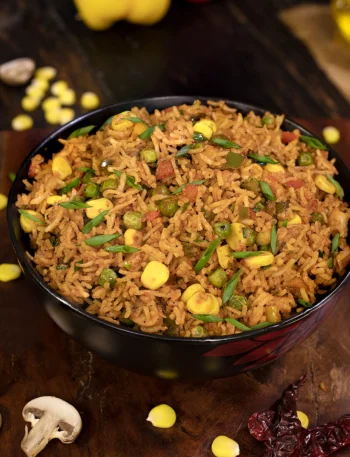
Walk into any Indian celebration—a wedding in Hyderabad, an Eid feast in Lucknow, a birthday party in Kolkata, a Sunday lunch in Chennai—and you’ll find biryani. Always biryani. The pot sits at the center of the table, steam rising, saffron-tinted rice glistening, and everyone waiting for that first serving.
But here’s the thing: the biryani at a Hyderabadi wedding looks nothing like the one at a Kolkata celebration. A Tamil Nadu feast serves biryani that would puzzle someone from Kerala. And a Lucknow gathering offers something entirely different from what you’d find in Mumbai.
So which one is the “real” biryani?
All of them. And that’s exactly the point.
Biryani as a Cultural Language
Biryani isn’t just food. It’s how India celebrates.
Other dishes might be daily comfort or regional pride, but biryani occupies a special place. It shows up when things matter. When families gather. When festivals arrive. When you want to tell someone they’re important enough for you to spend hours in the kitchen.
This isn’t about religion. Muslims serve it at Eid, Hindus cook it for Diwali, Christians make it for Christmas, and everyone brings it to weddings regardless of who’s getting married. Biryani crosses every line India draws between its people—language, religion, caste, region—and lands on the table as something everyone recognizes as special.
But why does biryani change so much from place to place? Why do people argue so passionately about which version is “authentic”? Because biryani doesn’t just exist in India—it belongs to India. And India is not one place. It’s dozens of climates, hundreds of ingredients, thousands of family traditions, all cooking the same basic idea in completely different ways.
The Foundation: Why Rice Defines the Biryani
Most people think biryani is about the meat or the spices. But talk to anyone who really knows biryani, and they’ll tell you: it starts with the rice.
Rice isn’t just the base. It determines everything else. How the biryani feels in your mouth. How it smells. How the spices work. How the meat and rice come together. Pick the wrong rice, and you’re not making that region’s biryani anymore. You’re making something else.
Basmati rice
Basmati rice is what most people think of when they imagine biryani. Long, slender grains that stay separate after cooking. When you lift a spoonful, each grain is distinct. The fragrance is delicate, almost floral. This rice is the foundation of North Indian biryanis—Hyderabadi, Lucknowi, Delhi. It works because these biryanis want drama. They want you to see layers. They want each element—rice, meat, saffron, herbs—to announce itself separately before coming together.
Basmati grows in the foothills of the Himalayas, in Punjab, Haryana, parts of Uttar Pradesh. The climate there—cold winters, specific soil—gives basmati its length and aroma. When Mughal cooks arrived in these regions centuries ago, they found this rice and built their biryanis around it.
Seeraga Samba Rice
Seeraga samba rice is smaller, rounder, almost stubby compared to basmati. Where basmati wants to stay separate, seeraga samba wants to absorb. Every grain soaks up the spices, the meat juices, the ghee. When you eat Tamil Nadu biryani made with seeraga samba, you’re not tasting separate components. You’re tasting everything at once, completely mixed together.
This rice grows in Tamil Nadu’s delta regions. It’s named after cumin (seeragam) because the grains are tiny like cumin seeds. Chettinad merchants, Ambur cooks, Dindigul vendors—they all chose this rice because their biryani philosophy is different. They want intensity in every bite. They want the rice to carry the heat of their spices, the tang of their curd marinades, the depth of their local techniques.
Kaima rice
Kaima rice, also called jeerakasala, sits somewhere in between. Shorter than basmati but longer than seeraga samba. The grains have a subtle sweetness and a nutty quality. This is Kerala’s choice, especially for Thalassery biryani. It makes sense: Malabar cooking balances sweet and savory constantly. Their biryani includes raisins, fried onions with caramelized edges, ghee-roasted cashews. Kaima rice carries all these flavors without getting overwhelmed.
The key understanding here is simple: there is no “correct” rice for biryani. There’s only the rice that makes sense for the biryani you’re making. A Hyderabadi would never use seeraga samba because it would mess up the layering technique. A Chettinad cook would never use basmati because it can’t absorb enough spice. The rice choice isn’t tradition for tradition’s sake. It’s practical. It’s about what works.
Cooking Philosophy: Kachchi vs Pakki Dum
The second thing that separates one biryani from another is cooking technique. And this isn’t small stuff. This is fundamental philosophy about what biryani should be.
Kachchi dum
Kachchi dum means cooking everything raw together. You marinate raw meat—mutton, chicken, whatever you’re using—with yogurt, spices, maybe some fried onions. You partially cook rice separately, just until it’s three-quarters done. Then you layer them. Raw meat at the bottom, rice on top. You seal the pot completely—traditionally with dough, sometimes just a tight lid—and cook everything together over very low heat.
What happens inside that sealed pot is magic. The meat releases its juices. The rice absorbs those juices while finishing its cooking. The spices from the meat travel upward. The saffron and herbs from the top layer travel downward. When you open the pot after an hour or more, the meat is falling-apart tender, the rice is perfectly cooked, and every single grain has absorbed the essence of everything else.
This is Hyderabadi biryani’s signature. It’s bold. It’s intense. The meat sits in the bottom, darker, almost caramelized. The rice on top is lighter, more fragrant. When you serve it, you mix layers from different depths, so every plate gets that range of flavors.
Kachchi dum works in Hyderabad because it’s hot there. The meat cooks through even with gentle heat. The technique also comes from royal kitchens where cooks had time, fuel, and patience. This was food for occasions, not everyday meals.
Pakki dum
Pakki dum takes a different approach. You cook the meat completely first, separately from the rice. Make a proper curry with the meat—cook it until tender, get the gravy right, adjust the spices. Cook the rice separately too, again until it’s not quite done. Then you layer them and seal the pot for a brief dum, maybe 20-30 minutes.
This technique gives you control. The meat is already perfect before layering, so you’re not gambling on whether it’ll cook through. The rice is already seasoned. The final dum is just about bringing everything together, letting flavors mingle, finishing the cooking gently.
This is Lucknowi biryani’s way. Awadhi cooking values subtlety. Where Hyderabad goes bold, Lucknow goes refined. The meat in pakki biryani is delicate, aromatic. You taste individual spices—cardamom, mace, kewra—rather than a unified heat blast. The technique also works for home cooks who can’t monitor a pot for two hours, or in regions where fuel was expensive, or in climates where gentle heat won’t cook raw meat reliably.
Kolkata biryani also uses pakki method, but for different reasons. The city’s biryani evolved when Awadh’s last nawab, Wajid Ali Shah, was exiled to Calcutta in the 1850s. His cooks adapted their royal recipes to what was available: less meat (it was expensive), more potatoes (cheap and filling), boiled eggs (local protein), lighter spices (local palates). Pakki method made this adaptation easier. You could cook everything separately, adjust as you went, make substitutions without ruining the whole pot.
Neither technique is better. They’re just different answers to the question: what do you want your biryani to feel like?
Regional Biryanis as Stories, Not Variants
Every region’s biryani tells you something about that place. About its history, its ingredients, how people there think about food and celebration.
Hyderabadi Biryani
Hyderabadi biryani is what happens when Persian cooking techniques meet South Indian heat and ingredients. The Nizams of Hyderabad had royal kitchens that competed to create the most spectacular biryanis. They used kachchi dum, loaded it with saffron, added mint and cilantro with abandon, made sure the meat was as important as the rice. The result is drama on a plate. Bold spices. Visible layers. Meat so tender it needs no knife. This is biryani as performance, as statement. You make this when you want people to remember the meal.
The heat comes from the local chili varieties and the generous hand with black pepper. The yogurt marinade has to be thick—Hyderabad’s heat meant yogurt was plentiful and necessary for tenderizing meat. Even today, a proper Hyderabadi biryani should make you reach for raita, not because it’s too spicy, but because that contrast is part of the experience.
Lucknowi (Awadhi) Biryani
Lucknowi (Awadhi) biryani is the opposite energy. This is biryani as poetry, not drama. The Nawabs of Awadh refined cooking into an art form. They wanted flavors that whispered instead of shouted. Lucknowi biryani uses pakki method, lighter spices, lots of aromatic ingredients like rose water, kewra (screwpine essence), cardamom. The meat is pre-cooked until meltingly soft, but the spicing is restrained. You should taste each element clearly—the meat’s sweetness, the rice’s perfume, the subtle warmth of whole spices.
This biryani reflects Lucknow’s culture: sophistication, elegance, a focus on refinement over showiness. The royal kitchens there competed on finesse, not volume. The city’s famous “pehle aap” (after you) courtesy shows up even in its biryani—nothing fights for attention, everything works together politely.
Kolkata Biryani
Kolkata biryani surprises people. Potatoes in biryani? Eggs? Lighter meat portions? But this tells the story of adaptation and survival. When Wajid Ali Shah arrived in exile, his cooks had to feed a household on a smaller budget in a city where ingredients were different. Potatoes absorbed the biryani flavors beautifully and filled plates. Eggs added protein without the cost of meat. The local preference was for less heat, so spices got dialed back.
What emerged wasn’t a compromise. It was a new creation. Kolkata biryani is gentler, slightly sweet (they add more kewra and sometimes a touch of sugar), and completely satisfying. The potato isn’t filler—it’s a feature, becoming creamy and flavorful inside the biryani. The egg adds richness. This is biryani that reflects resourcefulness and creativity, not limitation.
Ambur and Dindigul Biryanis
Ambur and Dindigul biryanis from Tamil Nadu take a completely different direction. These are tangy, spicy, intensely flavored. The meat marinates in yogurt with lots of chili powder, sometimes tamarind, giving it a characteristic sour-spicy edge. They use seeraga samba rice, which absorbs all these bold flavors. Black pepper features heavily—you’ll taste its sharp heat in every bite. These are biryanis from hot, dry regions where food needed strong flavors to survive the climate and where local palates appreciated heat.
Ambur biryani comes from a town famous for leather tanning, and the biryani tradition there blends Tamil and Mughal influences. Dindigul biryani is even more local—smaller rice grains, less oil, more pepper. The meat is often cut smaller, and the biryani is less layered, more mixed. This is working-class food that became legendary, served at roadside eateries and small hotels more than fancy restaurants.
Thalassery Biryani

Thalassery biryani from Kerala’s Malabar coast shows Arab trading influence. The Malabar coast connected India to Gulf Arab traders for centuries, and their cooking techniques mixed with local Kerala ingredients. Thalassery biryani uses the pakki method but includes sweet elements: raisins, fried cashews, caramelized onions. The rice (kaima/jeerakasala) is ghee-laden, almost rich enough to feel indulgent on its own.
The meat—often chicken or beef in Muslim households, mutton elsewhere—is cooked in a masala that balances savory, sweet, and aromatic. Fennel seeds, bay leaves, and tomatoes show up more here than in North Indian versions. The biryani isn’t as dramatic as Hyderabadi or as refined as Lucknowi. It’s hospitable, generous, meant for sharing with neighbors and travelers. That makes sense for a coastal trading community.
Chettinad Biryani
Chettinad biryani is fire. The Chettinad region of Tamil Nadu is famous for merchant families and their intensely spiced food. Chettinad biryani uses freshly ground masalas—every household has its own blend—with dried red chilies, peppercorns, and fennel. The meat is often mutton, cooked with tomatoes and onions until the fat separates. They use seeraga samba rice, ensuring every grain absorbs maximum spice.
This isn’t biryani for mild palates. It’s meant to be eaten in a hot climate where spices were preservatives and where strong flavors were signs of good cooking. The merchants who created this style could afford the best spices, and they used them generously.
Beyond Meat: Protein, Veg, and Local Adaptation
Here’s where arguments start. “Real biryani has meat,” some say. But that ignores how biryani actually works in India—it adapts to what people eat and why.
Chicken
Chicken biryani is everywhere now, though it’s relatively recent compared to mutton. Chicken is cheaper, cooks faster, and works with the same techniques. In some regions, like parts of Kerala and coastal areas, chicken was always the protein of choice. Today, it’s probably the most common biryani protein overall.
Mutton
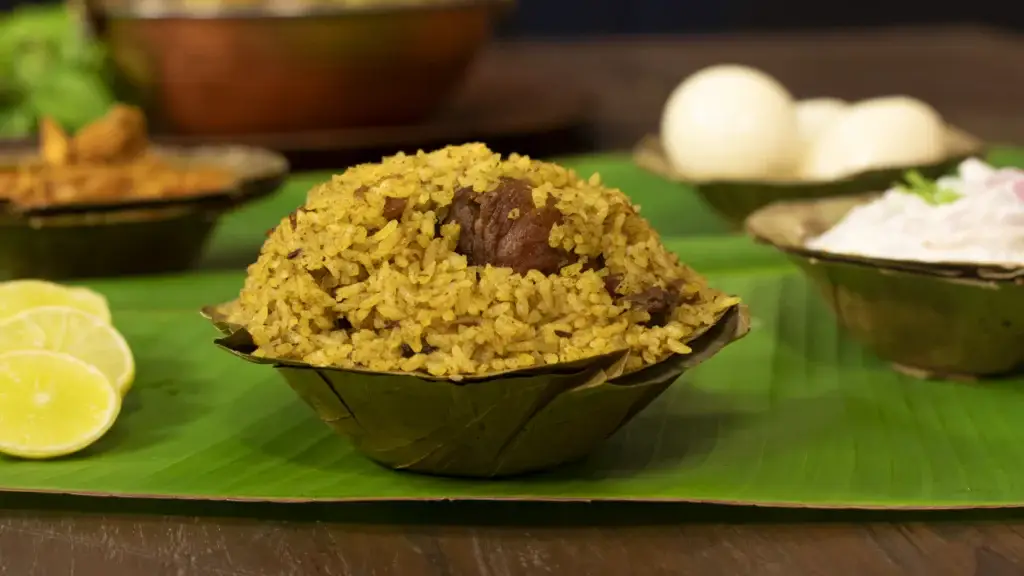
Mutton biryani remains the traditional favorite, especially for major celebrations. Mutton (which in India usually means goat, not sheep) has more flavor, stands up to long cooking, and feels special. Wedding biryanis and festival biryanis often default to mutton.
Fish and Prawn

Fish and prawn biryanis exist in coastal regions—Kerala, Bengal, parts of Andhra Pradesh. The technique is similar but adjusted: fish can’t handle the long cooking of dum, so it’s either fried first or added near the end. The spicing changes too, often including curry leaves, coconut, or tamarind. These biryanis prove the concept is flexible enough for any protein.
Beef
Beef biryani is common in Kerala, especially among Muslim and Christian communities, and in parts of Tamil Nadu. The meat is treated similarly to mutton, though it needs longer cooking. The spicing is often bolder to match beef’s stronger flavor.
Vegetable

Vegetable biryani gets dismissed by purists but exists widely. Vegetarian households across India, especially in Gujarat, Maharashtra, and among South Indian Brahmin communities, make biryanis with mixed vegetables, sometimes paneer, sometimes soya chunks. The technique is the same—layering, dum, attention to rice and spice—just without meat.
Is it “authentic”? That’s the wrong question. The right question is: does it feed people who don’t eat meat while giving them the same celebratory food experience? Yes. So it’s legitimate.
Egg
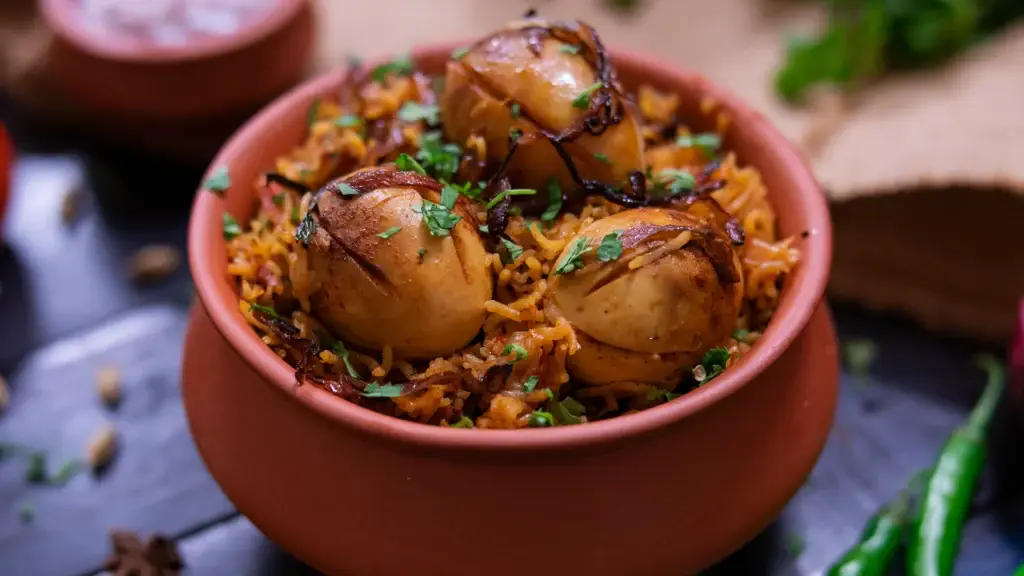
Egg biryani shows up in Kolkata, Kerala, and as a common home-cooking option everywhere. Hard-boiled eggs absorb flavors beautifully, add protein, and work within the same cooking framework. In budget biryanis, eggs sometimes appear alongside meat as an extender.
The broader point is this: biryani’s strength is adaptation. It absorbed local ingredients everywhere it went. That’s not dilution—that’s survival. That’s why biryani thrived while other foreign dishes stayed limited to certain communities. It became Indian by becoming local everywhere.
Accompaniments: The Silent Co-Stars
Nobody eats biryani alone. The accompaniments aren’t optional extras—they’re part of the experience, completing what the biryani starts.
Raita
Raita is the most universal accompaniment. Yogurt-based, usually with cucumber, onion, or boondi (fried chickpea flour drops), seasoned with cumin and sometimes mint. Raita serves multiple purposes: it cools the mouth if the biryani is spicy, it adds a creamy texture contrast to the rice, and it helps digestion of the heavy, rich food.
Different regions make different raitas. North Indian raita is simple, often just yogurt, cucumber, and cumin. Hyderabad’s raita might include fried curry leaves and mustard seeds. Kerala’s raita (pachadi) often has coconut. But the principle is the same: cooling balance.
Mirchi ka Salan
Mirchi ka salan is Hyderabad’s signature side—a tangy, spicy gravy made with long green chilies, peanuts, sesame, and tamarind. It’s complex, with layers of flavor that mirror the biryani’s complexity. You take a bite of biryani, a spoonful of salan, and the combination is greater than either alone. The sourness cuts through the richness, the peanuts add texture, the chilies add another dimension of heat.
Brinjal Curry
Brinjal (eggplant) curry appears with many South Indian biryanis. Sometimes it’s a simple eggplant masala, sometimes it’s the more elaborate brinjal gosthu from Chettinad—a thick, almost jam-like curry with eggplant, tamarind, and spices. The soft, tangy eggplant complements the rice and meat perfectly.
Shorba
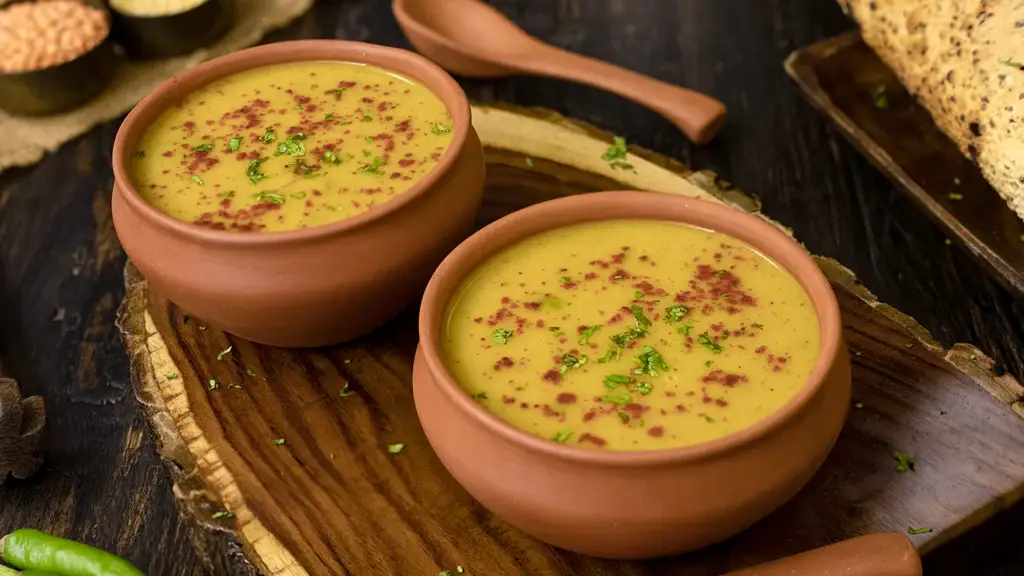
Shorba or soup sometimes starts a biryani meal, especially in Awadhi tradition. It’s light, aromatic, prepares the palate for the heavy food coming.
Onion Salad
Onion salad shows up everywhere—sliced onions with lemon juice, sometimes green chilies, sometimes pomegranate seeds. Simple, refreshing, cuts through the richness.
Achaar
Achaar (pickle) is common too. The intense, concentrated flavors of pickle add punch. You don’t need much—a small amount on the side of your plate, a tiny bite occasionally.
These accompaniments show that biryani isn’t meant to be a solo performance. It’s a complete meal built from multiple parts, each enhancing the others.
Why Biryani Is India’s Most Festive Food
What makes biryani special isn’t just taste. It’s what biryani means.
- Time is the first signal. Good biryani takes hours. Marinating meat (often overnight), soaking rice, grinding fresh masalas, frying onions until golden, layering carefully, cooking on dum—this isn’t fast food. When someone serves biryani, you know they spent time on it. That time investment says: you matter. This occasion matters.
- Abundance is the second signal. Biryani feeds crowds. You don’t make biryani for two people (though you can). You make it for ten, twenty, fifty. The giant pot, the steam when it’s opened, the heaped plates—biryani is generous by nature. It’s showing-off food in the best way, showing you have enough to share, enough to celebrate with.
- Royal origins matter too. Biryani came from palace kitchens. The Mughals, the Nizams, the Nawabs—these were rulers who ate elaborate multi-course meals daily. When their signature dish moved to common tables, it carried that sense of luxury, of special-occasion grandeur. Making biryani lets ordinary families feel, for a meal, like they’re serving something regal.
- It’s designed for sharing. Unlike dishes served individually, biryani comes in a large communal pot. Everyone eats from the same preparation. The act of serving—digging deep to get the bottom layers, making sure everyone gets meat and rice mixed together—is social. It requires attention to others. Who hasn’t been served yet? Does everyone have enough meat? The elderly first, the guests before family. These small rituals of serving biryani reinforce community bonds.
- Memory and nostalgia cling to biryani. Almost every Indian has a biryani memory—grandmother’s Eid biryani, uncle’s birthday party, wedding where the biryani was so good people still talk about it years later. These memories make biryani emotional. When you cook your family’s biryani, you’re not just making food. You’re connecting to past celebrations, honoring traditions, keeping memories alive.
This is why biryani shows up at every kind of celebration. Eid wouldn’t feel complete without biryani for many Muslim families. Hindu weddings serve it alongside other feast foods. Christians make it for Christmas and Easter gatherings. Birthday parties, anniversaries, promotions, house warmings, festivals—if it matters, biryani is there.
Modern Biryanis and Cultural Continuity
Biryani keeps evolving. Some people see this as corruption. But evolution is how biryani survived this long.
Fusion biryanis are everywhere now. Chicken 65 biryani adds the spicy, tangy fried chicken pieces to biryani rice. Schezwan biryani brings Chinese-Indian flavors in. Tikka biryani uses grilled, tikka-marinated meat. Paneer tikka biryani exists. Even “biryani rice” (essentially flavored rice without the proper technique) has become common.
Are these “real” biryani? Probably not by traditional standards. But they show biryani’s cultural power—people want to connect other foods to biryani because biryani means celebration and luxury. Calling something “X biryani” instantly positions it as special.
Restaurant culture changed biryani too. Restaurants needed to serve biryani quickly, not spend hours on each order. So shortcuts developed: pre-cooked rice and meat mixed and briefly steamed to order, rather than proper dum. Some use biryani masala powders instead of fresh spices. The results range from decent to terrible, but they made biryani accessible to millions who might never taste the slow-cooked traditional versions.
Delivery apps accelerated this further. Biryani became India’s most-ordered delivery food. Some cloud kitchens exist only to make biryani. This democratized access—anyone anywhere could get biryani delivered—but it also standardized it. Regional differences started blurring. “Hyderabadi-style” in a Mumbai cloud kitchen might share little with actual Hyderabadi biryani.
Yet traditional biryani still exists. Home cooks still spend Sundays making family recipes. Legendary biryani restaurants still draw crowds willing to wait hours. Wedding caterers still compete on biryani quality. YouTube and Instagram are full of people teaching traditional techniques, showing regional variations, arguing about authenticity.
The tension between old and new isn’t killing biryani. It’s keeping it alive in different forms for different needs. Quick weeknight biryani from a restaurant serves a different purpose than grandmother’s four-hour Sunday biryani. Both have their place.
One Dish, Infinite Belonging
Here’s what makes biryani unique: it belongs to everyone, and everyone feels ownership.
A Hyderabadi will defend their biryani as the ultimate version. A Lucknowi will quietly insist theirs is more refined. A Kolkatan will champion their potato-egg version as comfort food perfection. A Tamil Nadu resident will point out that their tangy, spicy style is what biryani should taste like. A Malayali will praise Thalassery’s sweet-savory balance.
And they’re all right.
Not because “all biryanis are equal”—that’s a meaningless statement. They’re all right because each version makes sense in its place, for its people, in their celebrations. Each reflects local ingredients, techniques, and values. Each carries memories and traditions. Each feeds communities and marks important occasions.
The arguments about authenticity aren’t really about which biryani is “correct.” They’re about identity and belonging. When someone defends their regional biryani, they’re saying: this is how my family celebrates. This is what special occasions taste like where I’m from. This is part of who I am.
Biryani’s diversity mirrors India’s diversity. A country with dozens of languages, hundreds of distinct cultures, multiple religions, varying climates and geographies—of course its most important celebratory dish exists in countless versions. It couldn’t be any other way.
The beauty of biryani is that it didn’t need to standardize to succeed. It succeeded because it changed to fit everywhere it went. It absorbed local preferences instead of imposing a single “correct” way. That flexibility, that willingness to adapt while keeping the core concept—layered rice and protein, careful spicing, celebration-worthy effort—is why biryani moved from royal courts to every kind of Indian table.
So the next time someone argues about which biryani is best, remember: they’re not really arguing about food. They’re sharing what celebration tastes like in their world. They’re offering you a piece of their culture. They’re inviting you to understand what makes an occasion special for them.
Biryani isn’t meant to be standardized. It’s meant to be shared. And in its infinite variations across India, it has been shared—passed down through generations, adapted to new places, brought to celebrations, and made with care for people who matter.
That’s the real biryani story. Not one recipe conquering all others, but one idea—celebration, generosity, technique, community—expressed in as many ways as India has ways of celebrating.
And when you sit down to biryani, any biryani, made with time and care, you’re part of that story.