When rice boils over, life is good!
There’s a moment in every Tamil household during mid-January when someone stands over a pot of rice, watching it carefully. Not to stop it from spilling—but to make sure it does. When that starchy, milk-white foam rushes up and tumbles over the sides, everyone gathered around shouts “Pongalo Pongal!” and smiles break out like the pot just delivered good news.
Because in a way, it did.
Pongal means “to overflow,” and that’s exactly what the dish—and the festival—is about. When your rice boils over, it means you have more than enough. It means the harvest was good, the land was kind, and there’s plenty to share. It’s a visible, messy, joyful symbol of abundance.
Unlike most Indian festivals where food comes after the prayers, Pongal is one of the rare celebrations where the food itself is the offering. You’re not cooking to feed guests after rituals are done—you’re cooking as the ritual. The pot, the rice, the overflow—that’s the prayer.
The festival stretches across four days in January, timed perfectly with the Tamil harvest season. But the heart of it all happens on the second day, Surya Pongal, when families gather to cook a pot of freshly harvested rice in the open air, offer it to the Sun God, and then sit down to eat together. It’s food-first spirituality, rooted in gratitude rather than grandeur.
So if you want to understand Pongal, don’t start with recipes. Start with the idea that rice boiling over is a blessing. Everything else follows from there.
Surya Pongal: The Day the Food Takes Center Stage
Surya Pongal is when the cooking happens—usually outdoors, often in an earthen pot, always with the season’s first rice. Families wake up early, draw intricate kolam patterns with rice flour at the entrance of their homes, and set up a little cooking station facing east, toward the rising sun.
The pot sits on a makeshift stove—sometimes firewood, sometimes a simple burner—and around it, you’ll see sugarcane stalks tied together, turmeric leaves, bananas, and maybe a few flowers. It’s not elaborate. It’s earthy and honest, the way harvest festivals should be.
The reason everything is done outside, under the sky, is because this meal is cooked for the Sun God. Surya is being thanked directly—for warmth, for ripening the grains, for making life possible. So you don’t cook this in your kitchen and then bring it out. You cook it right there, in front of him.
And the rice? It has to be from the fresh harvest. Ideally, it’s raw rice that’s just been brought in from the fields—unpolished, whole, still carrying the memory of the soil. The flavor is different. The texture is different. There’s a certain freshness you can taste, and that’s the point. Pongal isn’t about fancy ingredients. It’s about honoring what the earth just gave you.
When the rice and milk start bubbling up and spilling over, that’s the moment everyone’s been waiting for. That overflow is the whole point. It’s a sign that this year, there’s enough—and more than enough. The ritual isn’t complete until that happens.
After the offering is made, the same Pongal is shared with family, neighbors, and anyone passing by. There’s no hierarchy here. The food that was offered to the gods is the same food everyone eats. That’s the beauty of it—simplicity, shared abundance, and zero fuss.
The Two Pongals That Define the Festival
Sakkarai Pongal: Sweetness as Devotion
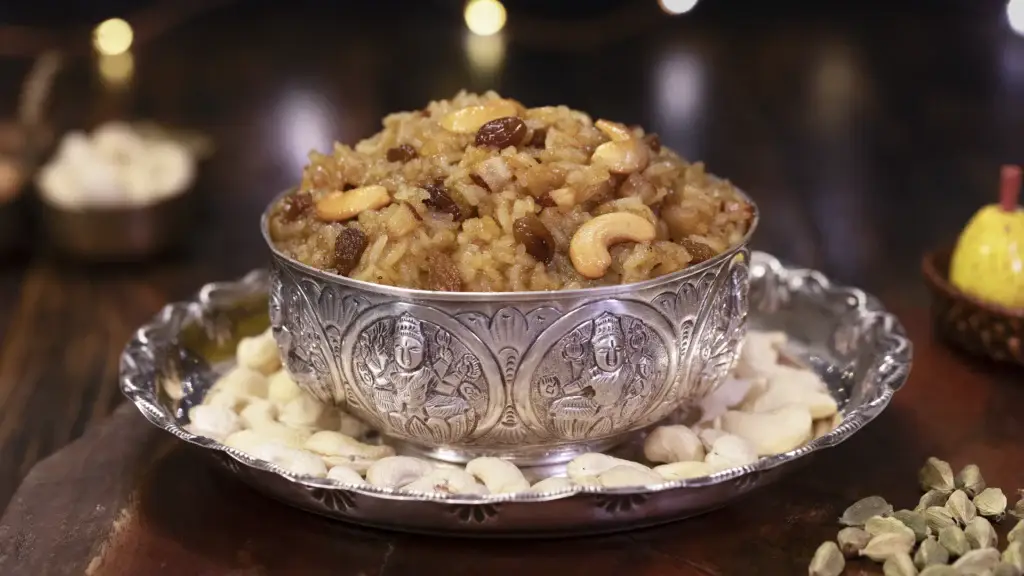
If there’s one dish that is Pongal, it’s Sakkarai Pongal—the sweet version made with jaggery. This is what gets cooked first on Surya Pongal morning, the dish that’s offered to the Sun before anything else is eaten.
It starts with rice and split yellow moong dal, cooked together until they’re soft and almost falling apart. Then comes the jaggery—dark, unrefined, and full of that deep, caramel-like sweetness that white sugar just can’t replicate. As the jaggery melts into the rice, the whole thing turns golden-brown and starts to smell like comfort itself.
Then the tempering happens. Ghee—lots of it—is heated in a small pan with cashews and raisins until the cashews turn golden and the raisins puff up. This gets poured over the Pongal, along with a generous pinch of cardamom powder. Some families add a tiny piece of edible camphor or a dash of nutmeg, especially if they’re making it temple-style.
The dish is rich, yes, but it’s not cloying. The moong dal adds a subtle earthiness that balances the sweetness, and the cardamom cuts through with just enough sharpness to keep things interesting. Every spoonful is soft, warm, and satisfying in a way that feels both indulgent and grounding at the same time.
In temples across Tamil Nadu, Sakkarai Pongal is made in enormous vessels and distributed as prasadam—food that’s been blessed and offered to the deity. Devotees line up to receive it, still warm, served on a banana leaf or in their cupped palms. It’s the same dish that’s made at home, just scaled up. No secret temple recipe, no special technique. Just rice, dal, jaggery, ghee, and gratitude.
What makes this dish special isn’t complexity—it’s intention. You’re not making dessert. You’re making an offering. And that shift in perspective changes how it tastes.
Venn Pongal: The Savory Comfort
If Sakkarai Pongal is devotion, Venn Pongal is pure comfort. This is the savory version, and while it’s also made on Pongal day, it’s less about ritual and more about sitting down to a meal that feels like a warm hug.
The base is the same—rice and moong dal, cooked until soft and creamy, almost porridge-like. But instead of jaggery, this one gets its flavor from ghee, black pepper, cumin, and ginger. Lots of ghee. If you think you’ve added enough, you probably haven’t.
The tempering is what makes Venn Pongal come alive. Ghee is heated in a pan, and in go cumin seeds, whole black peppercorns, cashews, fresh ginger, and sometimes a few curry leaves. The cumin crackles, the pepper releases its heat, the ginger sharpens everything up. When you pour this over the rice and dal and mix it all together, the dish transforms.
It’s soft but not mushy. Peppery but not harsh. Rich but not heavy. The cashews add little pockets of crunch, the ginger adds brightness, and the ghee ties it all together into something deeply satisfying.
Festival Venn Pongal is different from the version you might eat for breakfast on a regular Tuesday. On Pongal day, the spices are freshly cracked, the ghee is more generous, and the rice is from the new harvest. It tastes brighter, more alive.
This is the dish that gets paired with coconut chutney, sambar, and crispy vadas. It’s not flashy, but it doesn’t need to be. It’s the kind of food that makes you slow down, take your time, and actually taste what you’re eating.
The Pongal Plate: It’s Never Just One Dish
Here’s something important: you never eat Pongal by itself. The full meal is a plate—a thali, really—where everything plays a role.
Start with Medu Vada, those golden, crispy lentil fritters with the hole in the middle. They’re crunchy on the outside, soft on the inside, and when you dip them in coconut chutney or sambar, they soak up just enough flavor without falling apart. The texture contrast is key—you’ve got soft, creamy Pongal on one side and crisp, fried vada on the other.
Then there’s Arachuvitta Sambar—the kind where the spices are freshly ground, not pulled from a pre-made powder. Coriander seeds, cumin, dried red chilies, and fenugreek are roasted and ground right before cooking, and you can taste the difference. The sambar is tangy from tamarind, slightly sweet from jaggery, and loaded with seasonal vegetables—usually pumpkin, broad beans, drumsticks, and carrots. It’s not just a side dish. It’s part of the experience.
Coconut chutney is always there too—freshly ground coconut with green chilies, roasted chana dal, and a tempering of mustard seeds and curry leaves. It’s cool, creamy, and balances out the heat from the pepper in the Venn Pongal and the spice in the sambar.
The whole plate is designed around balance. Soft and crisp. Spicy and mild. Sweet and savory. Hot and cool. You’re not just eating—you’re tasting the rhythm of a well-thought-out meal.
Paal Pongal: The Purest Offering
Before anything else is cooked, before the jaggery comes out or the spices are tempered, some families make Paal Pongal—rice cooked only in milk and water.
No ghee. No jaggery. No pepper. Nothing.
It’s the simplest version of Pongal, and it’s offered directly to the Sun God before anyone eats. The purity is the point. You’re not adding anything to make it taste better. You’re offering the harvest in its most basic form—rice and milk, two things that represent sustenance and life.
It’s not a dish you’d serve at a meal. It’s not meant to be delicious in the way Sakkarai Pongal is. It’s meant to be honest. A quiet expression of gratitude before the celebration begins.
Some families eat a spoonful after offering it, just to close the ritual. Others don’t. Either way, it’s a reminder that Pongal, at its core, is about restraint as much as abundance.
Variety Rice: When the Festival Extends Beyond One Meal
Pongal isn’t just one day, and the food doesn’t stop after Surya Pongal. Over the next few days, Tamil households cook a rotation of variety rice dishes—flavored rice preparations that are practical, delicious, and easy to share.
These aren’t just leftovers or fillers. They’re part of the festival’s rhythm. Rice is the constant, but the flavors change—sour, nutty, tangy, mild. Each one uses preserved or shelf-stable ingredients (tamarind, lemon, coconut), which made them practical in the days before refrigeration. But more than that, they show that Pongal is about variety within simplicity. The grain stays the same. The intention stays the same. The flavors just shift.
Regional and Modern Variations
Not every Pongal is made the same way, and that’s fine. The festival adapts.
Temple Pongal tends to be richer and more intensely flavored than home-cooked versions. The ghee is poured more generously, the jaggery is darker, and sometimes there’s a hint of edible camphor that gives it a cooling, almost medicinal finish. It’s made in massive quantities and distributed as prasadam, so the recipe has to be bold enough to hold up even when it’s eaten hours later.
In villages, Pongal is still cooked outdoors in clay pots over wood fires. In cities, it’s made on gas stoves or induction cooktops, sometimes in pressure cookers to save time. The vessel changes, but the overflow ritual stays the same—even if it’s a small, symbolic spill.
What doesn’t change is the core idea: rice, gratitude, and a pot that’s allowed to boil over. Everything else is just adjustment.
How to Celebrate a Traditional Tamil Pongal Abroad
You Don’t Need Tamil Nadu to Celebrate Pongal
Here’s the thing about Pongal—it’s not about geography. You don’t need January sunshine in Chennai or a backyard in a Tamil village to celebrate it properly. You need rice, a pot, and the willingness to let it boil over. Even if that’s happening on an induction stove in London or a balcony in Toronto.
Pongal is about intention, not perfection. The ritual adapts. The meaning doesn’t.
Finding Ingredients Abroad
Most of what you need for Pongal is available wherever there’s a decent Indian or South Asian grocery store. Raw rice, moong dal, jaggery, ghee, black pepper, cumin, ginger, cashews, raisins—these are staples, not specialty items.
In the US and Canada, chains like Patel Brothers, India Bazaar, and Apna Bazaar carry everything. You’ll find Ponni rice, jaggery blocks, and even frozen banana leaves in bigger cities. Fresh sugarcane shows up in Indian and sometimes Mexican markets, though it’s optional, not mandatory.
In the UK, Indian grocery stores in London, Leicester, and Birmingham stock most of what you need. Sri Lankan Tamil shops are especially good for authentic rice and jaggery. Clay pots are harder to find, but you can order them online if you want to stick to tradition.
Australia has strong Indian grocery networks in Melbourne, Sydney, and Brisbane. Coconut, curry leaves, and moong dal are easy to find. Sugarcane might be seasonal, but again—it’s symbolic, not essential.
Singapore and Malaysia are probably the easiest places outside India to celebrate Pongal authentically. Indian wet markets carry everything from jaggery to banana leaves, and brass or clay cookware is widely available.
In Dubai and the Middle East, Indian groceries are everywhere, especially Tamil- and Kerala-focused stores. Sugarcane is common, and clay pots are sold in Indian utensil shops.
Germany, France, and other parts of Europe have Indian grocery stores in major cities, though the selection can be more limited. Jaggery is often sold as powder or small blocks, and banana leaves are usually frozen. Clay pots are rare, so stainless steel or thick-bottomed cookware works just fine.
The key is this: if the jaggery isn’t perfect or the rice isn’t Ponni, it’s okay. The intention matters more than the exact ingredient.
Utensils: What You Need (and What You Can Swap)
Traditionally, Pongal is cooked in an earthen pot (mann chatti) or a brass vessel, stirred with a wooden ladle. It’s symbolic and beautiful, but not required.
If you don’t have those, use a heavy-bottomed stainless steel pot. A pressure cooker works for everyday Pongal, but not for the ritual offering—you need to see the overflow happen.
The important part is this: let the Pongal boil over visibly. Even a small spill counts. That overflow is the whole point.
Setting Up Your Pongal Space
You don’t need a courtyard. A balcony works. A backyard works. Even a spot near a window facing east works.
Lay down a clean cloth or mat. Draw a simple kolam (rangoli) with chalk or rice flour if you can. Place a few pieces of sugarcane or a turmeric plant nearby if you have access to them. Add fresh flowers or bananas if you want.
It doesn’t have to look like a magazine spread. It just has to feel intentional.
The Ritual: Keep It Meaningful, Not Performative
Cook Sakkarai Pongal first, as the offering. When it starts to boil over, say “Pongalo Pongal!” out loud—even if you’re alone. Let it spill. Smile when it does.
Offer it mentally to the Sun. You don’t need elaborate prayers or a priest. A simple moment of gratitude is enough.
Then share the food. With family, with neighbors, with friends. Pongal is meant to be eaten together.
A Simplified Pongal Menu for Abroad
If you want to do a full traditional plate:
- Sakkarai Pongal
- Venn Pongal
- Medu Vada (or store-bought vada—it’s fine)
- Coconut chutney
- Sambar
If you’re keeping it minimal:
- One Pongal dish (sweet or savory)
- A shared meal
- Gratitude said out loud
That’s it. That’s enough.
Teaching the Next Generation
Let the kids stir the pot. Explain why the rice overflows. Talk about harvest, about farmers, about food and where it comes from.
This is how Pongal becomes cultural inheritance, not just nostalgia.
What Pongal Really Means
Pongal isn’t about indulgence. It’s not about showing off or making the most elaborate spread. It’s about gratitude.
The food is humble. The ingredients are simple. The cooking is intentional. And the ritual—the part where rice boils over and everyone watches it happen—is a reminder that abundance isn’t about having everything. It’s about having enough, and being grateful for it.
You don’t need to recreate Tamil Nadu exactly. You just need to carry the idea of abundance with you, wherever you are.
Rice can travel. Ritual can adapt. Gratitude needs no borders.