

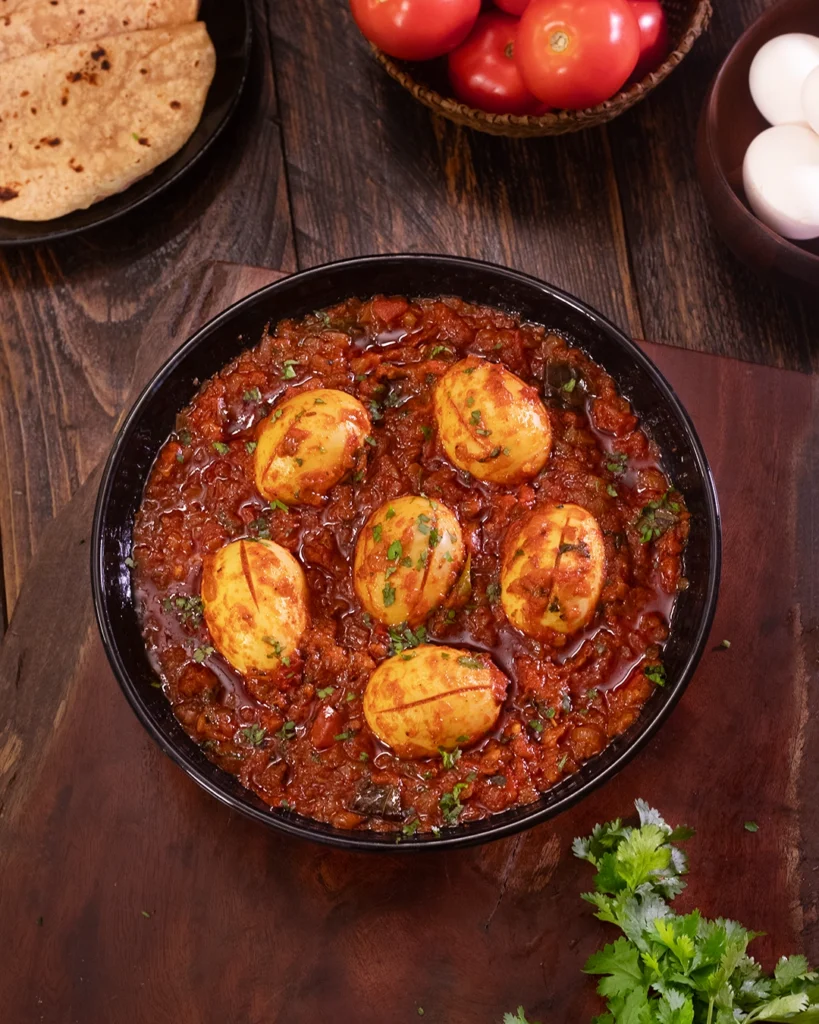

There’s something deeply comforting about eggs swimming in a thick, richly spiced gravy that’s been built from the ground up with whole spices, caramelized onions, and tomatoes cooked until they surrender all their sweetness. Egg masala curry is that dish—the one where tender boiled eggs soak up an aromatic, slightly tangy, warmly spiced curry that’s perfect for scooping up with rice, roti, or paratha. Each egg is infused with the flavors of ginger-garlic, curry leaves, and garam masala, while the gravy itself is a beautiful reddish-brown symphony of spices that coats everything it touches.
This is the kind of curry that works for everything—a quick weeknight dinner when you need protein fast, a weekend meal when you want something special without too much fuss, or even a make-ahead dish for meal prep since it tastes even better the next day. It’s economical, it’s filling, and it’s absolutely delicious. Serve it with steamed rice or warm rotis, and you’ve got a meal that satisfies on every level.
The Story Behind This Comforting Classic
Egg curry is beloved across India, with each region adding its own signature touch. From the Bengali dimer jhol with its lighter, more delicate gravy to the North Indian versions rich with cream and cashews, eggs have always been a practical protein that transforms beautifully in curry. This particular version leans into the aromatic, masala-forward style—where whole spices bloom in oil, onions caramelize deeply, and tomatoes break down into a rich base that’s both tangy and sweet.
What makes egg masala particularly special is its accessibility. Eggs are affordable, always available, and cook quickly. Yet when treated with the right spices and technique, they become something truly special—restaurant-quality food from humble ingredients. It’s the kind of dish that proves you don’t need expensive proteins to create something deeply satisfying and memorable.
Breaking Down Your Flavor Builders
- Eggs – The protein star, boiled until tender and scored with slits so they absorb all that gorgeous masala.
- Oil – The medium that blooms your whole spices and builds the flavor foundation.
- Cinnamon – Adds warmth and a subtle sweetness that rounds out the spice profile.
- Cardamom – Brings floral, aromatic notes that elevate the entire dish.
- Cloves – Intense, warming, slightly numbing spice that adds depth and complexity.
- Cumin Seeds – Earthy, slightly bitter in the best way, and essential for that authentic curry flavor.
- Onions – Finely chopped and caramelized until golden, they provide the sweet, rich base for your gravy.
- Green Chili – Slit to release their heat without overwhelming, they add fresh, bright spiciness.
- Pepper Powder – Brings a different kind of heat—more aromatic and pungent than chili powder.
- Ginger Garlic Paste – The aromatic backbone that adds pungency, warmth, and that unmistakable curry flavor.
- Tomatoes – Chopped tomatoes cook down to add body, tanginess, and natural sweetness to the gravy.
- Tomato Purée – One whole tomato blended smooth creates a silky, rich base that thickens the curry beautifully.
- Turmeric Powder – Golden color, earthy flavor, and all those anti-inflammatory benefits.
- Kashmiri Chilli Powder – Gorgeous red color with mild heat—all about looks and gentle warmth.
- Coriander Powder – Adds a slightly citrusy, sweet undertone that’s essential to balanced curry flavor.
- Salt – For seasoning everything properly so every component shines.
- Curry Leaves – Those aromatic leaves that make everything taste more authentically South Indian.
- Garam Masala – The final flourish of warming spices that brings everything together.
- Water – To create the gravy and adjust consistency to your liking.
- Coriander Leaves – Fresh, bright, herbaceous garnish that adds color and lightness.
How This All Comes Together
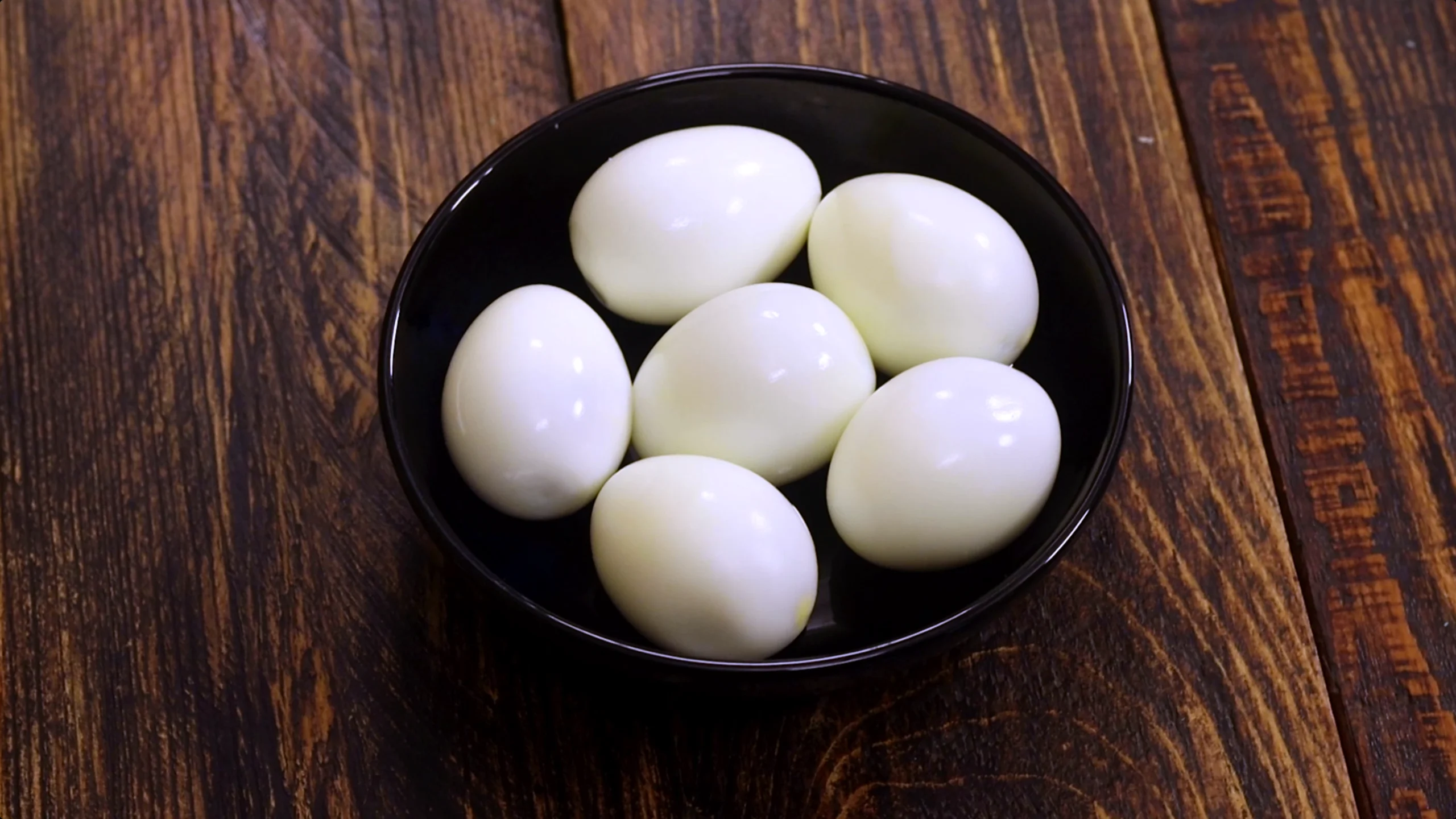
Start with your eggs. Boil them until they’re cooked through but still tender—not rubbery. Once they’re cool enough to handle, peel them carefully and make small slits all over each egg with a sharp knife. These slits are important—they allow the masala to penetrate the eggs so they’re not just sitting in gravy but actually absorbing all those beautiful flavors. Set your prepared eggs aside.
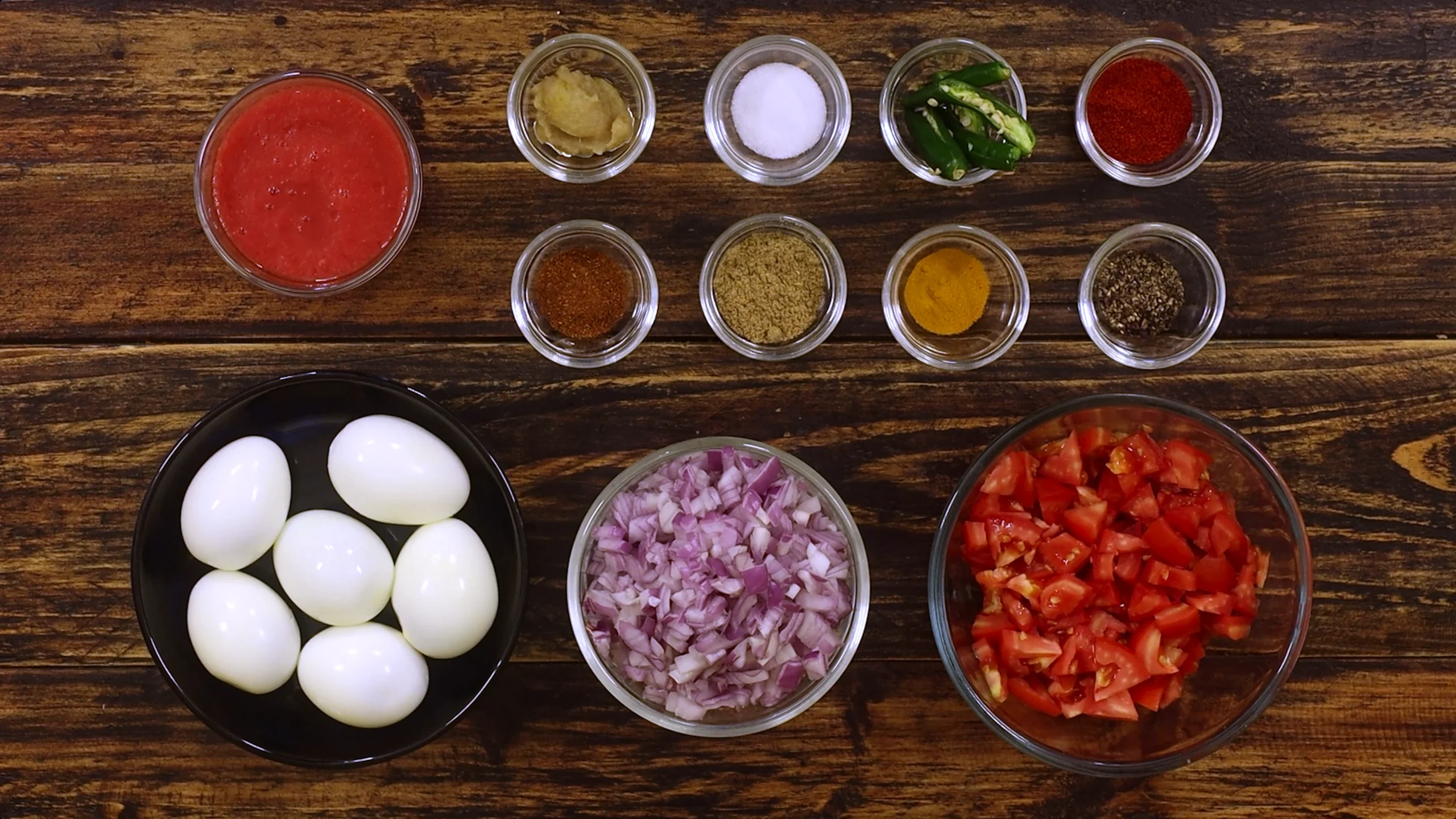
Get your prep work done before you start cooking because things move quickly once you’re at the stove. Finely chop your onions—you want small pieces that will break down and caramelize beautifully. Slit your green chilies lengthwise, and chop your tomatoes into rough pieces. Take that one tomato and blend it into a smooth purée—this is going to give your gravy body and silkiness.
Heat oil in a pan over medium heat. Once it’s shimmering, add your whole spices—cinnamon stick, cardamom pods, cloves, and cumin seeds. Let them sizzle and crackle in the hot oil for about 30 seconds to a minute. This step is crucial—you’re infusing the oil with all those aromatic compounds from the whole spices, which will flavor everything that follows. Your kitchen will start smelling incredible right about now.
💡 Pro Tip: Don’t rush the whole spice blooming. Those 30-60 seconds of sizzling in hot oil extract essential oils and aromatics that form the flavor foundation of your entire curry. Listen for the crackle and breathe in that aroma—that’s when you know it’s ready.
Add your finely chopped onions and slit green chilies to the fragrant oil. Sauté everything together, stirring frequently, until the onions turn golden brown. This takes patience—maybe 8-10 minutes—but it’s absolutely worth it. Golden-brown onions add a natural sweetness and depth that you simply can’t get by rushing this step.
Once your onions are beautifully caramelized, add your pepper powder and ginger-garlic paste. Stir everything together and cook for a minute or two until that raw, pungent smell of ginger-garlic disappears and is replaced by a mellow, cooked aroma.
Now pour in your tomato purée. Let it cook down, stirring occasionally, until you see the oil starting to separate from the mixture and come to the surface. This is the sign that your tomatoes are fully cooked and have broken down properly—usually takes about 5-7 minutes. Don’t skip this step; undercooked tomato purée can make your curry taste raw and sharp.
Add your chopped tomatoes now. Let them cook until they turn soft and mushy, breaking down into the gravy. This adds both texture and more tomato flavor—you’re building layers here.
💡 Pro Tip: Cooking tomatoes in stages—first the purée, then the chopped pieces—creates a more complex, layered tomato flavor rather than just a one-note tomato taste. It’s worth the extra step.
Time to add all your ground spices. Sprinkle in the turmeric powder, Kashmiri chili powder, coriander powder, and salt. Toss in a good handful of fresh curry leaves. Stir everything together and let the spices cook for about 30 seconds so they lose their raw edge and bloom in the oil.
Pour in a little water—about half a cup to start—cover your pan, and let everything simmer together for about 5 minutes. This allows all the flavors to meld and marry beautifully. After 5 minutes, add your garam masala and check your seasoning. Adjust salt if needed. If your gravy is too thick, add more water; if it’s too thin, let it simmer uncovered for a few minutes to thicken up.
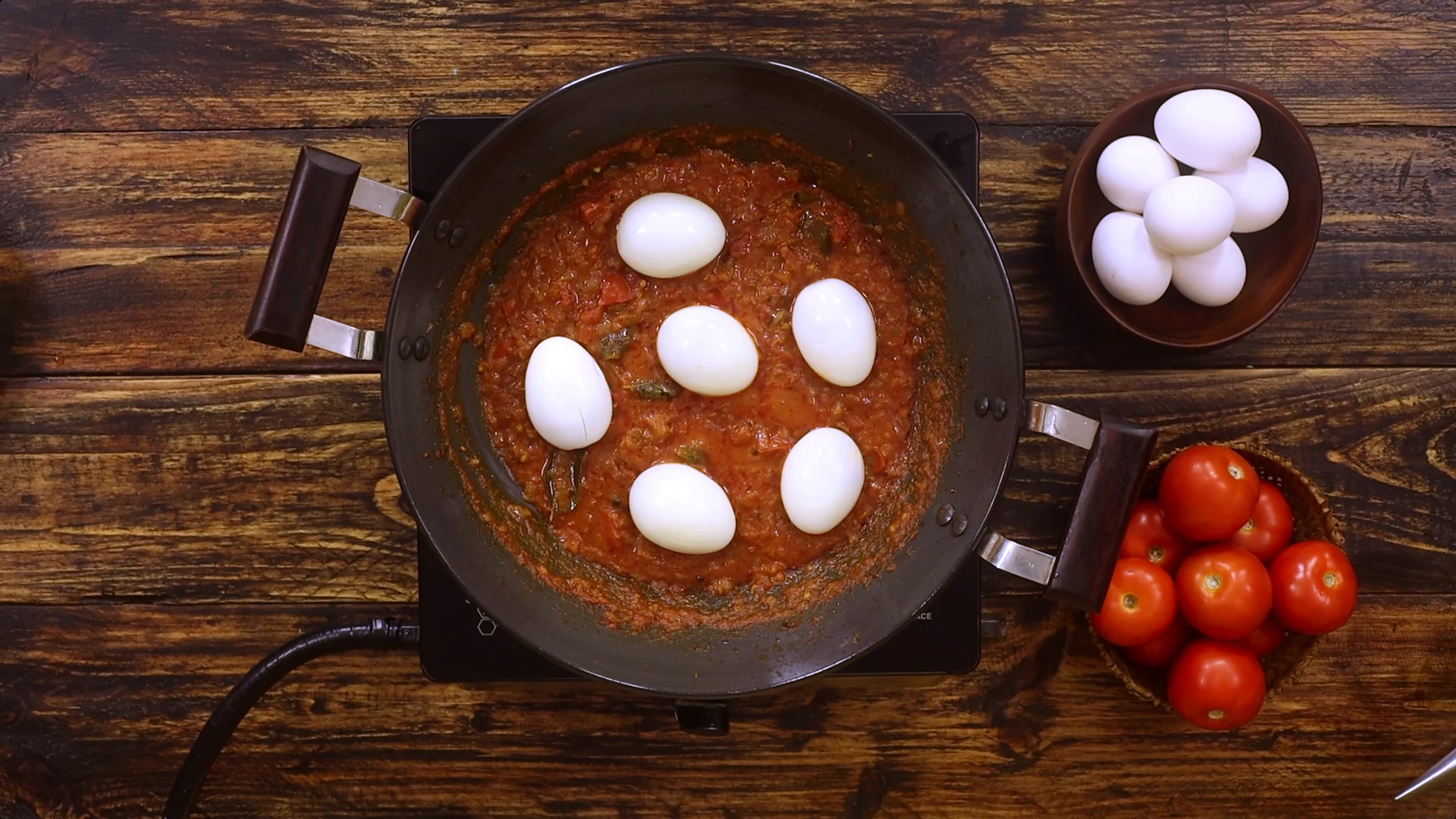
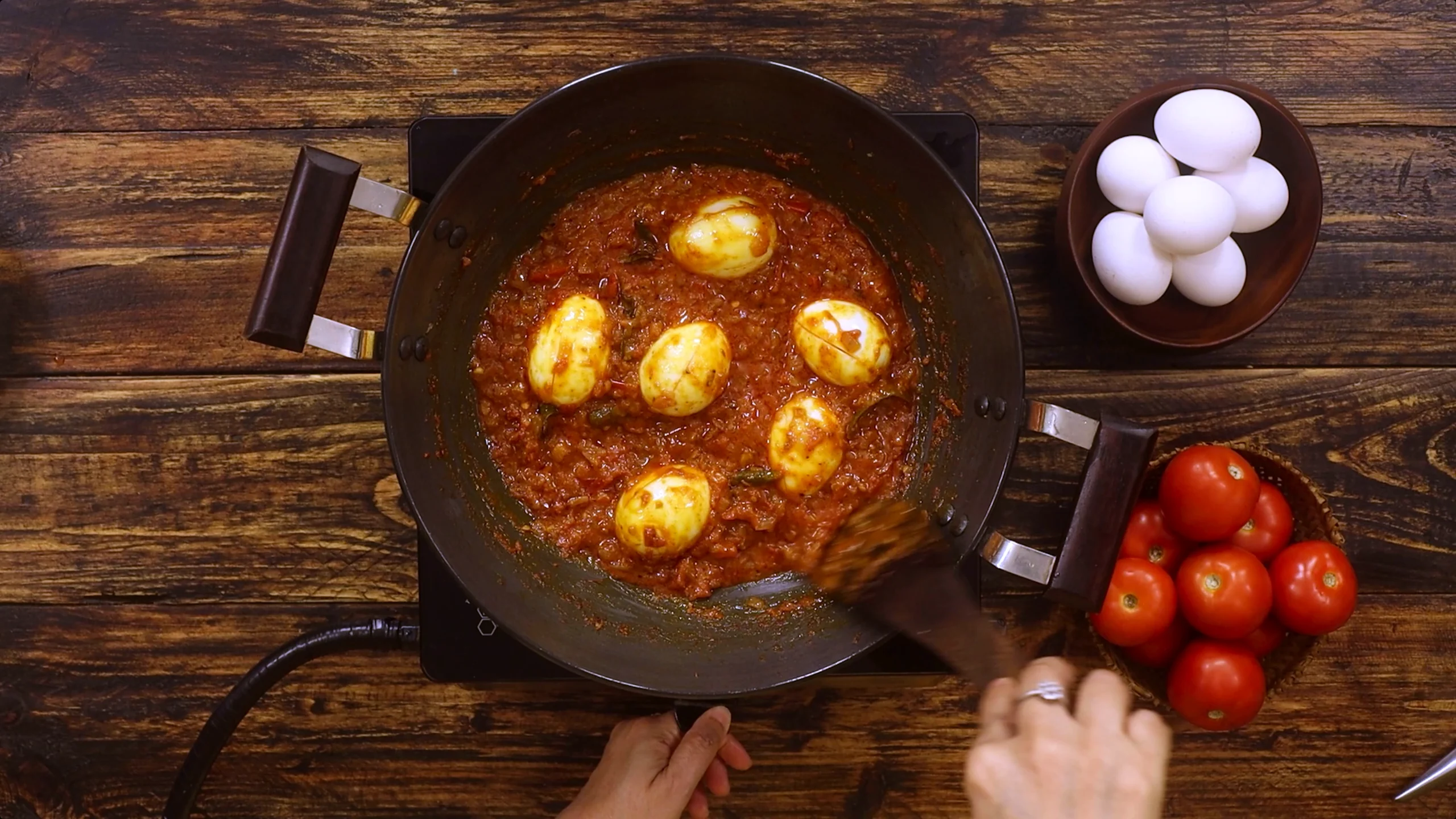
Now gently lower your prepared boiled eggs into this gorgeous, aromatic gravy. Make sure each egg gets coated well with the masala. Lower the heat and let the eggs simmer in the curry for another 5 minutes. This is when they soak up all those flavors through those slits you made earlier. The eggs should be well-coated and the gravy should have thickened slightly, clinging to everything beautifully.
Finally, sprinkle freshly chopped coriander leaves over the top as a garnish. That pop of green against the rich red-brown curry is not just pretty—it adds a fresh, herbaceous note that lifts the entire dish.
What Goes Along
Egg masala curry is incredibly versatile. It’s fantastic with steamed basmati rice or jeera rice, perfect with soft rotis or parathas for scooping up that delicious gravy, and even great with dosas or appam if you’re feeling adventurous. A simple onion raita or cucumber raita on the side adds cooling contrast. Some people love it with just plain curd. For a complete meal, add a simple vegetable stir-fry or salad on the side.
How to Serve
Serve egg masala hot, preferably in a shallow serving bowl so you can see those beautiful eggs nestled in the gravy. If serving with rice, you can either serve them separately or do the traditional thing and spoon the curry over a mound of rice. With rotis or parathas, serve the curry in a bowl on the side for dipping and scooping. Garnish with extra coriander leaves and maybe a wedge of lemon for those who want extra tanginess.
How to Store
Egg masala stores beautifully and often tastes even better the next day once all the flavors have had time to deepen and meld. Let it cool completely, then transfer to an airtight container and refrigerate for up to 3-4 days. The gravy might thicken in the fridge—just add a splash of water when reheating.
How to Reheat
Reheat gently on the stovetop over medium-low heat, adding a splash of water if the gravy has thickened too much. Stir occasionally and heat until warmed through—about 5-7 minutes. You can also microwave it, covered, for 2-3 minutes, stirring halfway through. The stovetop method is better because it prevents the eggs from becoming rubbery.
Common Substitutions
Don’t have Kashmiri chili powder? Use regular chili powder but reduce the quantity—or use paprika for color with a pinch of cayenne for heat.
No ginger-garlic paste? Freshly grate ginger and mince garlic—about an inch of ginger and 4-5 cloves of garlic. You can use regular onions if you don’t have access to shallots (the recipe calls for 3 onions, so just use medium-sized yellow or red onions).
No fresh curry leaves? You can skip them, though the flavor won’t be quite as authentic—dried curry leaves are better than nothing but not by much.
Packing for Parties / Bulk Preparation
Egg masala is perfect for meal prep and bulk cooking because it scales up easily and improves with time. You can make a double or triple batch without any issues—just use a larger pot. The curry actually benefits from sitting for a few hours or overnight, allowing all those spices to penetrate the eggs deeply.
For parties, make the entire curry a day ahead and refrigerate. Reheat gently before serving. This also frees you up to focus on other dishes on the day of your gathering. The curry holds well on a warming tray or in a slow cooker on low if you’re serving buffet-style.
If you’re packing this for a potluck or to take to work, pack the curry and eggs together in a leak-proof container. Pack rice or rotis separately to prevent sogginess. It travels well and tastes great even at room temperature, though warming it is always better.
Meal Prep Ideas
Egg masala is a meal prep champion. Make a big batch on Sunday and portion it into individual containers with rice or store the curry separately to pair with fresh rotis through the week. It keeps well for 3-4 days, giving you easy, protein-packed lunches or dinners.
You can hard-boil eggs in advance—they keep in the fridge for up to a week. Make the masala base ahead and add the eggs when you’re ready to eat. The gravy can even be frozen for up to a month—just thaw overnight in the fridge and reheat, adding freshly boiled eggs.
For variety through the week, use the same masala base but switch up what you add—try paneer one day, chickpeas another, mixed vegetables, or even chicken. The fundamental curry technique and spicing work beautifully with different proteins and add-ins, so you get variety without having to learn entirely new recipes.
Other Related Curries & Gravies you might like:-
- Tomato Curry — tangy tomato-based gravy with simple homely spices.
- Paneer Butter Masala — soft paneer cubes in a rich, buttery tomato-cream gravy.
- Paneer Masala (Dhaba Style) — robust restaurant-style paneer curry with bold spices.
- Malai Paneer (Creamy Paneer Gravy) — silky, mildly spiced cream-based paneer gravy.
- Matar Korma — mild, aromatic korma with green peas and creamy sauce.
- Cauliflower Curry — South-Indian style cauliflower in a spiced gravy.
- Brinjal Lobia Curry — aubergine and beans cooked in a flavorful, slightly tangy gravy.
- Aloo Baingan Ke Sabji — potato & brinjal curry with homely spices and gravy.
- Aloo Palak Sabzi — spinach and potato in a mildly spiced, saucy curry.
- Dal Fry — tempered lentil gravy — comforting and pairs well with egg or rice.
- Restaurant Style Dal Makhani — rich, buttery black-lentil gravy for a decadent meal.
- Afghani Chicken Curry — creamy, mildly spiced meat gravy (good if you also suggest non-veg pairings).
Tomato Egg Curry
Description
Tomato Egg Curry is a flavorful, spicy, and comforting Indian-style egg curry made with boiled eggs, fresh tomatoes, and aromatic spices. The rich, tangy tomato gravy pairs perfectly with chapathi, rice, or dosa, making it a versatile dish for lunch or dinner. This recipe is quick, easy, and bursting with homely flavors—just like something your mom would make on a busy day. Perfect for beginners and seasoned cooks alike!
Ingredients
Instructions
Prep Work
-
Boil & Peel Eggs
Boil & Peel Eggs – Boil the eggs, peel them, and make small slits so they absorb the masala.
-
Chop Ingredients
Chop Ingredients – Finely chop onions, slit green chilies, and chop tomatoes.
-
Make Tomato Purée
Make Tomato Purée – Blend one tomato into a smooth purée.

Method:
-
Temper the Whole Spices for Aroma
Heat oil in a pan. Add whole spices—cinnamon, cardamom, cloves, and cumin seeds. Let them crackle and release their aroma.
-
Sauté Onions and Green Chilies Until Golden
Add the chopped onions and green chilies. Sauté until onions turn golden brown.
-
Add Pepper Powder and Ginger-Garlic Paste
Mix in pepper powder and ginger-garlic paste. Stir well until the raw smell goes away.
-
Cook the Tomato Purée
Pour in the tomato purée and cook until the oil starts separating.
-
Soften the Chopped Tomatoes
Now, add the chopped tomatoes and let them turn soft and mushy.
-
Add Spice Powders and Curry Leaves
Time for spices! Sprinkle turmeric, Kashmiri chili powder, coriander powder, and salt. Toss in some fresh curry leaves for extra flavor.
-
Simmer with Water, Garam Masala, and Seasoning
Pour a little water, cover, and let it simmer for about 5 minutes. add some garam masala and check salt and other seasoning.Adjust consistency if needed.
-
Coat the Boiled Eggs in the Masala
Gently drop in the boiled eggs and coat them well in the masala. Let them soak in all the flavors for another 5 minutes on low heat.
-
Garnish and Serve
Finally, sprinkle freshly chopped coriander leaves.
Equipment

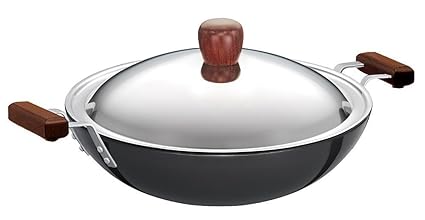

Affiliate Disclosure: This post contains Amazon affiliate links, i.e., when you buy any product using the links below, we get commissions. but it doesn’t cost you anything extra. If you do purchase any product using the given links, we thank you in advance!
Nutrition Facts
Servings 3
- Amount Per Serving
- Calories 280kcal
- % Daily Value *
- Total Fat 20g31%
- Saturated Fat 3g15%
- Cholesterol 200mg67%
- Sodium 700mg30%
- Total Carbohydrate 12g4%
- Dietary Fiber 3g12%
- Sugars 4g
- Protein 14g29%
- Calcium 80 mg
- Iron 3 mg
* Percent Daily Values are based on a 2,000 calorie diet. Your daily value may be higher or lower depending on your calorie needs.