


There’s something magical about tamarind rice—the way its tangy-sweet curry clings to every grain, the warm roasted spice aroma that fills your kitchen, and that perfect balance of earthy lentils and fiery red chilies. This isn’t just rice; it’s a flavor bomb wrapped in golden-brown goodness. The texture is what makes it special: soft, fluffy rice coated in a thick, glossy tamarind paste, with little bursts of crunch from roasted peanuts and dal. It’s the kind of dish that tastes even better the next day, making it perfect for lunchboxes, picnics, temple offerings, or those days when you need comfort food that doesn’t ask for much effort.
In South Indian homes, tamarind rice (or puliyogare, as it’s called in Karnataka, or pulihora in Andhra Pradesh) holds a special place. It’s travel food, festival food, and temple prasadam all rolled into one. Historically, this dish became popular because it stays fresh without refrigeration—the tamarind’s natural acidity acts as a preservative. You’ll find variations across every South Indian state, each family adding their own twist with different spice blends or jaggery levels. My earliest memories of tamarind rice involve long train journeys with my grandmother, who’d pack it in steel tiffins, and somehow it tasted better eaten while watching the countryside blur past the window.
The Ingredients That Make It Sing
For the Masala Powder, you’ll need coriander seeds (they bring a citrusy warmth), chana dal and urad dal (for nuttiness and body), peppercorns (subtle heat), fenugreek seeds (that slightly bitter, maple-like depth), sesame seeds (creamy richness), and red chilies (the backbone of all that heat).
For the Tamarind Curry, tamarind is obviously the star—it gives that mouth-puckering tang that defines the dish. Oil carries all the flavors, while more chana dal, urad dal, and peanuts add texture and toasted notes. Mustard seeds pop and crackle, bringing their sharp bite. Red chilies layer in more heat, asafoetida powder adds that mysterious umami funk, and turmeric powder gives everything a golden glow and earthy base.
For the Rice, just cooked rice—preferably day-old or slightly cooled, so it doesn’t turn mushy when you mix it with that intensely flavored curry.
How It All Comes Together
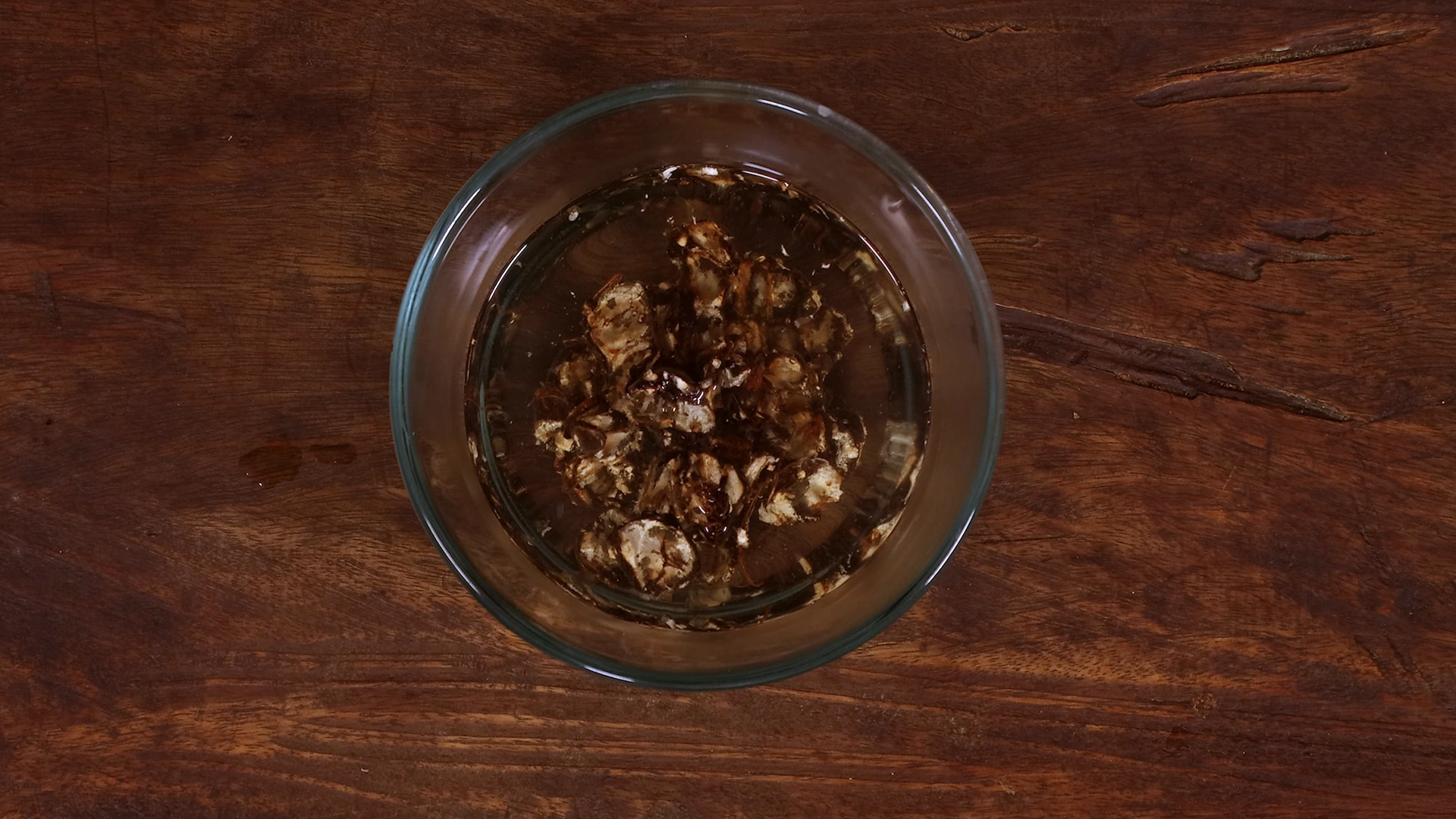
Let’s start with the prep work. Take your tamarind and soak it in hot water for about 10 to 15 minutes—this softens it up so you can squeeze out all that tangy pulp. If you’re not using leftover rice, cook your rice now and let it cool slightly. You want the grains separate, not clumpy.
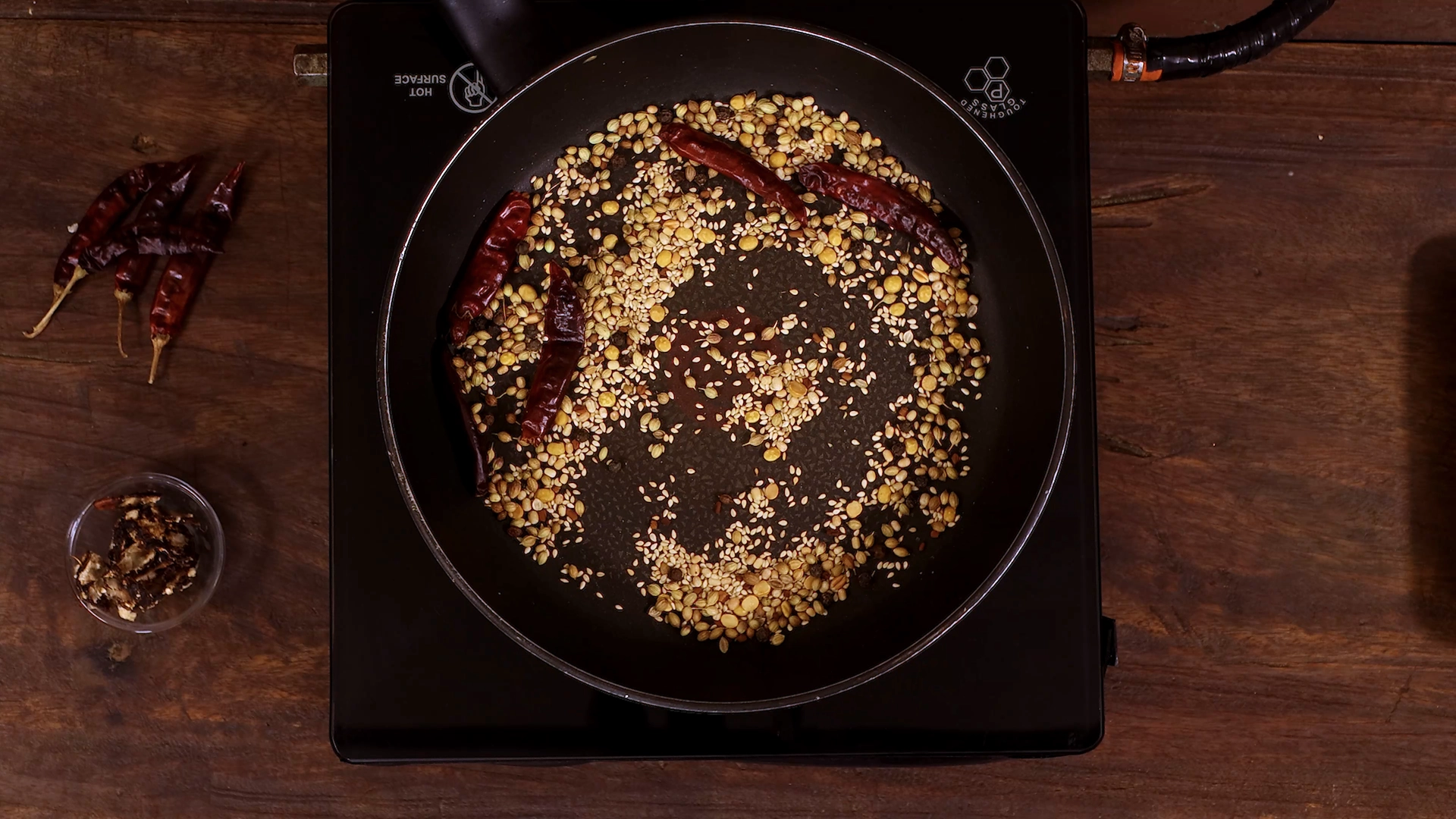
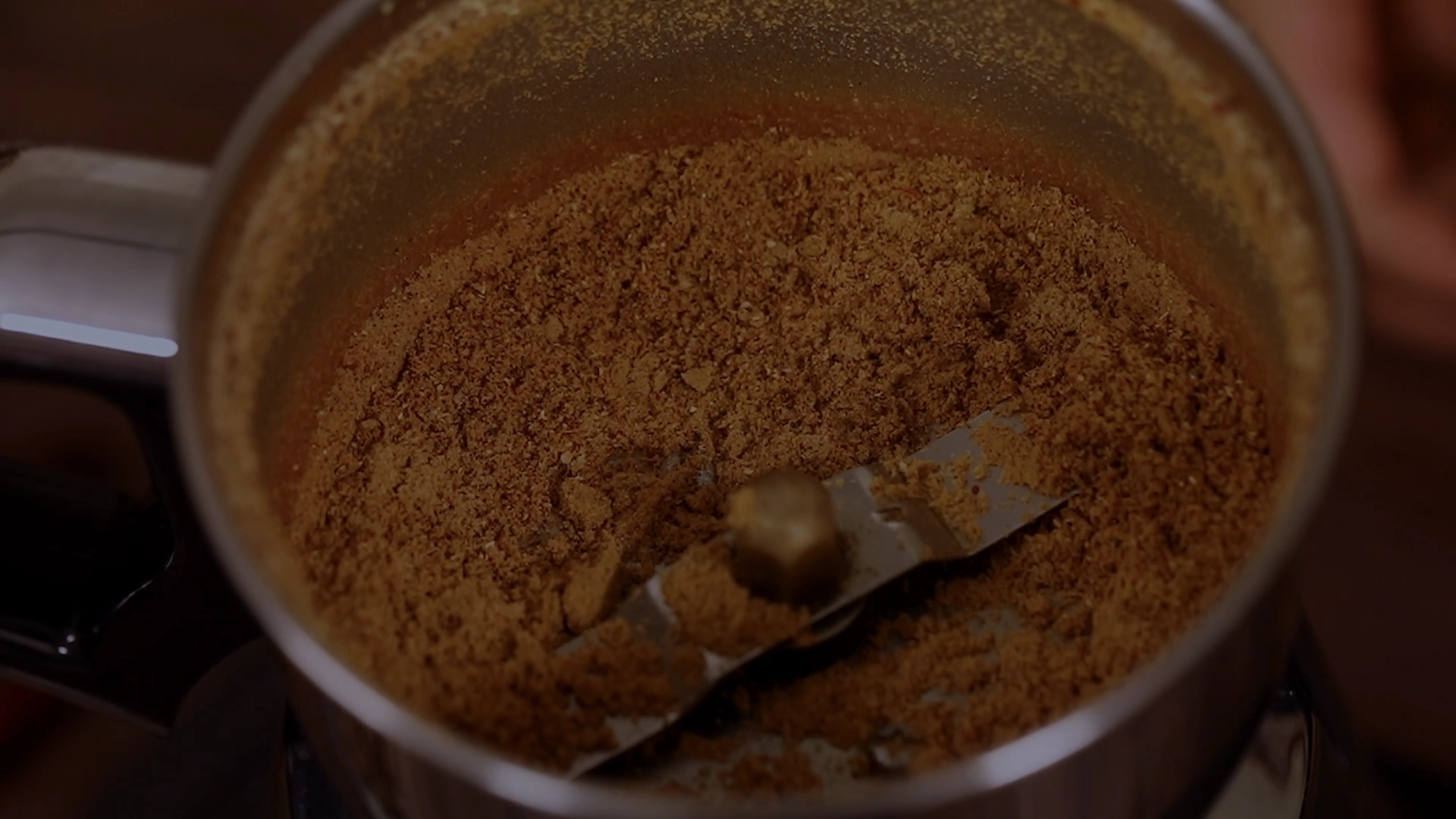
Now for the masala powder, which is where the magic really begins. Heat up a pan on medium flame and toss in your coriander seeds, chana dal, urad dal, peppercorns, and fenugreek seeds. Let them roast gently—you’ll start to smell that toasty, almost coffee-like aroma. Add the sesame seeds and let everything roast for a few more seconds until it’s all turning golden. Throw in those red chilies and keep roasting until everything’s a beautiful brown. The key here is patience; don’t rush it or you’ll end up with bitter, burnt spices. Once it’s done, slide everything onto a plate and let it cool completely. Then grind it all together with the asafoetida powder into a fine powder. This is your secret weapon—the soul of your tamarind rice.
💡 Pro Tip: Make a big batch of this masala powder and store it in an airtight container. It’ll stay fresh for months and cut your cooking time in half next time you crave tamarind rice.
Next, let’s make the tamarind curry. Using the same pan (why dirty another one?), add your oil and heat it up. Toss in the chana dal, urad dal, and peanuts, and roast them for about 2 minutes until they’re golden and crispy—this is where you build that addictive crunch. Now add the mustard seeds and watch them splutter and dance, then throw in the red chilies, asafoetida powder, and curry leaves for that classic South Indian tempering.
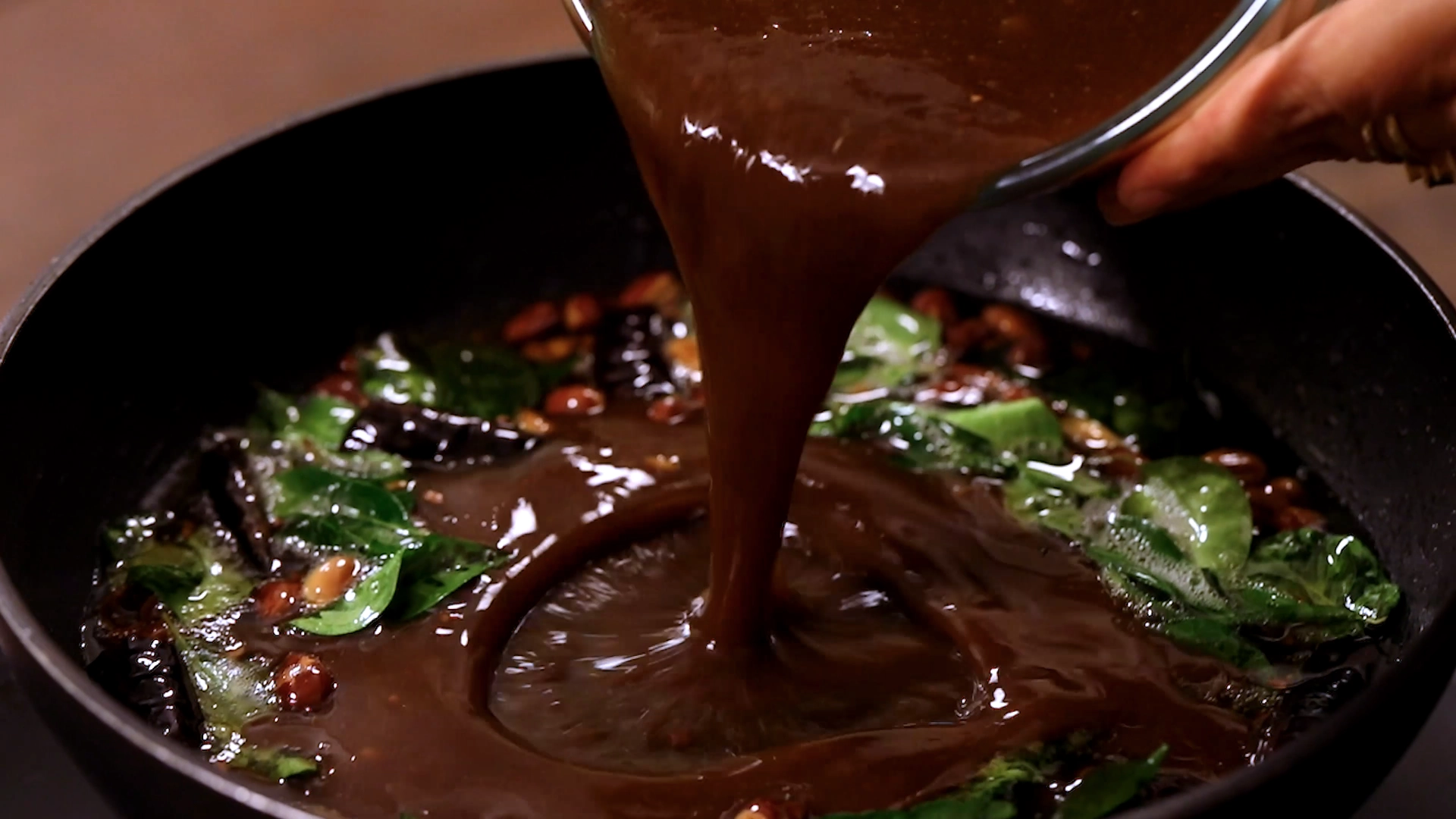
Squeeze out all that tamarind pulp you soaked earlier and add it to the pan. Stir it around so it mingles with all those roasted, tempered ingredients. Sprinkle in the turmeric powder and rock salt, mix everything well, and let it cook for about 10 minutes on medium heat. The raw tang of the tamarind needs time to mellow out and marry with the spices.
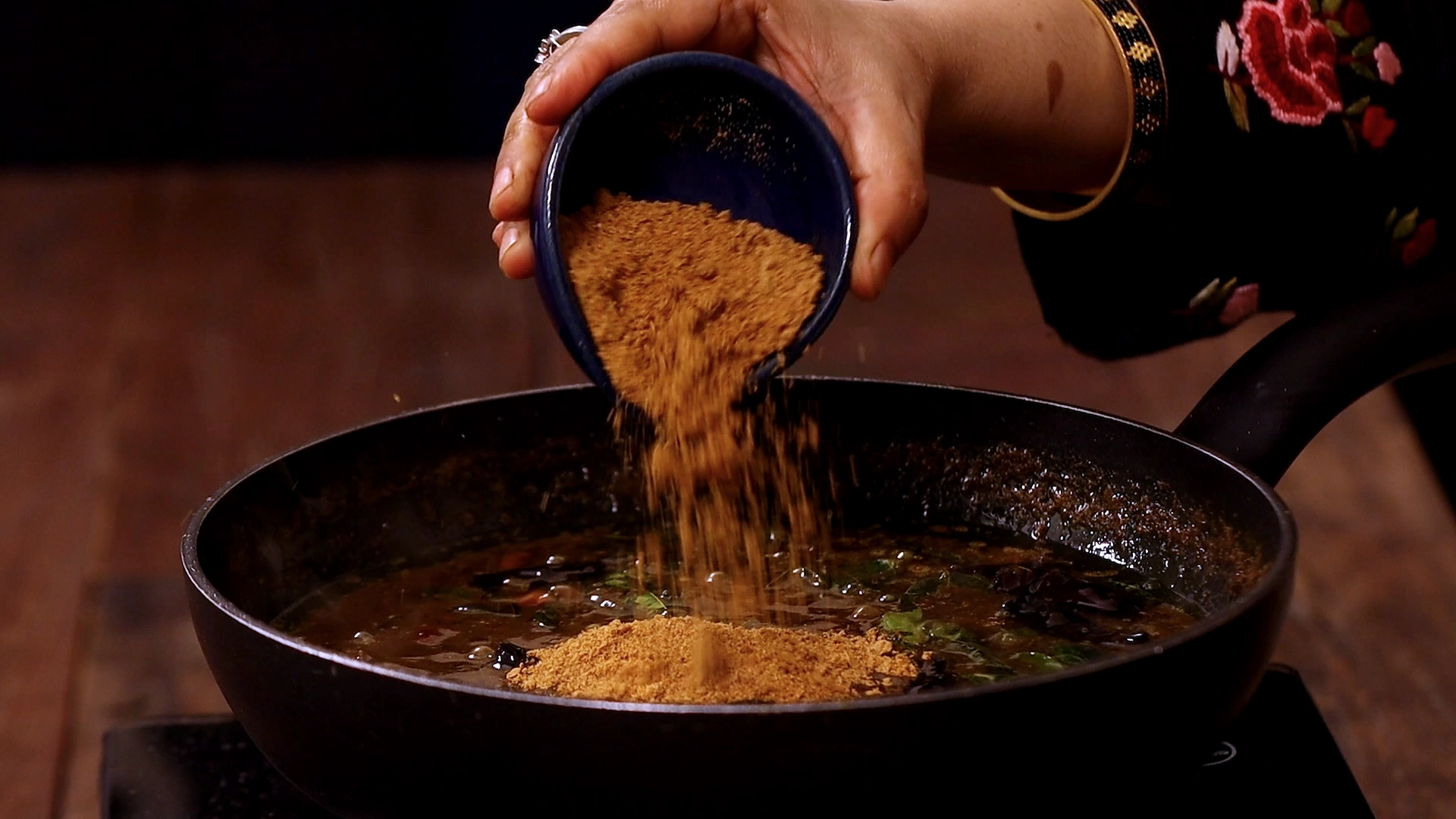
Now comes the balancing act—add jaggery powder (this cuts the sourness and adds a subtle sweetness) and your freshly ground masala powder. Mix it all together and cook for another 5 minutes. Taste it now—this is your chance to adjust. Too sour? Add more jaggery. Not enough punch? A bit more salt or masala powder. The curry should be thick, glossy, and intensely flavored because you’re going to be mixing it with plain rice.
💡 Pro Tip: Don’t add all the curry to your rice at once. Start with half, mix it well, taste, and add more if needed. You can always add more, but you can’t take it away.
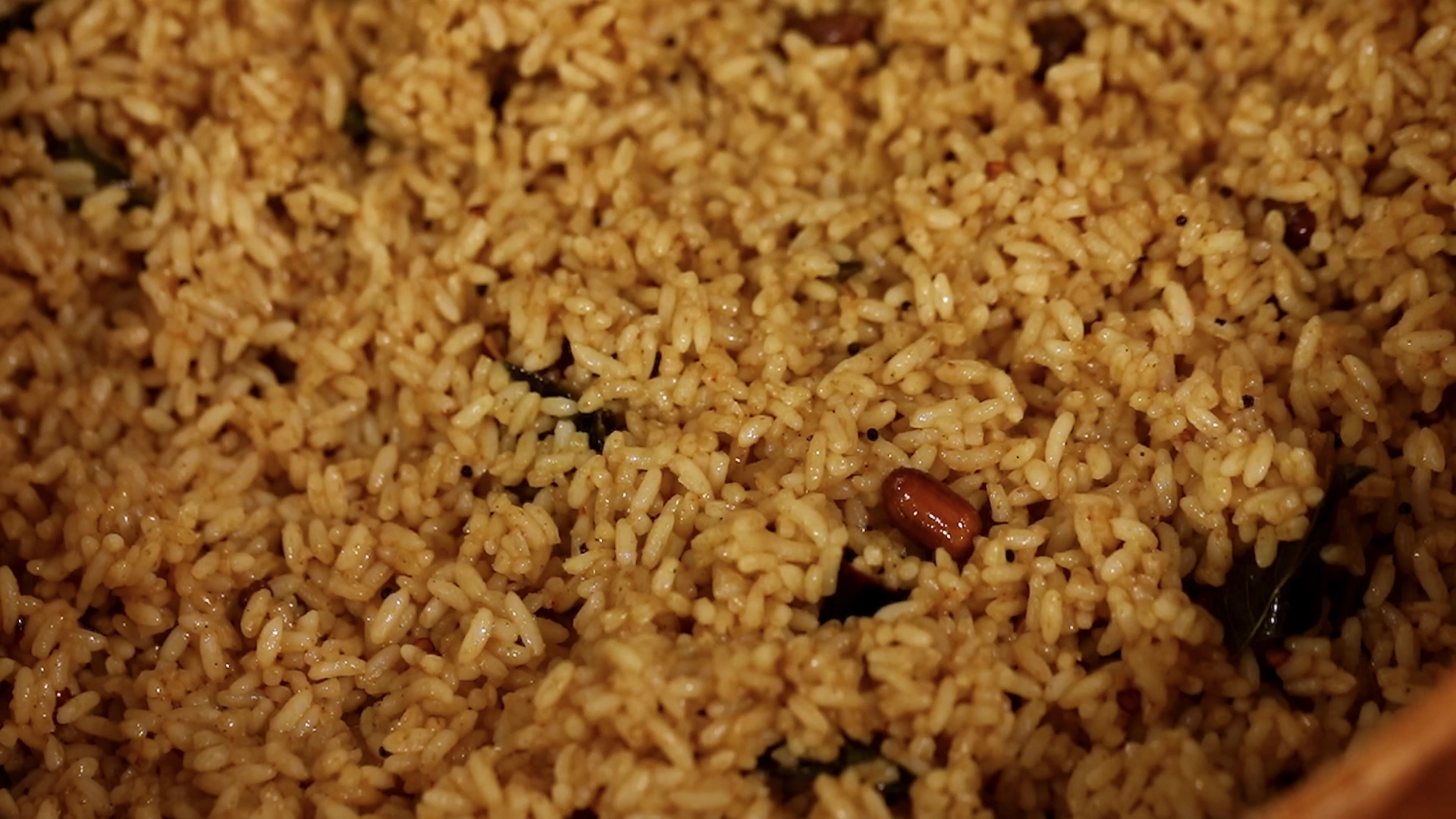
Once your curry is perfect, take the amount you need and mix it gently with your cooked rice. Use a light hand here—you don’t want to break the rice grains. Now here’s the secret that makes restaurant-style tamarind rice: let it sit for about 30 minutes. This resting time lets the rice absorb all those beautiful flavors and the whole dish comes together in a way that’s just not the same if you eat it immediately.
Any leftover tamarind paste? Don’t waste it—spoon it into a clean glass jar and refrigerate it. It’ll keep for weeks, and you can whip up fresh tamarind rice anytime by just mixing it with rice.
What Goes Along
Tamarind rice is pretty self-sufficient, but it loves company. Crispy papad is the classic partner—that crunch against the soft, tangy rice is perfection. A simple cucumber raita or plain yogurt on the side helps cool down the spice. Some people love it with potato chips (trust me, it works) or banana chips for extra crunch. A side of pickle—mango or lime—amps up the flavors even more.
How to Serve
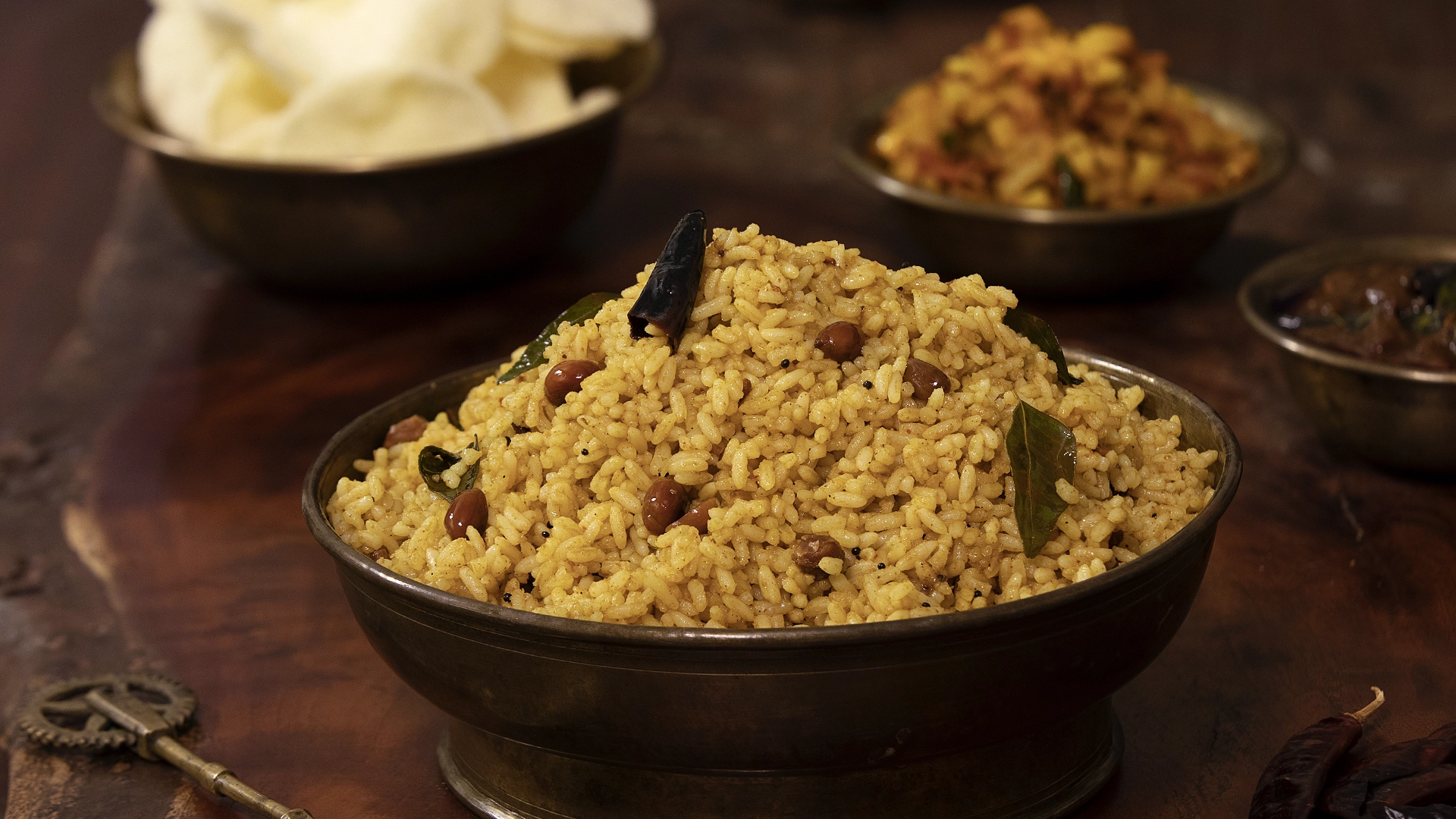
Serve your tamarind rice at room temperature or slightly warm—never piping hot. Pile it on a plate, crumble some papad over the top, maybe add a dollop of ghee if you’re feeling indulgent, and dig in. Garnish with some roasted cashews or fried curry leaves if you want to make it fancy.
How to Store
Tamarind rice stores beautifully, which is why it’s such beloved travel food. Keep it in an airtight container in the fridge for up to 3 days. The separate tamarind curry paste will last up to 2 weeks refrigerated, even longer if you freeze it.
How to Reheat
Room temperature is honestly the best way to eat tamarind rice—it’s designed for that. But if you must reheat, do it gently. Microwave for 30-40 seconds, or warm it in a pan with a tiny splash of water or oil to loosen it up. Don’t overheat or the rice will dry out.
Common Substitutions
- No chana dal or urad dal? Use split yellow moong dal, though the flavor won’t be quite as nutty.
- Out of jaggery? Brown sugar works in a pinch.
- Can’t find curry leaves? Skip them rather than substituting—nothing really mimics that flavor.
- If tamarind paste is hard to find, use tamarind concentrate (you’ll need less)
Packing for a Party / Bulk Preparation
Tamarind rice is a meal-prepper’s dream. Make a big batch of the masala powder and tamarind curry on Sunday, and you’ve got quick lunches for the whole week. Just mix the curry with freshly cooked rice each day, or mix it all at once and portion it out. It packs beautifully in lunchboxes—no need to heat it up, and it won’t make a mess or smell up your office. For parties, make the curry a day ahead, then mix it with rice the morning of your event. It actually improves with time.
Other Related Recipes You Might Like:-
- Masala Chitranna (Lunch Rice) — tangy, spiced Karnataka-style lemon rice (Chitranna) perfect as a lunchbox favorite.
- Onion Rice — fragrant rice cooked with caramelized onions and mild spices.
- One-Pot Lobia Rice Recipe — hearty black-eyed peas rice cooked in one pot for a comforting meal.
- Vatha Kulambu Rice — tangy, podi-style rice made with vatha kulambu (sun-dried tangy mix).
- Leftover Rice Chapati — clever way to use leftover rice by turning it into soft chapatis.
- Palak Rice — nutritious spinach-flavored rice with a mild, earthy taste.
- Mexican Rice — tomato-spiced, vibrant Mexican-style rice that adds a different flavor profile.
Tamarind Rice
Description
Tamarind Rice, also known as Puliyodarai or Pulihora, is a tangy, spicy South Indian dish made by mixing cooked rice with a flavorful tamarind paste. The paste is prepared by simmering tamarind pulp with aromatic spices like mustard seeds, dried red chilies, curry leaves, turmeric, and asafoetida, along with roasted sesame seeds and a touch of jaggery for subtle sweetness. Often enhanced with crunchy peanuts or cashews, this dish is known for its vibrant balance of sour, spicy, and savory notes. Tamarind Rice is not only delicious but also travels well, making it a popular choice for lunchboxes, festivals, and temple offerings.
Ingredients
To Make Masala Powder
To Make Tamarind Curry
To make Tamarind Rice
Instructions
Prep Work
-
Soak the tamarind
Soak the tamarind in hot water for 10-15 minutes and extract the pulp.
-
Cook the rice
Cook the rice (if not using leftover rice) and set it aside to cool slightly before mixing it with the tamarind curry.
Making the Masala Powder
-
Roasting the Whole Spices
Start by heating a pan on medium heat. Add the coriander seeds, chana dal, urad dal, peppercorns, and fenugreek seeds. Roast them lightly.
-
Adding Sesame and Chilies
Toss in the white sesame seeds, and let it all roast for a few more seconds. Add the red chilies and continue roasting until everything turns golden brown.
-
Grinding the Masala
Once the spices are well-roasted, transfer them to a plate and let them cool completely. Now, place them in a mixer jar, add the asafoetida powder, and grind it all into a fine powder. Set this aside.
Making the Tamarind Curry
-
Heating the Oil
In the same pan, add oil and heat it up.
-
Roasting Dal and Peanuts
Add chana dal, urad dal, and peanuts. Roast them for about 2 minutes until they're nice and crisp.
-
Tempering with Spices
Toss in mustard seeds, red chilies, and a pinch of asafoetida powder, followed by curry leaves. Give it a quick sauté.
-
Adding Tamarind Pulp
Squeeze the pulp out of the tamarind and add the puree to the pan. Stir it all together.
-
Spicing the Curry
Now, sprinkle in turmeric powder, rock salt, and mix everything well. Let it cook for about 10 minutes on medium heat.
-
Final Flavoring
Add jaggery powder and the ground masala powder. Mix it again and cook for another 5 minutes.
-
Adjusting Taste
Taste and adjust seasoning if necessary.
Bringing It All Together
-
Mixing with Rice
Once your tamarind curry is ready, take the required amount and mix it with freshly cooked rice. Let the rice sit for about 30 minutes for all the flavors to come together.
-
Storing Leftovers
You can store any leftover tamarind paste in a glass jar and refrigerate it for future use.
-
Serving
Serve the tamarind rice after it’s rested, and pair it with crispy papads for that extra crunch!
Equipment


Affiliate Disclosure: This post contains Amazon affiliate links, i.e., when you buy any product using the links below, we get commissions. but it doesn’t cost you anything extra. If you do purchase any product using the given links, we thank you in advance!
Nutrition Facts
Servings 4
- Amount Per Serving
- Calories 450kcal
- % Daily Value *
- Total Fat 18g28%
- Saturated Fat 5g25%
- Sodium 600mg25%
- Total Carbohydrate 65g22%
- Sugars 8g
- Protein 10g20%
* Percent Daily Values are based on a 2,000 calorie diet. Your daily value may be higher or lower depending on your calorie needs.

User Reviews
keep adventure with New ideas