



Ever had one of those meals where simple rice + fish curry = pure happiness?
That’s exactly what this (Vanjaram) Seer Fish Curry delivers. It’s spicy, tangy, aromatic, and tastes even better the next day, just like a proper South Indian home-style fish curry should.
If you think fish curry needs hours of slow cooking, let me stop you right there.
This version comes together in about 30 minutes, and the flavours? Deep, bold, and totally restaurant-worthy.
A Quick Note on Seer Fish
Seer fish, also known as Vanjaram in Tamil, Surmai in Hindi, and King Fish in English, is one of the most popular fish used in South Indian coastal cooking.
Why everyone loves it:
- Firm flesh that doesn’t break easily
- Absorbs masala beautifully
- Mild fishy smell compared to other varieties
Across Tamil Nadu and Kerala, you’ll find dozens of variations of this curry, some with coconut, some with roasted spices, and many (like this one) with a tamarind and shallot base cooked in gingelly oil for that classic village-style taste.
Why This Fish Curry Works So Well
This recipe hits all the right notes:
- Spicy from red chilli powder and green chillies
- Tangy from thick tamarind extract
- Sweet depth from loads of shallots and garlic
- Authentic aroma from gingelly (sesame) oil
And the best part?
It’s:
- Weeknight-friendly
- Great for meal prep
- Naturally gluten-free
- Protein-rich and filling
Ingredient Breakdown:
Let’s talk about what makes this curry so addictive.
Seer Fish + Simple Marinade
Just turmeric, salt, and chilli powder.
No over-marinating, no curd, no fancy stuff — because you want the fish to taste like fish, not like masala paste.
Gingelly Oil (Sesame Oil)
This is non-negotiable for authentic flavor. It gives:
- Smoky aroma
- Slight bitterness that balances tamarind
Shallots + Garlic
Shallots melt into the gravy and add natural sweetness.
Garlic gives depth and balances the heat.
This combo is the backbone of traditional fish curries.
Tomatoes + Tamarind
Tomatoes add body, tamarind adds punch. Together, they create that thick, glossy gravy that coats rice perfectly.
How the Curry Comes Together
You start by lightly coating the fish with turmeric, salt, and chilli powder and keeping it aside while you build the gravy. This way, the fish absorbs flavour but stays tender.
In a wide pot (a mud pot if you have one, it really does make a difference), gingelly oil goes in first. Once it heats up, mustard and fenugreek seeds crackle, releasing a nutty aroma that tells you you’re on the right track.
Next comes the real flavour base, chopped shallots, whole shallots, and whole garlic cloves. You don’t rush this part. Let them slowly soften and turn glossy. This step builds sweetness that balances all the spice later.
Green chillies and curry leaves go in, followed by ginger-garlic paste. Once that raw smell disappears, tomatoes are added and cooked till they collapse into the oil.
Now comes the masala chilli powder, coriander powder, and rock salt, stirred into the softened tomato base. When tamarind puree and water are added, the gravy suddenly looks and smells like proper fish curry.
You let this boil for a few minutes so the raw spice taste cooks out. Only then do the fish pieces go in.
And here’s the key part, no stirring with ladles. Just gently swirl the pot so the fish doesn’t break. Ten minutes on medium-low heat later, the oil starts floating on top and you know the curry is ready.
A handful of coriander leaves, and that’s it.
Pro Tip 💡: If you substitute with regular oil, the curry will still work but you’ll miss that classic South Indian fish curry smell that hits you the moment you lift the lid.
What Makes This Recipe Perfect for Busy Days
This curry is a lifesaver because:
- No grinding required
- One-pot cooking
- Works with fresh or slightly frozen fish
- Tastes even better the next day
It’s perfect when:
- You want something comforting after work
- Guests drop in unexpectedly
- You’re bored of chicken and paneer curries
Diet & Health Notes
- High in protein
- Rich in omega-3 fats (great for heart health)
- Naturally dairy-free
- Gluten-free
Lighter Version: Use slightly less oil and reduce shallots by a small amount. Flavor stays strong, calories drop a bit.
What Goes Best with Seer Fish Curry
This curry is extremely versatile.
Best pairings:
- Hot steamed rice (absolute classic)
- Soft idiyappam or dosa (for next-day leftovers)
- Appam or plain chapati (surprisingly good)
Add-ons that elevate the meal:
- Cabbage poriyal
- Raw mango salad
- Simple rasam after the meal
Serving for Guests or Family Lunches
For weekend lunches or small gatherings:
- Make the curry 2–3 hours ahead
- Reheat gently before serving
- Flavour actually improves as it rests
Serve in:
- Clay bowls for a traditional feel
- Wide shallow dishes so fish pieces stay intact
Common Pitfalls:-
Overcooking the Fish
Seer fish cooks fast. More than 10–12 minutes, and it turns rubbery.
Stirring Too Much
Always swirl the pot instead of using a spoon once fish is added.
Weak Tamarind Water
This curry needs thick tamarind extract. Watery tamarind = flat taste.
How to Store Seer Fish Curry
Fish curry actually tastes better the next day.
- Store in an airtight container
- Refrigerate up to 2 days
- Keep fish pieces submerged in gravy to avoid drying
Avoid freezing; the texture of fish changes after thawing.
How to Reheat Fish Curry Properly
Never microwave if you can avoid it.
Best method:
- Reheat on the stove on low flame
- Add a few spoons of water if the gravy has thickened
- Gently shake the pan instead of stirring
This keeps fish pieces intact and soft.
Substitutions If You Don’t Get Seer Fish
You can use:
- Pomfret
- Shark (sura meen)
- Tilapia (gravy will be slightly thinner)
Avoid very delicate fish like sole — they may break in this style of curry.
Other Related Recipes You might like:-
- Nellore Chepala Pulusu (Fish Curry) – tangy and spicy Andhra-style fish curry with bold flavours.
- Fish Fillet with Coconut Cream Sauce – rich, mildly spiced fish dish with coastal coconut notes.
- South Indian Chicken Soup – peppery, comforting soup often served alongside fish meals.
- Prawn Biryani (Pressure Cooker) – flavourful seafood biryani perfect for special lunches.
- Andhra Green Chilli Chicken – spicy Andhra dish for lovers of bold coastal heat.
- Buttermilk Rasam – light, soothing rasam that balances spicy fish curries.
- Temple Style Curd Rice – cooling rice dish commonly paired after fish gravies.
- Raw Mango Chutney – tangy chutney that enhances seafood meals.
Seer Fish Curry
Description
This seer fish curry is a simple, comforting home-style dish that comes together with everyday ingredients and loads of flavor. Soft pieces of vanjaram fish simmer in a spicy, tangy tamarind gravy made with shallots, tomatoes, and aromatic spices. There’s no deep frying, just slow cooking that lets the fish soak up all the goodness. It’s perfect with hot steamed rice and makes a great choice for both lunch and dinner. If you love bold, homely flavors, this is one recipe you’ll really enjoy making and sharing with your family.
Ingredients
To marinate fish
To make seer fish curry
Instructions
Prep work
-
Clean the fish
Wash and clean the seer fish pieces properly and keep them ready
-
Marinate the fish
Add turmeric powder, salt and chilli powder to the fish and mix gently so all pieces are coated
-
Chop the veggies
Chop shallots and tomatoes, slit green chillies and peel garlic cloves -
Prepare tamarind
Keep thick tamarind puree ready before starting to cook
Method
-
Heat the oil
Add gingelly oil to a mud pot and heat it
-
Add whole spices
Add mustard seeds and fenugreek seeds and let them splutter -
Add shallots and garlic
Add chopped shallots, whole shallots and garlic cloves and saute for 10 minutes.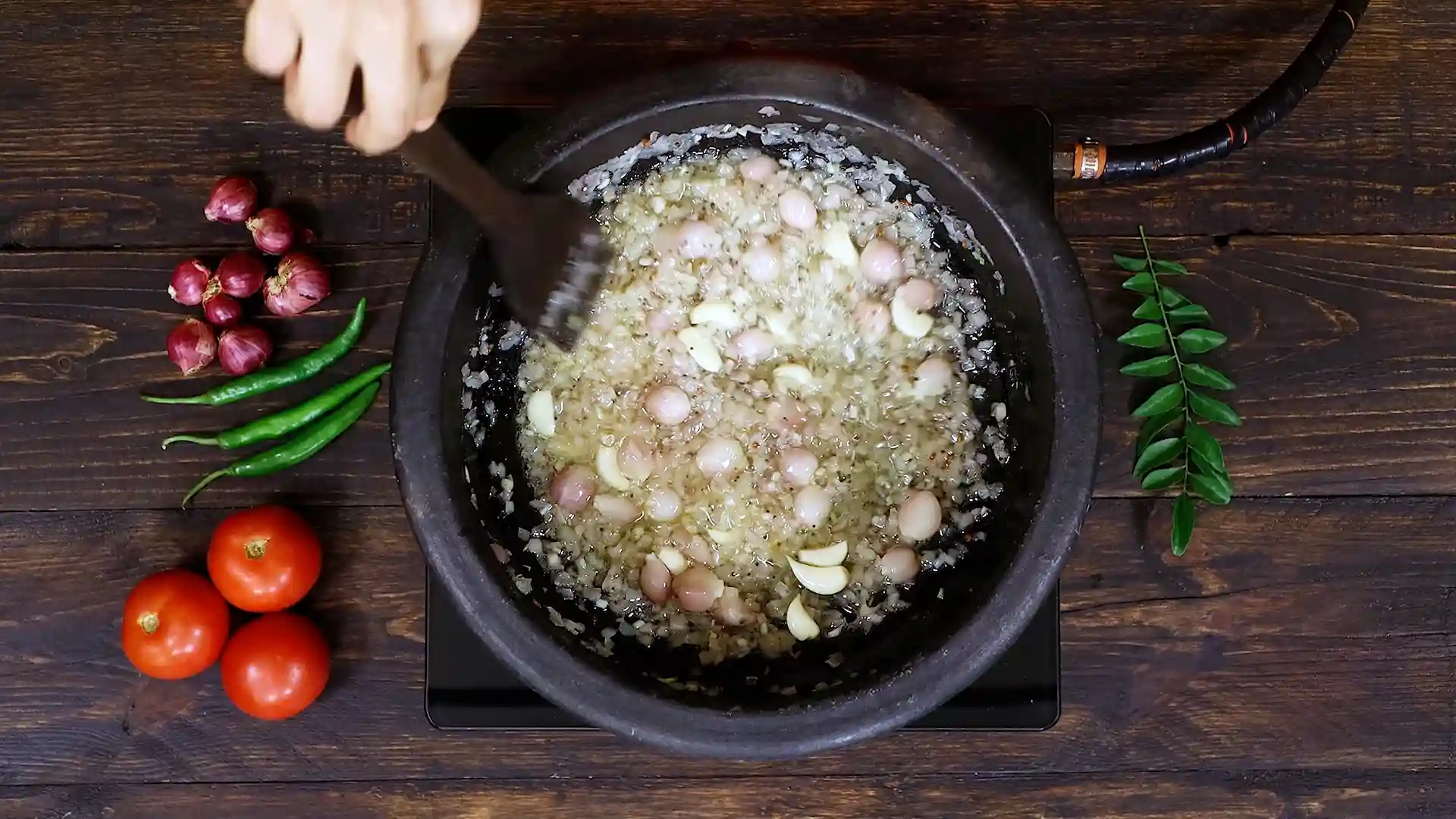
-
Add chillies and leaves
Add green chillies and curry leaves and sauté well -
Add paste
Add ginger garlic paste and cook till raw smell goes off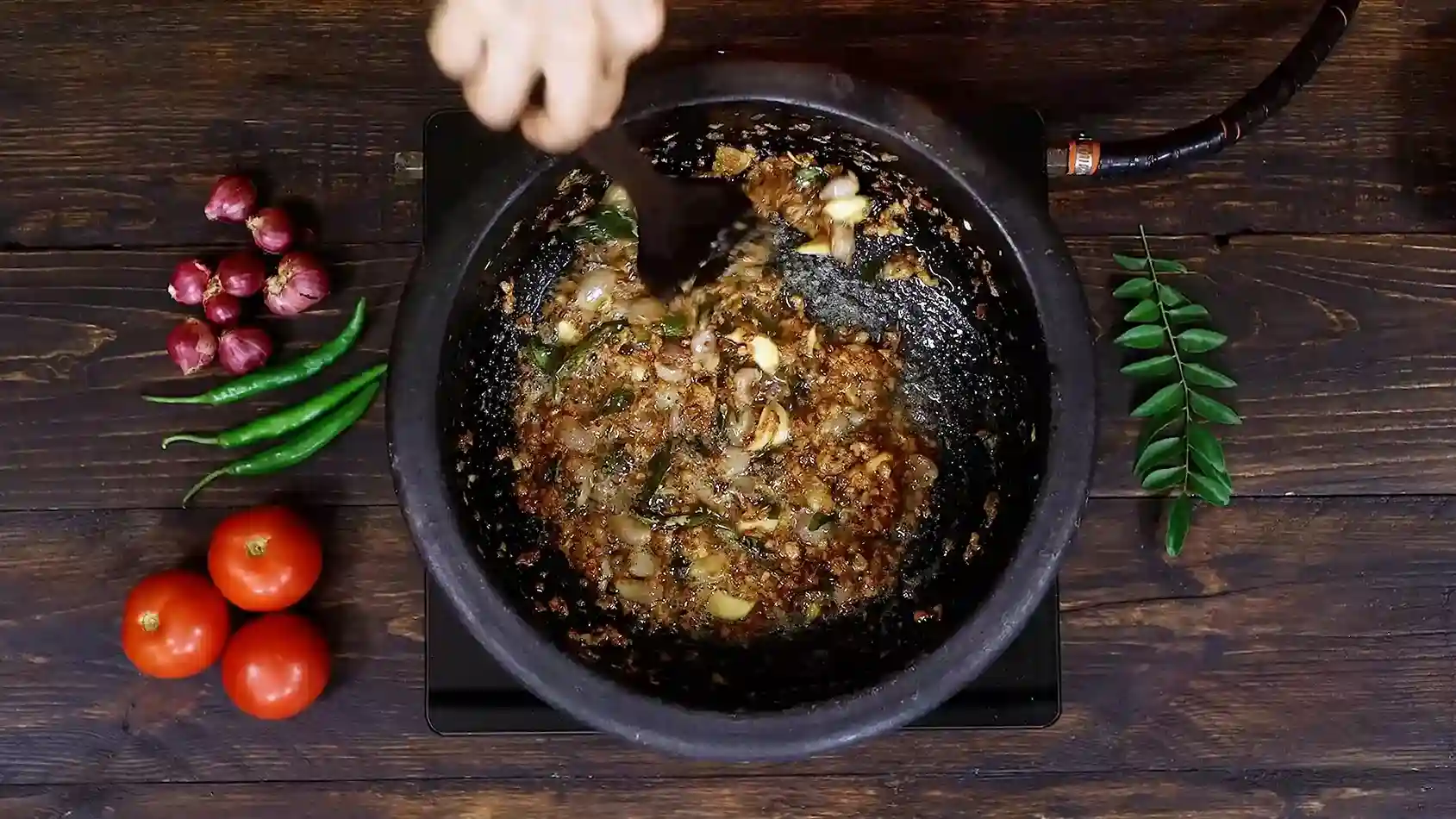
-
Add tomatoes
Add chopped tomatoes and cook till slightly mushy -
Add spice powders
Add rock salt, chilli powder and coriander powder and mix well -
Add tamarind and water
Add thick tamarind puree and water, mix and bring to boil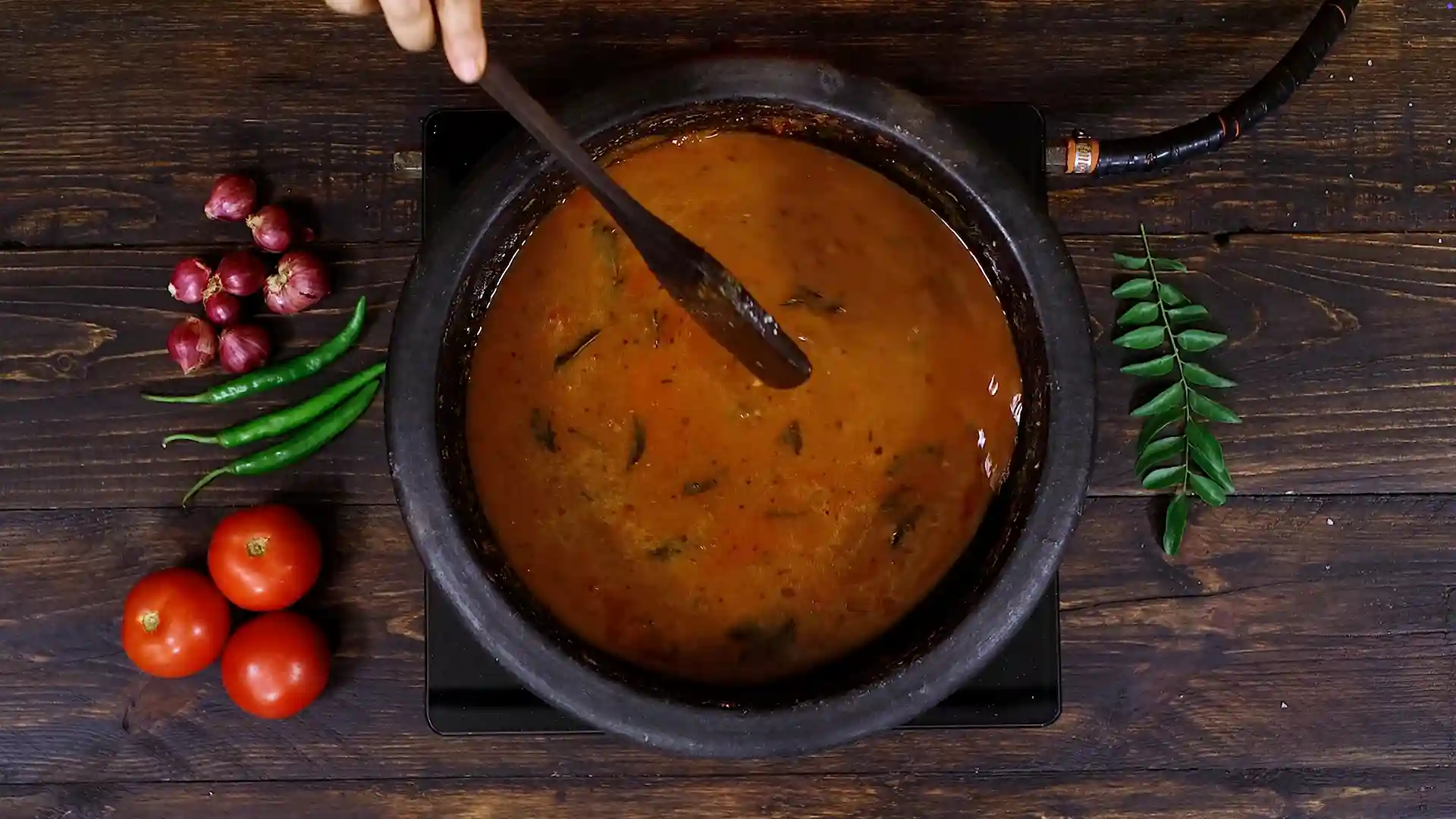
-
Add fish
Gently drop marinated fish into the pot and swirl without stirring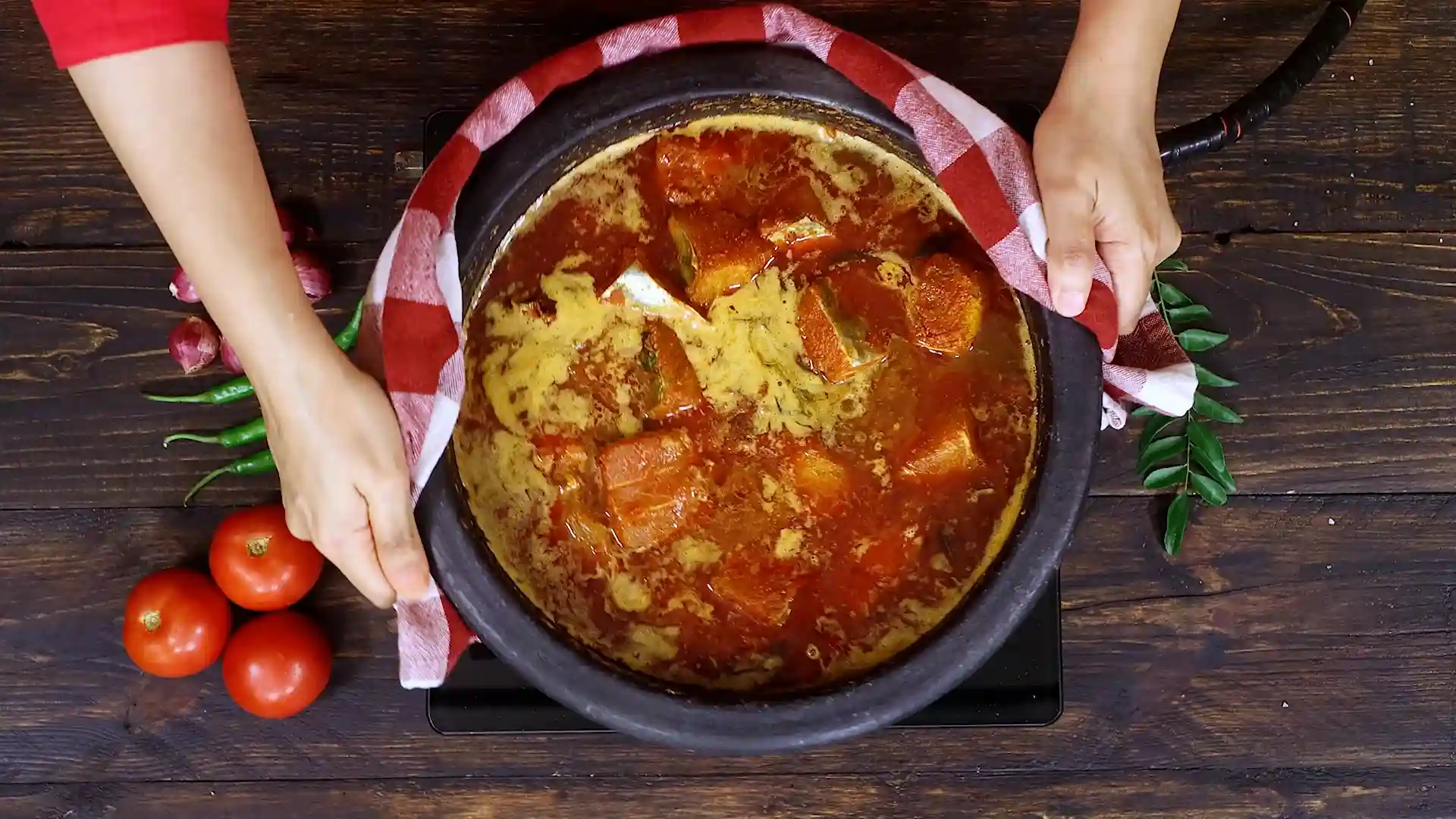
-
Slow cook
Cook on medium low flame till fish is cooked for 10 minutes and oil separates -
Finish and garnish
Garnish with chopped coriander leaves and switch off flame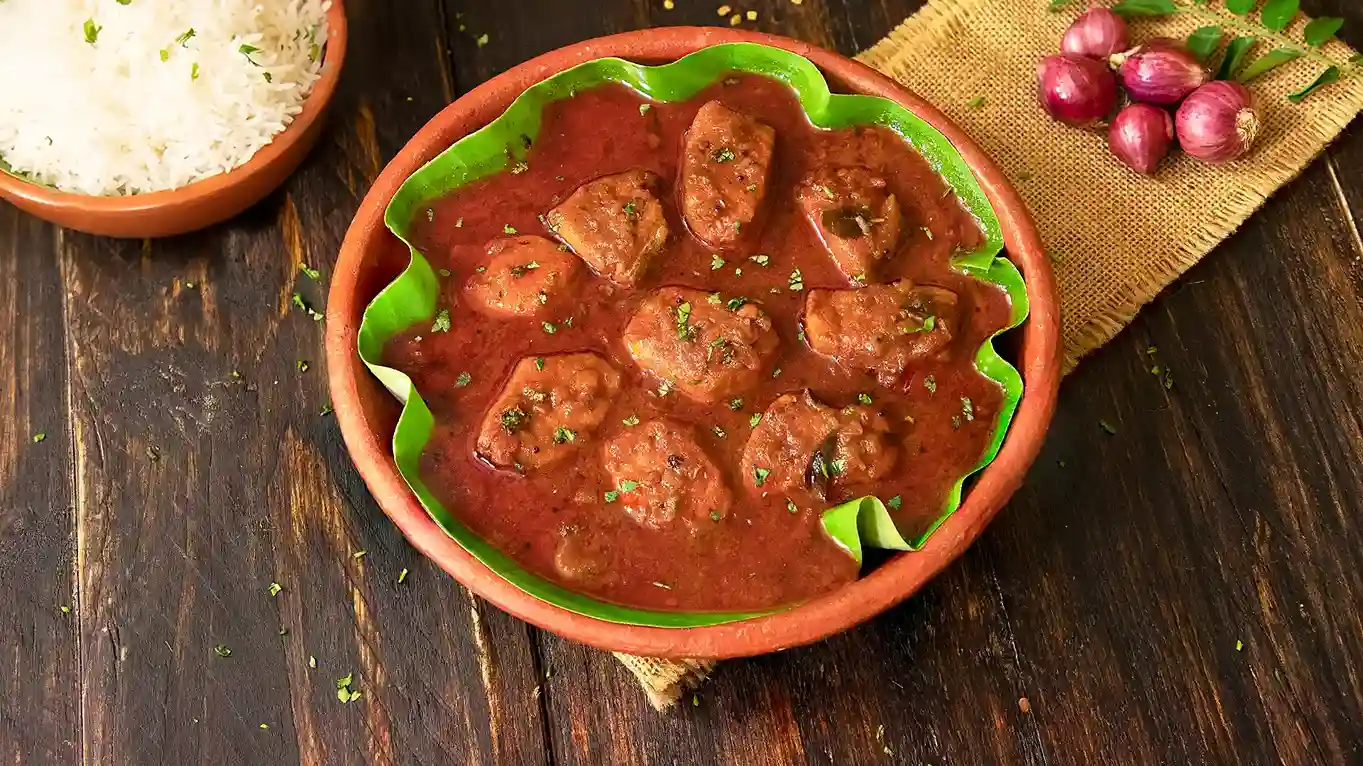
Equipment

Affiliate Disclosure: This post contains Amazon affiliate links, i.e., when you buy any product using the links below, we get commissions. but it doesn’t cost you anything extra. If you do purchase any product using the given links, we thank you in advance!
Nutrition Facts
Servings 4
- Amount Per Serving
- Calories 340kcal
- % Daily Value *
- Total Fat 18g28%
- Saturated Fat 4g20%
- Cholesterol 85mg29%
- Sodium 620mg26%
- Potassium 520mg15%
- Total Carbohydrate 12g4%
- Dietary Fiber 3g12%
- Sugars 4g
- Protein 32g64%
- Vitamin A 850 IU
- Vitamin C 18 mg
- Calcium 70 mg
- Iron 2.5 mg
- Vitamin D 180 IU
- Vitamin B12 3.2 mcg
- Phosphorus 320 mg
- Magnesium 45 mg
- Zinc 1.6 mg
- Selenium 55 mcg
* Percent Daily Values are based on a 2,000 calorie diet. Your daily value may be higher or lower depending on your calorie needs.