

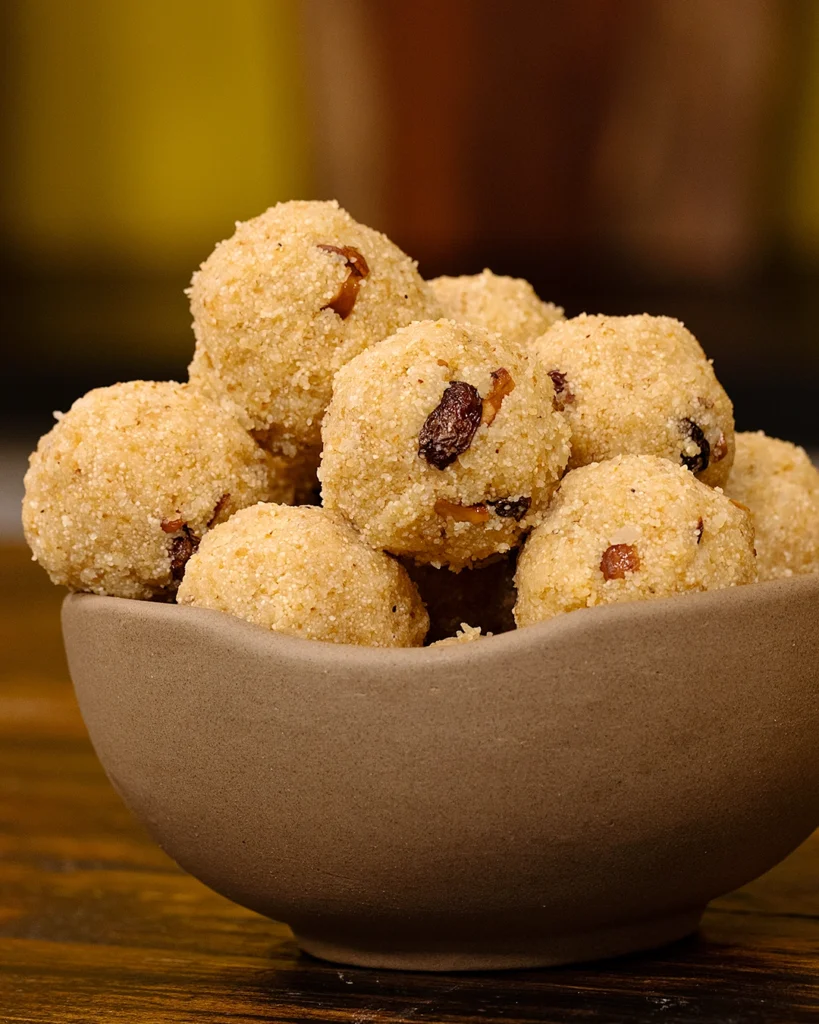

There’s something magical about a perfectly made ladoo—that round, sweet ball that fits in your palm and melts in your mouth with every bite. Rava coconut ladoo takes that magic and amplifies it with the grainy texture of roasted semolina, the natural sweetness and tropical flavor of coconut, the richness of ghee, and the crunch of cashews and plump raisins scattered throughout. Each bite delivers warmth from the cardamom, sweetness from the sugar, and that incredible nutty aroma from everything being roasted in ghee. The texture is beautifully complex—slightly grainy from the rava, tender from the coconut, with those delightful pops of nuts and raisins.
These ladoos are celebration in edible form—perfect for festivals like Diwali or Dussehra, ideal for gifting during special occasions, wonderful as an after-meal sweet, or simply as a treat when you’re craving something homemade and comforting. They’re easier to make than they look, store beautifully, and always impress. Make a batch and watch them disappear within days.
The Story Behind These Sweet Spheres
Ladoos hold a special place in Indian culture—they’re offered to deities, distributed during festivals, given as gifts during celebrations, and shared to mark auspicious occasions. The word “ladoo” itself comes from Sanskrit “ladduka,” and variations of these sweet balls appear across the Indian subcontinent, each region boasting its own signature style. From besan ladoo to boondi ladoo to til ladoo, the concept remains the same: shaping sweet mixtures into perfect spheres.
Rava coconut ladoo, also known as rava nariyal ladoo or semolina coconut balls, represents a relatively quicker version compared to traditional milk-based ladoos that require hours of stirring. By roasting semolina and coconut separately in ghee before combining them, you build layers of flavor—each ingredient getting its moment to develop its full potential. The technique of adding sugar and milk gradually ensures the mixture comes together perfectly, not too dry and crumbly, not too wet and sticky, but just right for shaping into those iconic round balls.
Breaking Down Your Flavor Builders
- Ghee – The golden foundation that adds richness, helps with roasting, and binds everything together. Don’t even think about substituting—ghee is essential.
- Cashew Nuts – Roasted until golden, they add buttery crunch and little pockets of richness throughout the ladoos.
- Raisins – Plump, sweet bursts of concentrated fruit flavor that balance the richness and add textural interest.
- Semolina (Rava) – The structural base that provides that characteristic slightly grainy texture and nutty flavor when roasted.
- Coconut (Grated) – Fresh, grated coconut adds natural sweetness, moisture, tropical flavor, and tender texture that contrasts beautifully with the rava.
- Sugar – Sweetens everything and helps bind the mixture. The amount can be adjusted to taste.
- Boiled Milk – Added gradually to bring everything together, adding moisture and richness without making it too wet.
- Cardamom Powder – The aromatic soul of the ladoo—warm, floral, slightly sweet, and absolutely essential for authentic flavor.
How This All Comes Together
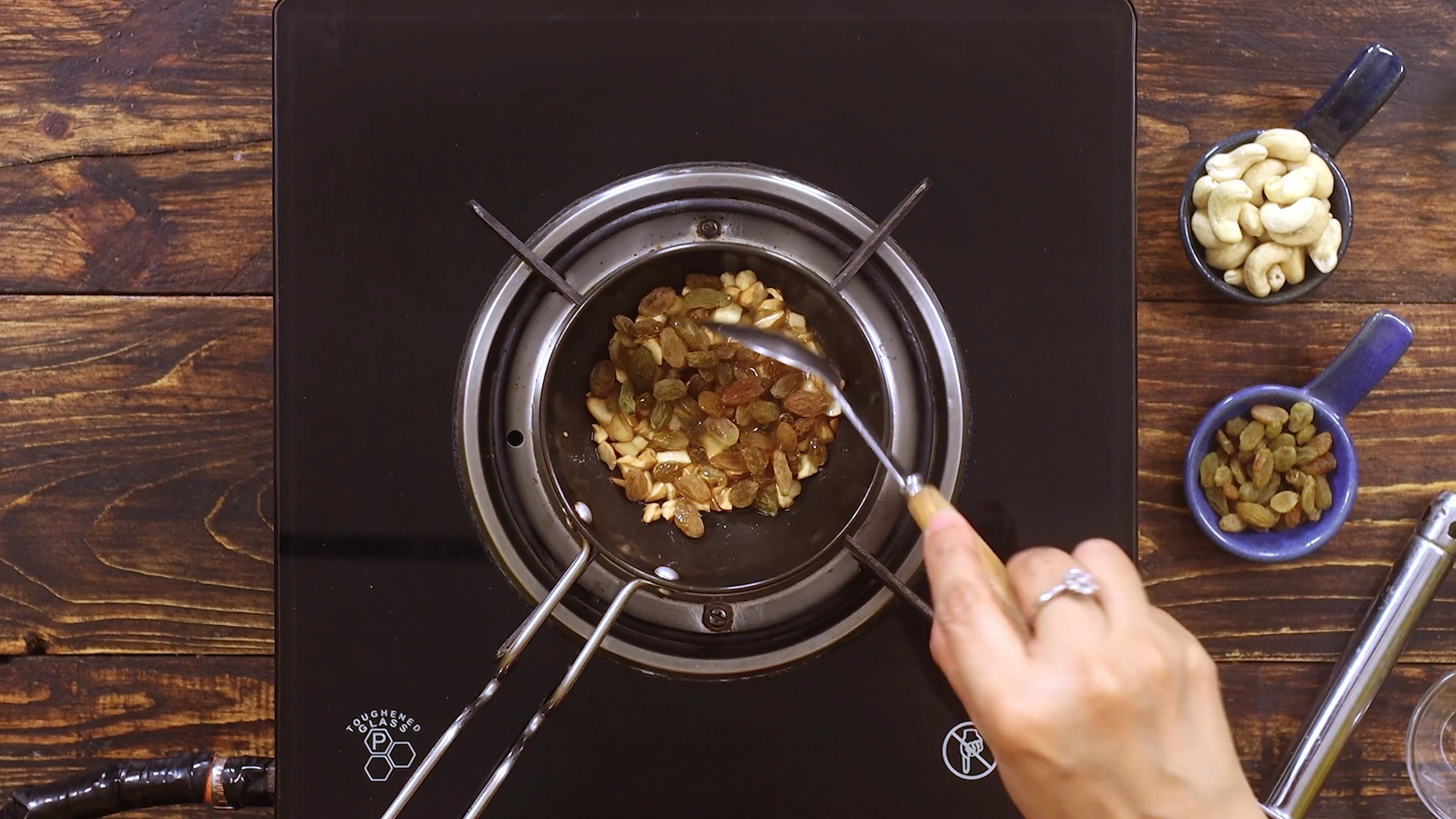
Let’s start by preparing all our roasted elements separately so each one develops its full flavor. Heat a small portion of ghee in a pan—about a teaspoon or so. Add your cashew nuts and roast them over medium heat, stirring constantly, until they turn golden brown and aromatic. This takes just a minute or two, so watch carefully—cashews go from golden to burnt very quickly. Once they’re golden, add your raisins to the same pan and sauté for just 20-30 seconds until they plump up slightly. Transfer both to a plate and set aside.
💡 Pro Tip: Roasting cashews and raisins together in ghee infuses them with flavor and prevents them from being raw-tasting in the final ladoos. But add raisins only after cashews are almost done—they need just seconds to plump up.
In the same pan, heat another portion of ghee—about 2 teaspoons. Add your semolina and roast it over medium-low heat, stirring continuously. This is crucial—you want even roasting without burning. Keep stirring for about 8-10 minutes until the rava turns golden brown and releases that incredible nutty, toasted aroma. The color should be distinctly darker and more golden than raw rava. Transfer this to a plate and set aside.
Now for the coconut. Heat another portion of ghee in the pan—about 2 teaspoons again. Add your grated coconut and roast it over medium-low heat, stirring frequently. Fresh coconut contains moisture, so this roasting process will dry it out, concentrate its flavors, and turn it golden brown. This takes about 10-12 minutes of patient stirring. The coconut should turn a beautiful golden color and become dry and slightly crispy. You’ll smell that toasted coconut aroma—sweet, nutty, and tropical.
💡 Pro Tip: Roasting coconut properly is key to ladoos that hold their shape. Under-roasted coconut retains too much moisture and makes the ladoos fall apart. Keep stirring and be patient until it’s properly golden and dry.
Once your coconut is perfectly roasted, reduce the heat to low and add your roasted rava back into the pan with the coconut. Mix everything together thoroughly so the rava and coconut are evenly combined. Keep the heat on low—you’re not cooking anymore, just mixing and warming.
Now comes the sugar. Add it gradually—maybe a third at a time—mixing well after each addition before adding more. This gradual addition helps the sugar distribute evenly and prevents clumping. As you mix, the sugar will start melting slightly from the residual heat, helping everything bind together.
Time to add the milk. Pour in your boiled milk little by little while stirring continuously. Don’t dump it all in at once—add maybe a quarter cup at a time, stirring well, then add more. The mixture should come together and become cohesive but not wet or soupy. You want it moist enough to hold together when pressed but not so wet that it’s sloppy. The exact amount of milk you need might vary slightly depending on the moisture content of your coconut, so add it gradually and stop when the consistency is right.
💡 Pro Tip: The right consistency is crucial for shapeable ladoos. The mixture should hold together when pressed in your palm but not be dripping wet. If it’s too dry, add a tiny bit more milk; if it’s too wet, cook it a bit longer to evaporate excess moisture.
Add any remaining ghee you haven’t used yet—this extra richness helps bind the ladoos and adds flavor. Mix in your cardamom powder—be generous; cardamom is what makes these taste authentically delicious. Finally, add your roasted cashews and raisins, stirring them in so they distribute evenly throughout the mixture.
Turn off the heat but keep the mixture in the warm pan. Grease your palms well with ghee—this is essential to prevent sticking. While the mixture is still warm (but not too hot to handle), take a small portion—about the size of a lime—and press it firmly in your palm, shaping it into a smooth, round ball. The warmth helps everything bind together, and the pressure compacts it so it holds its shape.
💡 Pro Tip: Shape ladoos while the mixture is still warm—it binds better and shapes more easily. If it cools too much and becomes hard to shape, gently warm it again. Greasing your palms generously with ghee is non-negotiable for smooth, crack-free ladoos.
Continue shaping all the mixture into round ladoos, regreasing your palms with ghee as needed. Place them on a plate or tray as you finish each one. They might feel slightly soft when just shaped, but they’ll firm up beautifully as they cool.
Let the ladoos cool completely and set at room temperature. As they cool, they’ll become firmer and easier to handle. Once completely cool, they’re ready to serve or store.
What Goes Along
Rava coconut ladoos are traditionally enjoyed on their own as a sweet treat after meals or during celebrations. They pair beautifully with a cup of hot chai or filter coffee—the warmth of the beverage brings out the cardamom and ghee flavors even more. During festivals, they’re often served alongside other sweets as part of a dessert spread. Some people enjoy them with a glass of milk, especially children.
How to Serve
Serve rava coconut ladoos at room temperature, arranged on a decorative plate or in small paper cups. For festivals or special occasions, place them in decorative boxes lined with parchment paper or in traditional silver containers. They look beautiful arranged on a platter garnished with a few rose petals or silver leaf (varak) for an extra festive touch. For gifting, pack them in boxes with dividers to prevent them from touching and losing their shape.
How to Store Rava Coconut Ladoo
Rava coconut ladoos store excellently at room temperature in an airtight container for up to a week, though they rarely last that long! The ghee content acts as a natural preservative. In the refrigerator, they’ll keep for 2-3 weeks. However, refrigerated ladoos become quite firm, so bring them to room temperature before serving for the best texture. They can also be frozen for up to a month—just thaw completely before eating.
How to Reheat This Semolina Ladoo
Ladoos don’t typically need reheating, but if they’ve been refrigerated and are too firm, simply bring them to room temperature for 30 minutes before serving. If you want them slightly warm, you can microwave them for just 10-15 seconds, but be careful—too much heat will make them fall apart or become too soft.
Common Substitutions
If you can’t find fresh grated coconut, use desiccated coconut (unsweetened)—you’ll need about 1½ cups since it’s more concentrated. No boiled milk? Use warm water instead, though the flavor won’t be quite as rich. You can substitute sugar with jaggery for a more traditional, caramel-like sweetness—just melt it first and strain to remove impurities. If you don’t have cardamom powder, use a tiny bit of vanilla extract or skip it, though cardamom really is essential to authentic flavor. Almonds or pistachios can replace or supplement cashews.
Packing for Parties / Bulk Preparation
Rava coconut ladoos are perfect for bulk preparation because they store well and the recipe scales up easily. For festivals or large gatherings, double or triple the recipe without any issues. Make them a day or two ahead—they actually taste better after sitting for a day as the flavors meld together.
For gifting during festivals, these are ideal. Pack them in decorative boxes, traditional mithai dabba (sweet boxes), or even mason jars tied with ribbons. They travel well and don’t require refrigeration for short periods, making them practical for gifting to friends and neighbors during celebrations.
For parties, you can make mini ladoos—smaller than usual—which look adorable and allow guests to try multiple sweets without feeling too full. Shape them about half the size of regular ladoos for bite-sized treats.
Meal Prep Ideas
While ladoos are traditionally a dessert or festive sweet, having them on hand means you always have a homemade treat available. Make a batch on the weekend and store in an airtight container—they’re perfect for satisfying sweet cravings throughout the week without reaching for processed sweets.
These ladoos also make excellent energy balls for a quick snack—they’re surprisingly nutritious with protein from cashews, healthy fats from coconut and ghee, and quick energy from semolina and sugar. Some people enjoy one with their morning tea for a substantial breakfast, especially when they’re in a rush.
For variety, you can make different batches with variations—add cocoa powder to one batch for chocolate coconut ladoos, mix in some poppy seeds for texture, or add dried rose petals for a floral note. Once you master the basic technique, experimentation is easy and fun.
You can also prep components ahead—roasted rava and roasted coconut can be stored separately in airtight containers for a week or two. When you want to make ladoos, you just need to combine them with sugar and milk, which makes the process much faster.
These ladoos represent the beautiful simplicity of Indian sweets—a handful of ingredients, some patience for proper roasting, and careful technique resulting in something that tastes complex and feels special. They’re proof that homemade sweets don’t have to be complicated to be absolutely delicious.
Other related recipes you might like:-
- Dry Fruit Ladoo — festive sweet loaded with assorted dry fruits.
- Makhana Ladoo High Protein Laddu — protein-packed makhana sweet, perfect for festivals.
- Tender Coconut Payasam — rich and creamy coconut-based festive dessert.
- Millet Pongal — healthy, mildly sweet festive millet dish.
- Rava Pongal — classic rava sweet dish for festive occasions.
- Sabudana Kheer Navratri Platter — Navratri-special tapioca pearls kheer, light and delicious.
Rava Coconut Ladoo
Description
Rava Coconut Ladoo is a simple yet delicious Indian sweet made with roasted semolina, fresh coconut, sugar, and ghee. These melt-in-the-mouth laddoos are quick to prepare, making them perfect for festive celebrations or a quick homemade treat. With their rich flavor and soft texture, they’re a delightful sweet that everyone will love.
Ingredients
Instructions
Prep Work
-
Roast cashew nuts & raisins
Heat ghee in a small portion in a pan, roast cashews until golden, then add raisins and sauté. Keep aside.
-
Roast rava
Heat ghee in a small portion in a pan, add rava, and roast until golden brown. Keep aside. -
Roast coconut
In the same pan, Heat ghee in a small portion in a pan and roast grated coconut until it turns golden brown and dry.
Method
-
Mix roasted ingredients
Once coconut is roasted, add fried rava and mix well over low flame.
-
Add sugar
Gradually add sugar, mixing well each time before adding more.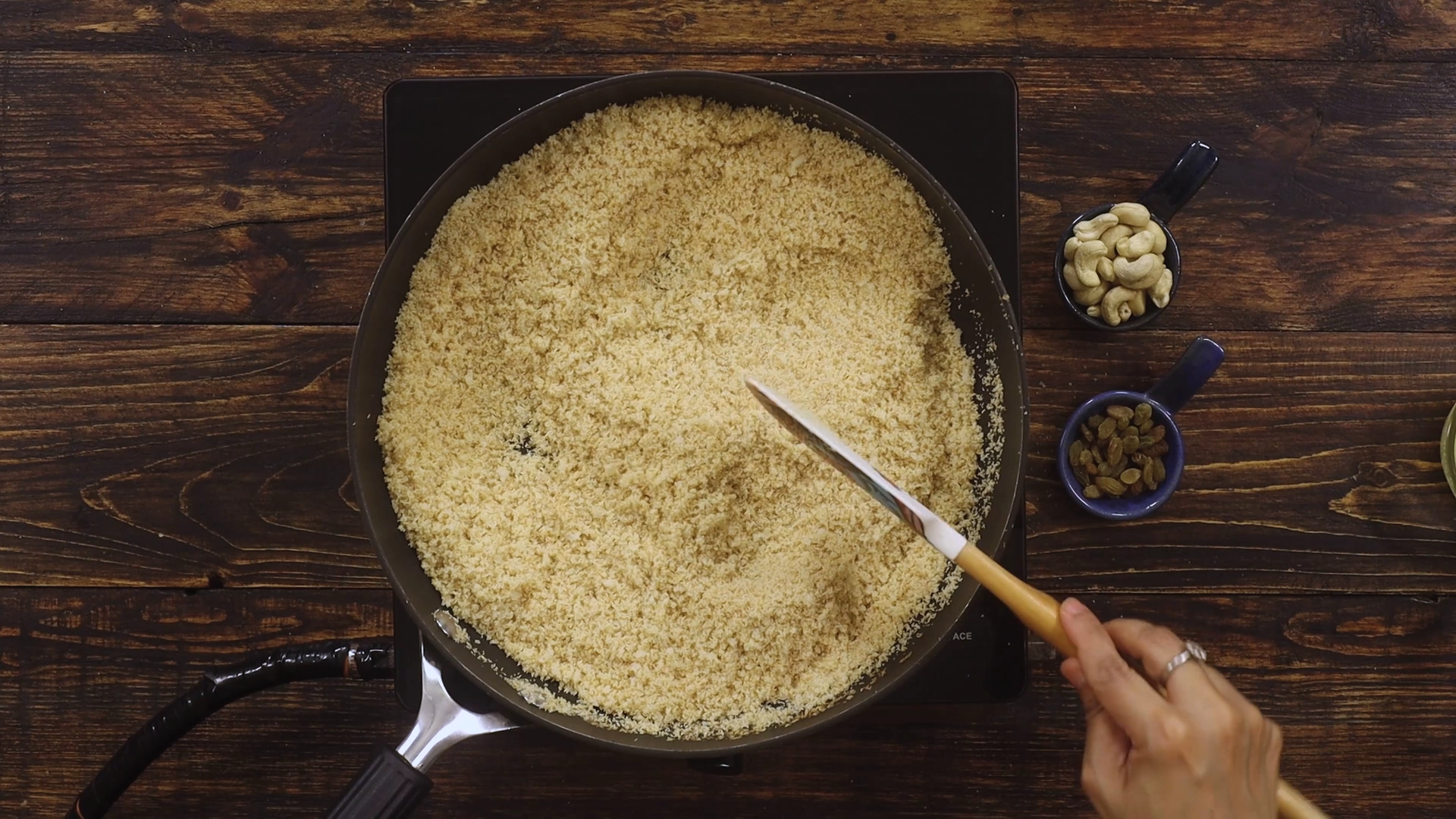
-
Pour milk
Add boiled milk little by little while stirring continuously.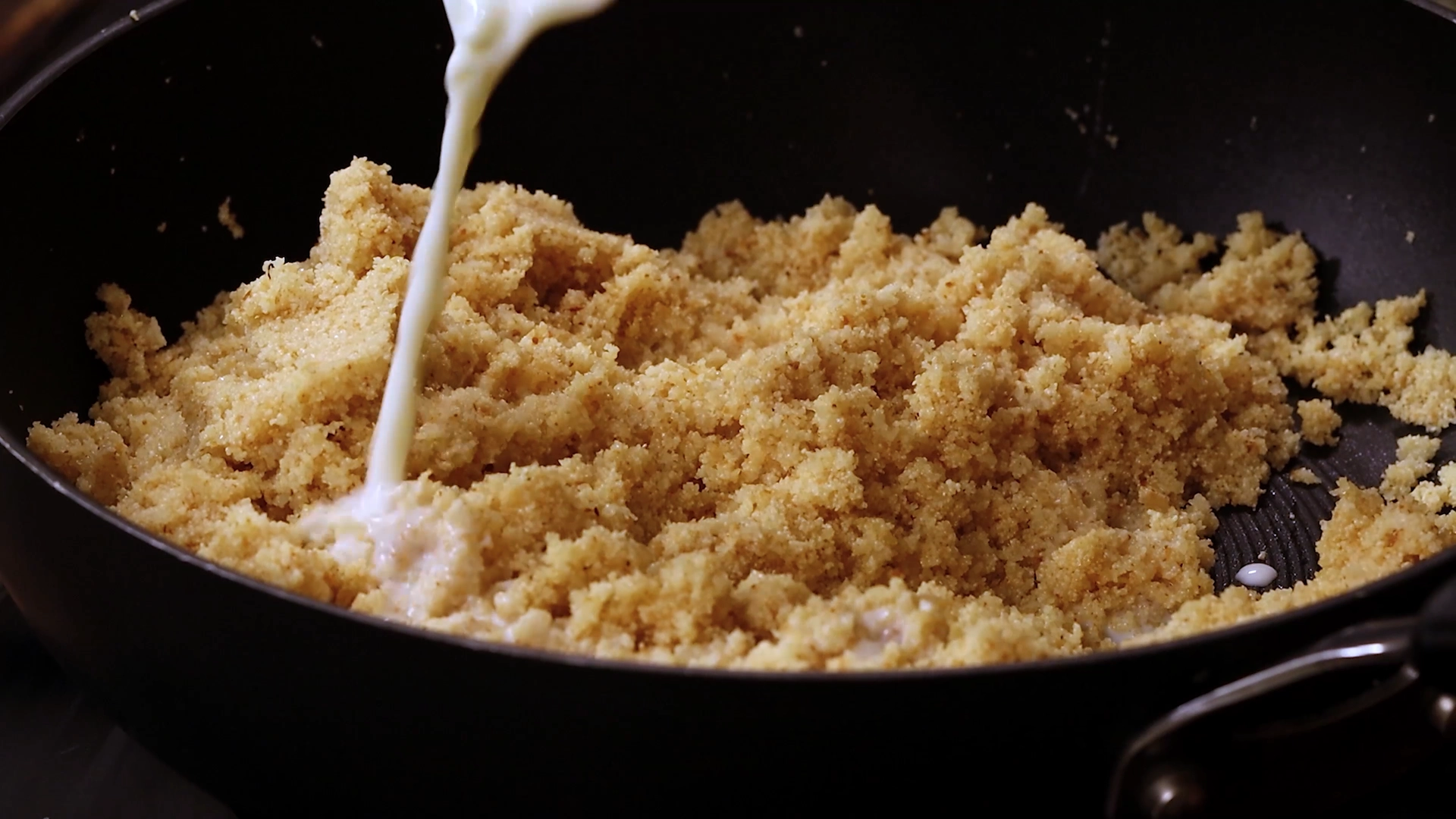
-
Add final ingredients
Mix in the remaining ghee, cardamom powder, roasted cashews, and raisins. Stir well. -
Shape ladoos
Grease hands with ghee, take portions of warm mixture, and shape into round ladoos.
-
Let them set
Allow the ladoos to cool and set before serving.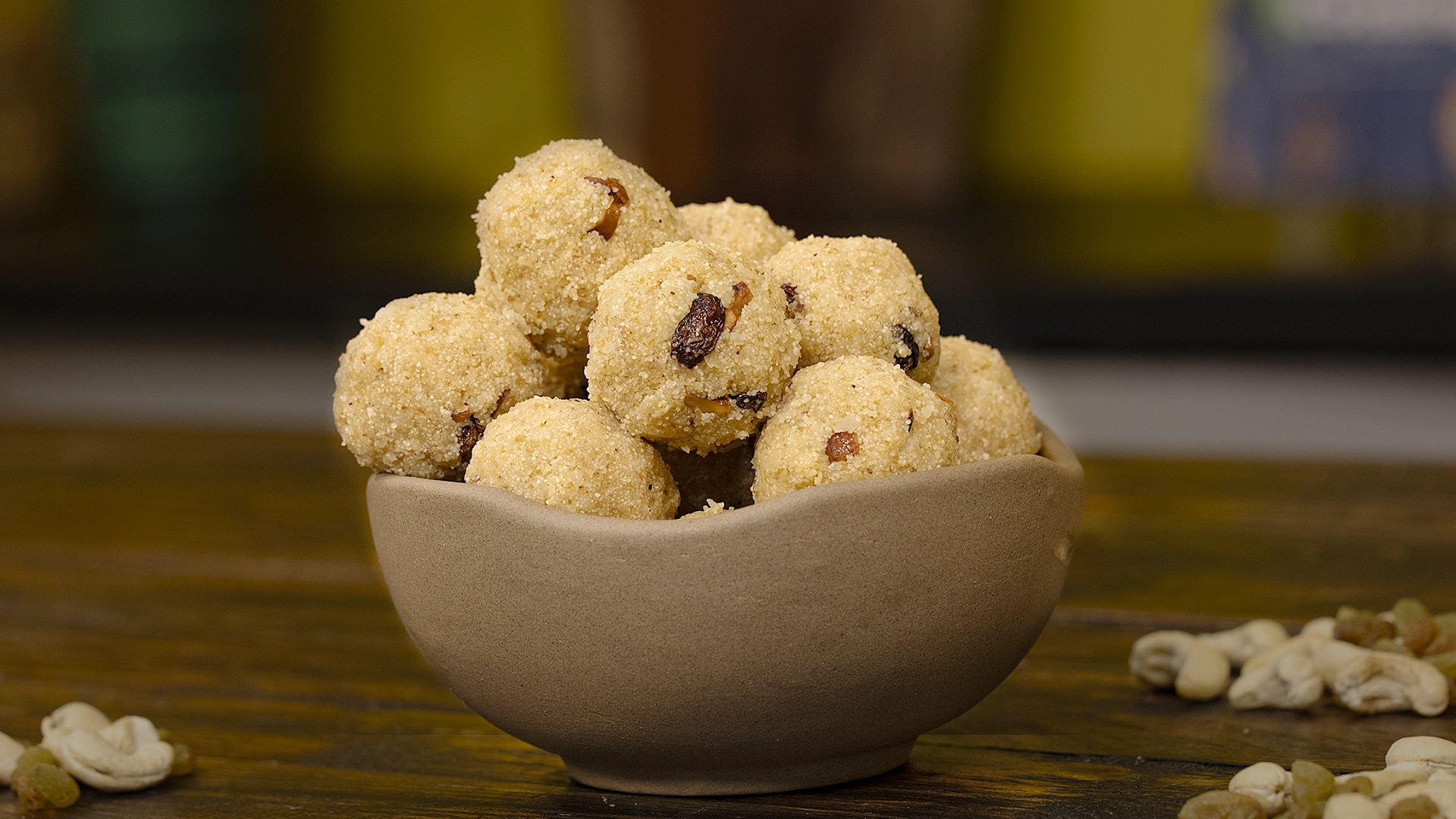
Equipment

Affiliate Disclosure: This post contains Amazon affiliate links, i.e., when you buy any product using the links below, we get commissions. but it doesn’t cost you anything extra. If you do purchase any product using the given links, we thank you in advance!
Nutrition Facts
Servings 12
- Amount Per Serving
- Calories 210kcal
- % Daily Value *
- Total Fat 9g14%
- Saturated Fat 6g30%
- Cholesterol 10mg4%
- Sodium 15mg1%
- Potassium 80mg3%
- Total Carbohydrate 30g10%
- Dietary Fiber 2g8%
- Sugars 18g
- Protein 3g6%
- Vitamin A 50 IU
- Magnesium 15 mg
* Percent Daily Values are based on a 2,000 calorie diet. Your daily value may be higher or lower depending on your calorie needs.