



Ever notice how some dishes only make sense in a particular season?
Kacche aam ki sabji is exactly that kind of recipe. It’s tangy, lightly spicy, gently sweet, and incredibly satisfying, especially on a hot day when heavy food feels like too much.
This is the kind of sabji you make when raw mangoes are at their best. No onion. No deep frying. Just simple spices, mustard oil, and that unmistakable sour punch that makes your mouth water before the first bite.
If you enjoy seasonal cooking, this one belongs in your summer rotation.
A Little Context: Where This Raw Mango Sabji Fits In
Across India, raw mango shows up in many forms, such as chutneys, dals, pickles, and curries. This version leans toward homestyle North Indian cooking, where tanginess is balanced with jaggery and whole spices rather than tomatoes or onions.
What makes this sabji special is its restraint.
- No onion or garlic-heavy base
- No overpowering masalas
- The mango is the star
It’s simple food, cooked with intention, the kind our elders relied on during peak summer months.
Why This Dish Works So Well in Summer
This kacche aam ki sabji isn’t just tasty, it’s practical.
- Cooling & appetite-boosting thanks to raw mango
- Light on the stomach, even with mustard oil
- Quick to cook, no long prep
- Naturally vegan and gluten-free
It’s also one of those dishes that actually tastes better after resting, making it great for lunchboxes or next-day meals.
Ingredient Breakdown:
- Raw Mango: The foundation. Slightly firm mangoes work best, so they hold shape and don’t dissolve into the gravy.
- Garlic & Dry Spices: Garlic adds warmth without heaviness. Kashmiri chilli gives colour and mild heat, while coriander and cumin add depth.
- Mustard Oil: This isn’t optional for flavour. It adds sharpness and authenticity that complements the mango’s sourness.
- Fenugreek, Cumin & Kolanji Seeds: These whole spices release bitterness, earthiness, and aroma, essential for balancing tang.
- Jaggery: This is what rounds everything out. Not sweet, just balanced.
Vegan Swap 🌿: This dish is naturally vegan. For a milder version, reduce mustard oil slightly and add a neutral oil to balance.
How This Sabji Comes Together
First, the raw mango is cooked just until tender, not mushy. That cooking water is gold, so don’t throw it away. It becomes part of the masala and carries natural sourness.
Next comes the mustard oil. Once heated properly, the whole spices go in and bloom, releasing their aroma. This step sets the tone of the dish.
The prepared masala paste is added and cooked patiently until the raw smell disappears. This is where flavour develops, rushing here flattens everything.
Once the masala is ready, the cooked mango chunks and slit green chillies go in gently. Jaggery follows, balancing the sharpness. A little water brings everything together into a light gravy, and a short simmer allows the mango to absorb the spices.
A final touch of fennel powder softens the edges and rounds off the dish beautifully.
Pro Tip 💡: Always cook the masala well before adding mango. Raw spice taste is the fastest way to ruin a simple curry.
What Problem This Recipe Solves
- Don’t want onions in summer?
- Looking for a quick sabji with pantry spices?
- Want something tangy without tomatoes?
- Need a chapati and rice-friendly curry?
This is everyday food that still feels special.
Diet & Allergy Friendly Notes
This kacche aam ki sabji is:
- Vegan
- Gluten-free
- Nut-free
- Low-calorie
- Digestive & summer-friendly
It works well for light lunches and clean eating days.
What Goes Along With Kacche Aam Ki Sabji
This sabji is versatile and pairs beautifully with:
- Plain chapati or phulka
- Jeera rice or steamed rice
- Simple dal and curd on the side
It also works as a tangy side for heavier mains.
How to Serve It Best
- Serve warm or at room temperature
- Let it rest for 10–15 minutes before serving
- A drizzle of mustard oil on top enhances the aroma
The flavours open up as it sits.
Packing & Meal Prep Tips
This curry is lunchbox-friendly:
- Doesn’t leak excessively
- Tastes better after a few hours
- Reheats well without breaking
Ideal for work lunches or travel meals.
How to Store Kacche Aam Ki Sabji
How to Store
- Store in an airtight container
- Refrigerates well for 2 days
Shelf Tip
Flavours intensify overnight, making it perfect for next-day meals.
How to Reheat
- Reheat gently in a pan on low heat
- Add a splash of water if needed
- Avoid boiling aggressively
Microwave reheating works, but stovetop is better for texture.
Common Mistakes to Avoid
- Cutting the mango too small (it turns mushy)
- Skipping jaggery completely
- Not cooking the masala enough
- Using cold mustard oil without heating properly
- Over-thickening the gravy
Avoid these, and the sabji stays balanced and bright.
Other Related Recipes You Might Like
- Raw Mango Chutney – tangy accompaniment using the same main ingredient.
- Quick Easy Mango Pickle – closely related raw mango preparation.
- Mango Coconut Chutney – South Indian raw mango–based side dish.
- Tomato Curry – similar dry/semi-gravy sabji pairing with rice or roti.
- Onion Sabzi – simple everyday vegetable curry for meal combos.
- Aloo Methi (Under 30 Minutes) – dry sabji category interlink.
Kacche Aam Ki Sabji (Raw Mango Sabji)
Description
Tangy and flavorful Kacche Aam Ki Sabji (Raw Mango Sabji) made with garlic, spices, jaggery, and mustard oil. This traditional kacche aam ki sabji by Hema Subramanian is a perfect summer curry, ready in 30 minutes and pairs well with rice or roti.
Ingredients
To make masala paste
To make kacche aam ki sabji
Instructions
Prep Work
-
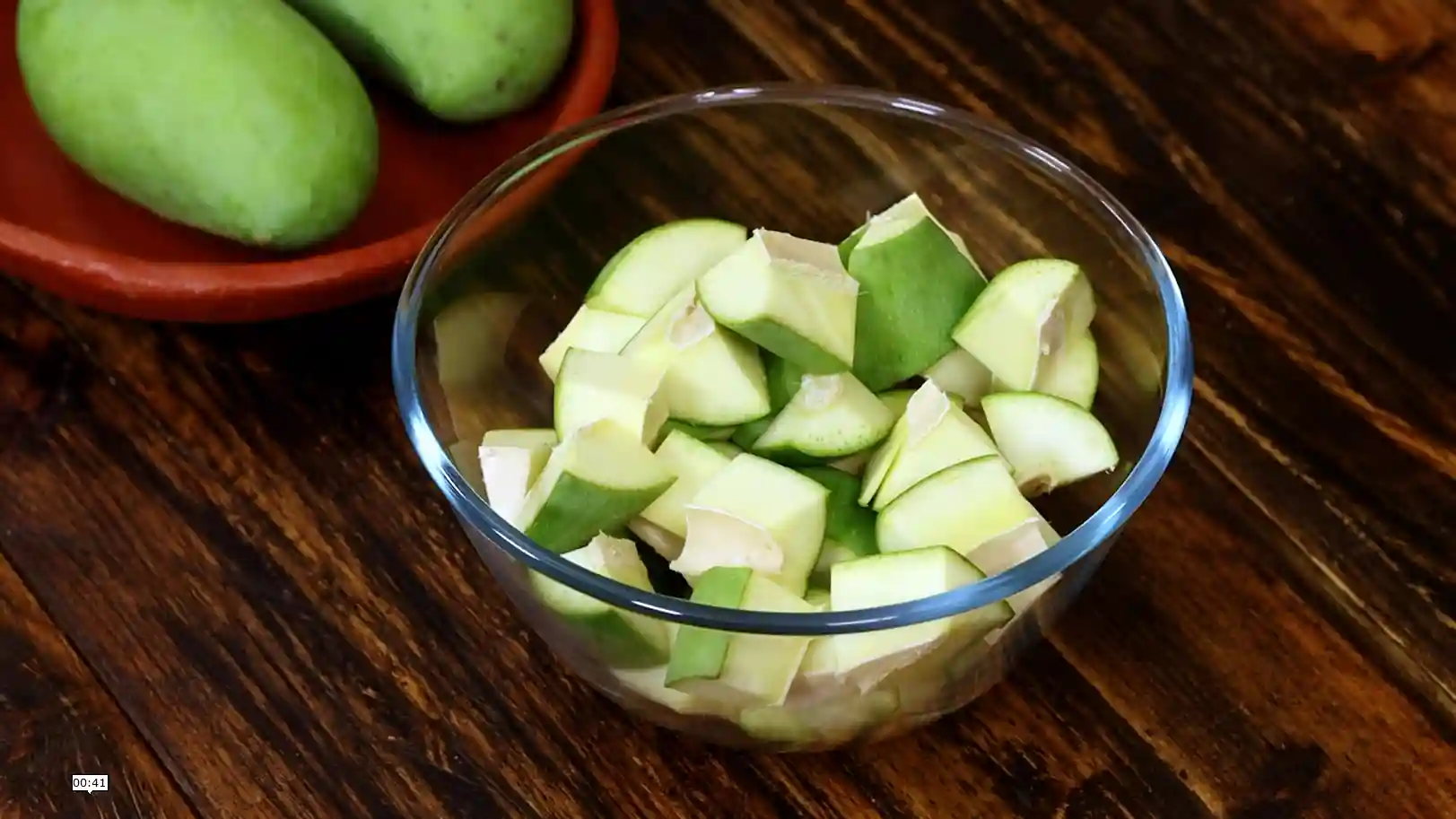
Cut raw mango
Wash, peel if needed, and cut raw mango into slightly large chunks
-
Boil mango
Boil Mango pieces with turmeric until just soft and reserve some cooking water
-
Prepare masala paste
Mix garlic, spice powders, salt, and mango water into a smooth paste -
Slit green chillies
Slit green chillies lengthwise and keep aside
Method
-
Cook mango
Boil mango pieces until soft, then drain and reserve some water

-
Make masala
Combine garlic, spice powders, salt, and mango water into a smooth paste
-
Temper spices
Heat oil and sauté fenugreek seeds, cumin seeds, and kolanji seeds until aromatic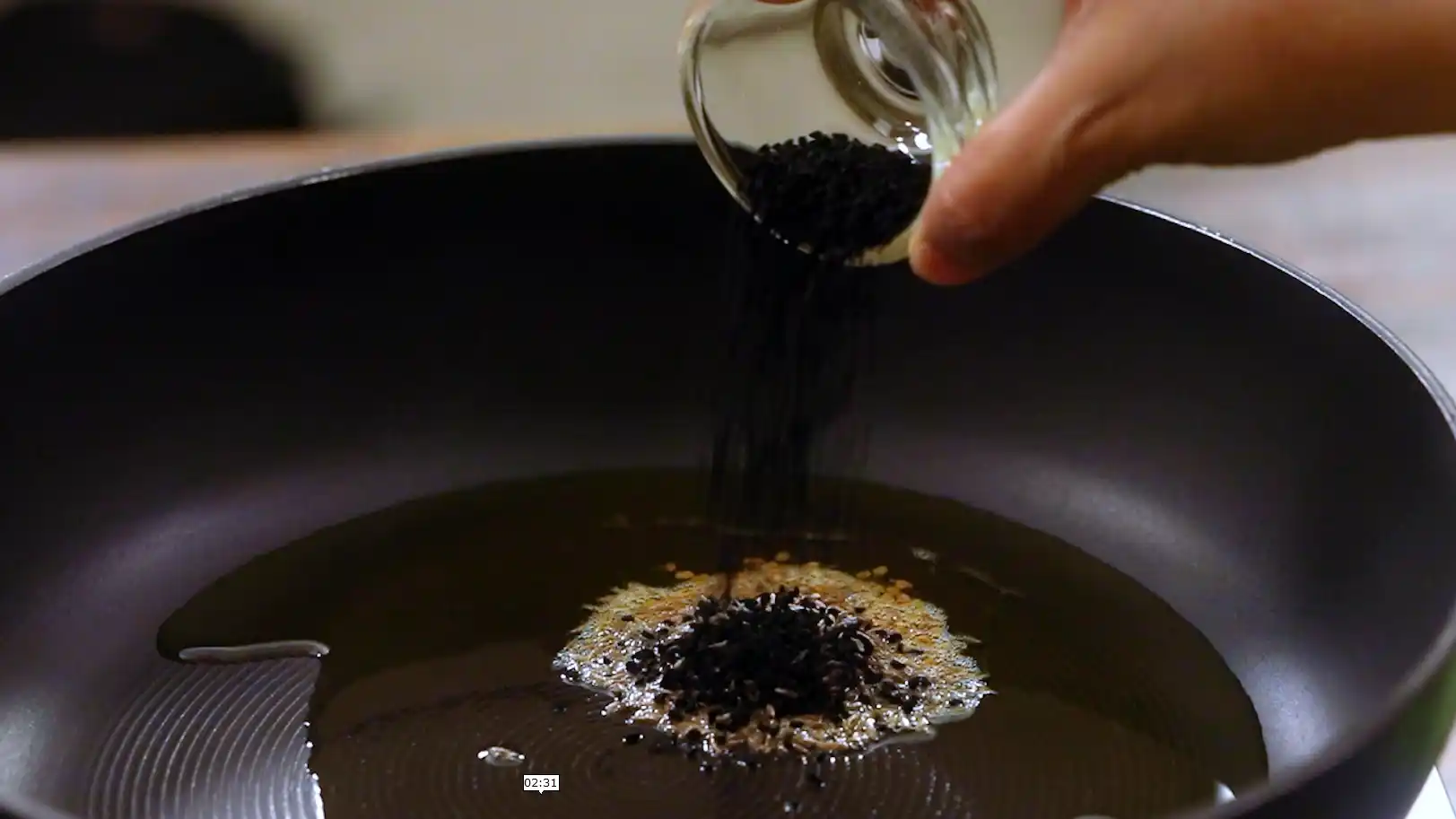
-
Cook masala
Add hing and masala paste, cooking until the raw smell disappears
-
Add mango
Add slit green chillies and cooked mango pieces, mixing gently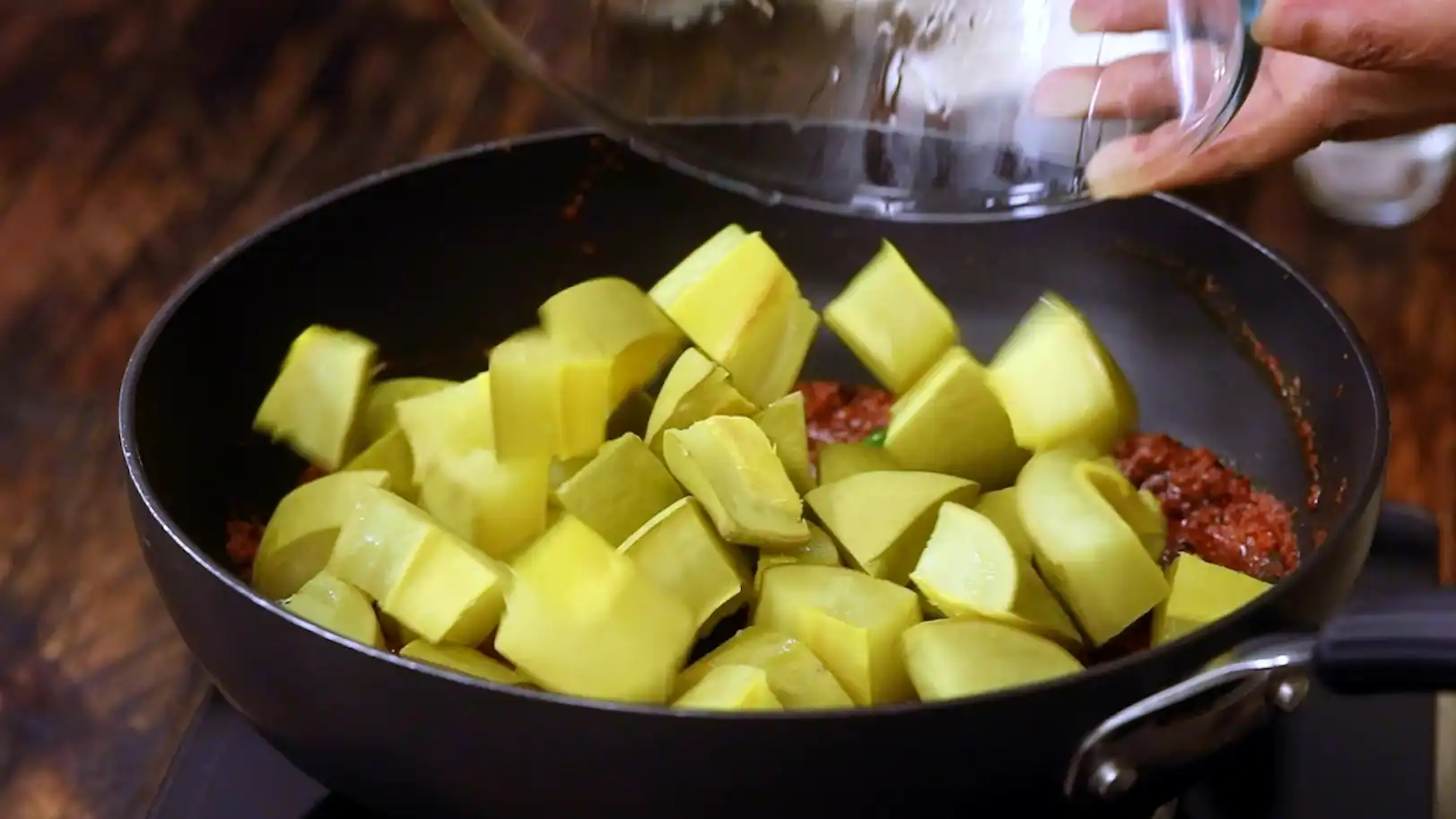
-
Balance flavors
Add jaggery and reserved mango water to balance tanginess
-
Simmer curry
Simmer with water until thick gravy forms
-
Finish
Finish with fennel powder and turn off heat
Equipment


Affiliate Disclosure: This post contains Amazon affiliate links, i.e., when you buy any product using the links below, we get commissions. but it doesn’t cost you anything extra. If you do purchase any product using the given links, we thank you in advance!
Nutrition Facts
Servings 3
- Amount Per Serving
- Calories 210kcal
- % Daily Value *
- Total Fat 11g17%
- Saturated Fat 2g10%
- Sodium 680mg29%
- Potassium 420mg12%
- Total Carbohydrate 28g10%
- Dietary Fiber 4g16%
- Sugars 14g
- Protein 3g6%
- Vitamin A 850 IU
- Vitamin C 38 mg
- Calcium 55 mg
- Iron 2.1 mg
* Percent Daily Values are based on a 2,000 calorie diet. Your daily value may be higher or lower depending on your calorie needs.