

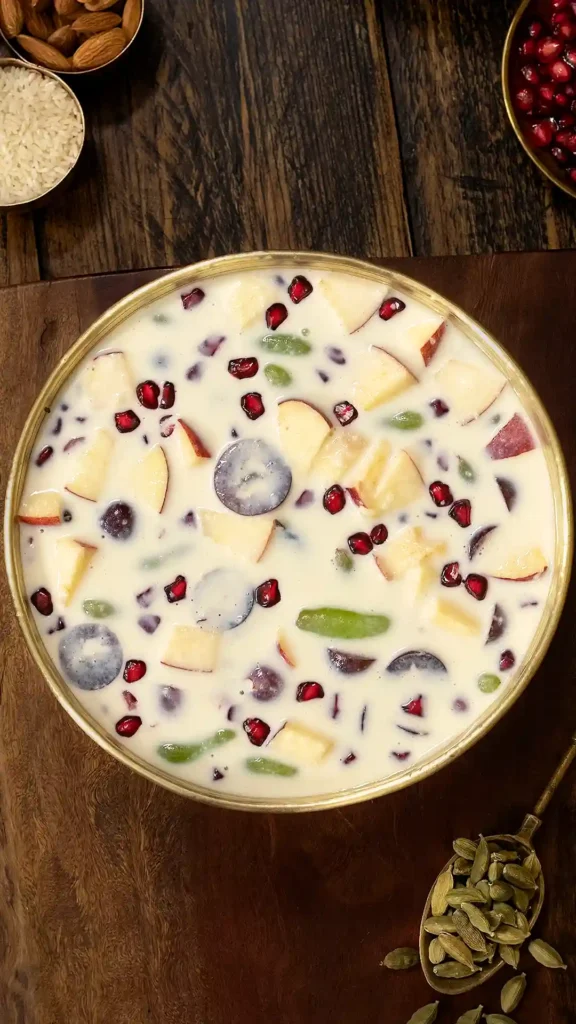

Ever wanted a dessert that feels festive, rich, and refreshing at the same time, without spending hours in the kitchen?
That’s exactly what Chettinad Fruit Payasam delivers. It’s creamy, mildly sweet, aromatic with cardamom, and loaded with fresh fruits that bring texture and freshness in every spoon.
Unlike regular kheer, this version feels lighter and more refreshing, making it perfect after heavy South Indian meals or festive feasts.
Why Chettinad Fruit Payasam Is So Special
Fruit Payasam, also known as Pazha Payasam in parts of Tamil Nadu, is a celebratory dessert often served during weddings, festivals, and special occasions in Chettinad households.
The Chettinad version stands out because it uses nut paste and rice paste to naturally thicken the payasam instead of heavy cream, giving a silky texture without making it too heavy.
What makes this payasam unique:
- Creamy texture without cream
- Naturally thickened with nuts and rice
- Loaded with fresh fruits
- Aromatic cardamom flavor
- Perfectly served chilled
It’s also ideal for summer gatherings since chilled payasam tastes incredibly refreshing.
Ingredients Breakdown
Cashews & Almonds: These provide:
- Creamy body
- Natural richness
- Protein and healthy fats
Grinding them creates a smooth base instead of using cream.
Rice Paste: Soaked rice acts as a natural thickener, giving payasam body while keeping texture light and traditional.
Cardamom Pods: Cardamom adds a signature South Indian dessert aroma, making the dish feel festive and comforting.
Milk & Condensed Milk: Milk forms the base, while condensed milk:
- Adds sweetness
- Improves texture
- Saves cooking time
Fresh Fruits: Apples, grapes, dates, and pomegranate
- Freshness
- Natural sweetness
- Color and texture contrast
How the Chettinad Fruit Payasam Comes Together
The magic starts with soaking nuts and rice so they grind smoothly later. Cashews and almonds are blended into a creamy paste that gives the payasam its rich texture.
Meanwhile, soaked rice and cardamom are ground into a smooth mixture that helps thicken the milk naturally during cooking.
Milk is boiled slowly in a heavy pan, and once it starts simmering, the rice-cardamom paste is added gradually while stirring to avoid lumps. Soon after, the nut paste goes in, making the mixture silky and aromatic.
Condensed milk is added next for sweetness and richness, and the payasam is simmered gently until it thickens beautifully.
Once cooled completely, chopped fruits are mixed in gently so they remain fresh and juicy rather than cooked and mushy.
The final result is creamy, chilled payasam filled with fruit bites in every spoon.
💡 Pro Tip: Always add fruits only after the payasam cools completely; adding them hot can make fruits sour and release excess water.
Problems This Recipe Solves
- Heavy desserts after festive meals
- Store-bought sweets with preservatives
- Desserts that take hours to prepare
- Kid-unfriendly traditional sweets
This payasam feels light yet festive.
Diet-Friendly Tweaks
- Low-Sugar Version: Reduce condensed milk and rely more on dates and fruits for sweetness.
- High-Protein Version: Increase the nut quantity slightly for added nutrition.
- Lactose-Free Version: Use coconut milk or almond milk instead of dairy milk.
What Goes Along with Fruit Payasam
Typically served after meals, but you can also pair it with:
- Light South Indian meals
- Festival spreads
- Weekend lunches
For festive serving:
Serve after biryani or traditional meals to balance heavy spices.
How to Serve
Serve chilled in small bowls or glasses, garnished with chopped nuts or extra pomegranate seeds for color.
It also works beautifully in dessert cups for parties.
Packing & Party Preparation Tips
Perfect for gatherings because it can be prepared ahead.
For bulk preparation:
Prepare payasam base a day earlier and add fruits just before serving to keep them fresh.
Common Pitfalls
- Payasam Too Thick: Occurs if too much rice paste is added or cooked too long. Add warm milk to adjust consistency.
- Fruits Turning Sour: Happens when fruits are added to hot payasam.
- Lumpy Texture: Rice paste must be added slowly while stirring.
How to Store Fruit Payasam
How to Store Properly
Refrigerate in airtight containers for up to 2 days.
Add fresh fruits when serving for the best taste.
How to Reheat Payasam
Best Method: Gently warm on low heat, then cool again before adding fruits.
Microwave Method: Heat in short intervals and stir to avoid separation.
Other Related Recipes You Might Like:-
- Rice Kheer – classic creamy kheer made with rice and milk.
- Moong Dal Kheer (Paruppu Payasam) – traditional festive payasam with lentils and jaggery.
- Makhana Kheer – rich and creamy kheer made with fox nuts.
- Tender Coconut Payasam – refreshing coconut-based payasam with subtle sweetness.
- Creamy Mango Kheer – fruity twist to classic kheer with ripe mango flavour.
- Royal Falooda – layered milk dessert with fruits and nuts.
- Falooda Custard Pudding – creamy pudding with custard and fruit layers.
- Palkova (Traditional Milk Sweet)– thick milk-based sweet perfect for festive occasions.
Chettinad Fruit Payasam
Description
Chettinad Fruit Payasam is a rich, creamy South Indian dessert where slow-simmered milk, nuts, and a gentle hint of cardamom come together with fresh fruits for a refreshing finish. The smooth, mildly sweet payasam paired with juicy fruits makes every spoonful comforting yet light.
It’s an easy, no deep-fry dessert that works beautifully for festivals, special lunches, or whenever you want to serve something homemade that everyone — especially kids — happily enjoys. Served chilled, this fruit kheer is both festive and refreshing, making it a perfect crowd-pleaser.
Ingredients
Instructions
Prep Work
-
Soak Nuts
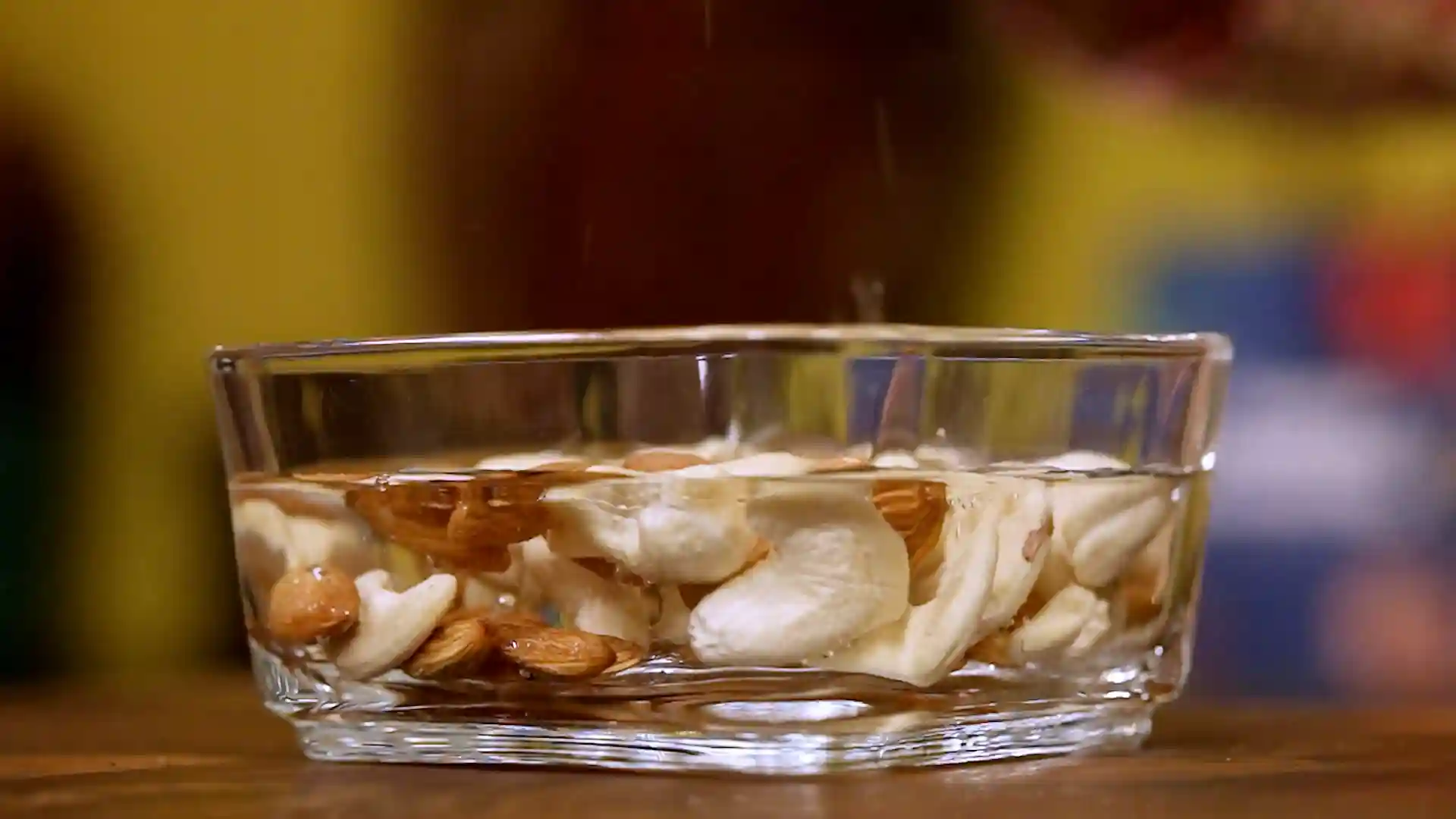
Soak cashews and almonds in water for 30 minutes until softened.
-
Soak Rice & Cardamom
Soak the raw rice and cardamom together for 30 minutes until soft. -
Peel Almonds
Remove skins from soaked almonds. -
Grind Nut Paste
Grind soaked nuts with a little water into a smooth paste and keep aside.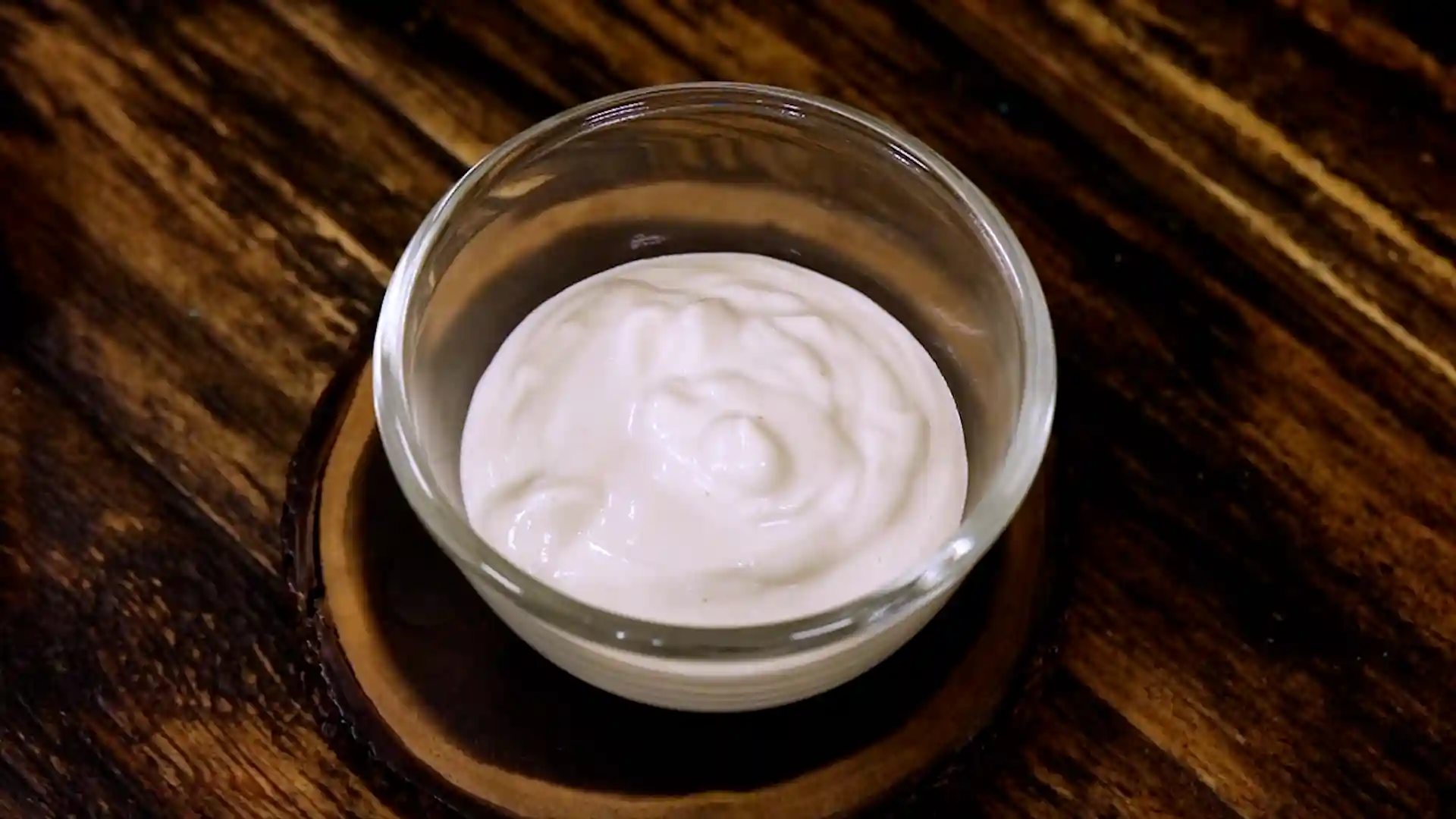
-
Grind Rice Paste
Grind soaked rice and cardamom with a little water into a fine paste. -
Prepare Fruits
Chop the apple and dates, keep the grapes and pomegranate ready.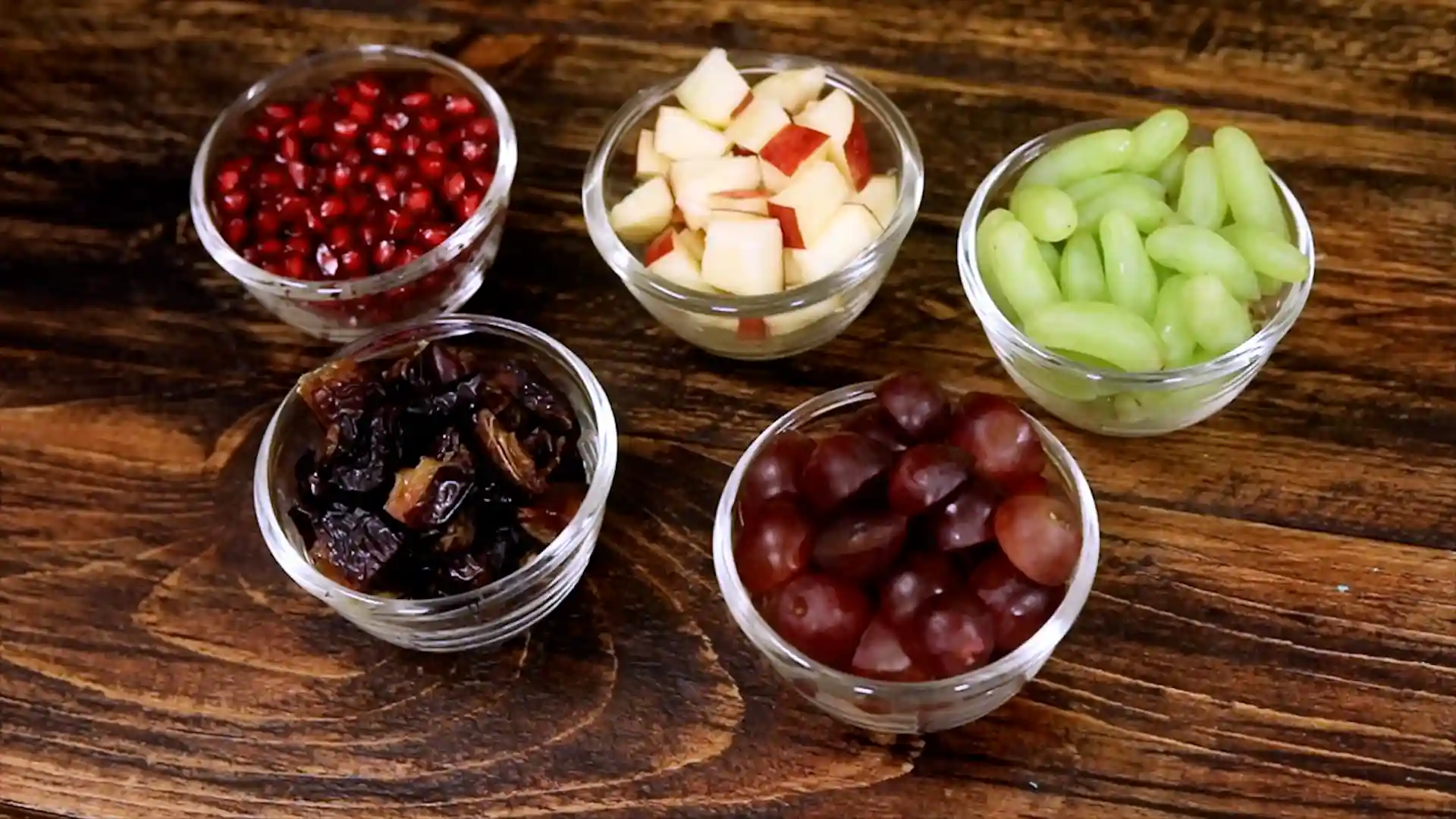
Method
-
Boil Milk
Heat milk in a heavy pan and bring it to a boil while stirring continuously
-
Add Rice Paste
Add rice-cardamom paste slowly while stirring to avoid lumps. -
Add Nut Paste
Add the prepared nut paste, reduce flame and mix well. -
Add Condensed Milk
Add condensed milk and allow payasam to simmer on low flame for 15 minutes until thick.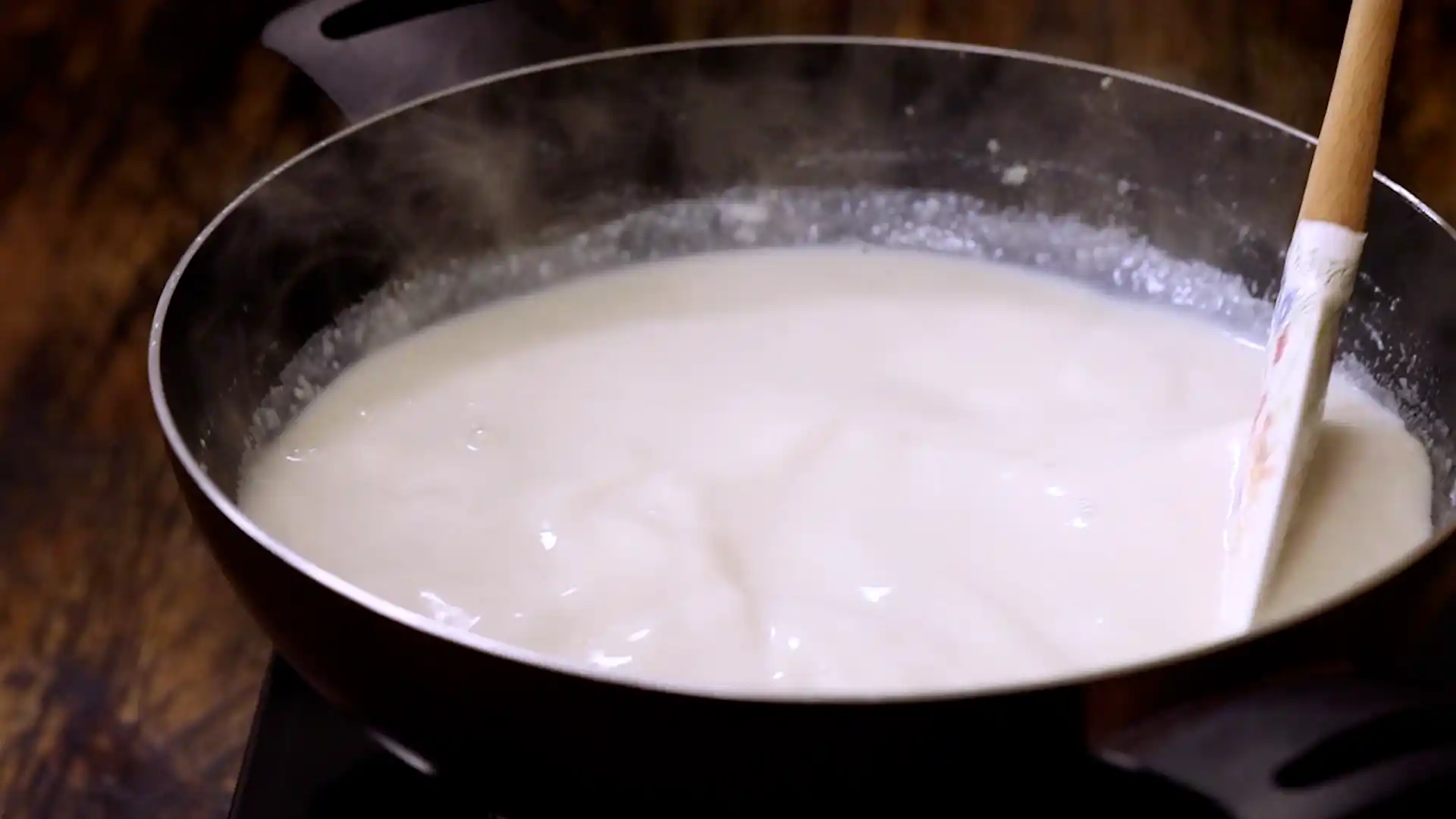
-
Cool the Payasam
Turn off the heat and allow the payasam to cool completely. Transfer to a big bowl. -
Add Fruits
Add prepared chopped apple, green grapes, dates, black grapes, and pomegranate, mix gently, and chill before serving. -
Serve
Serve chilled fruit payasam.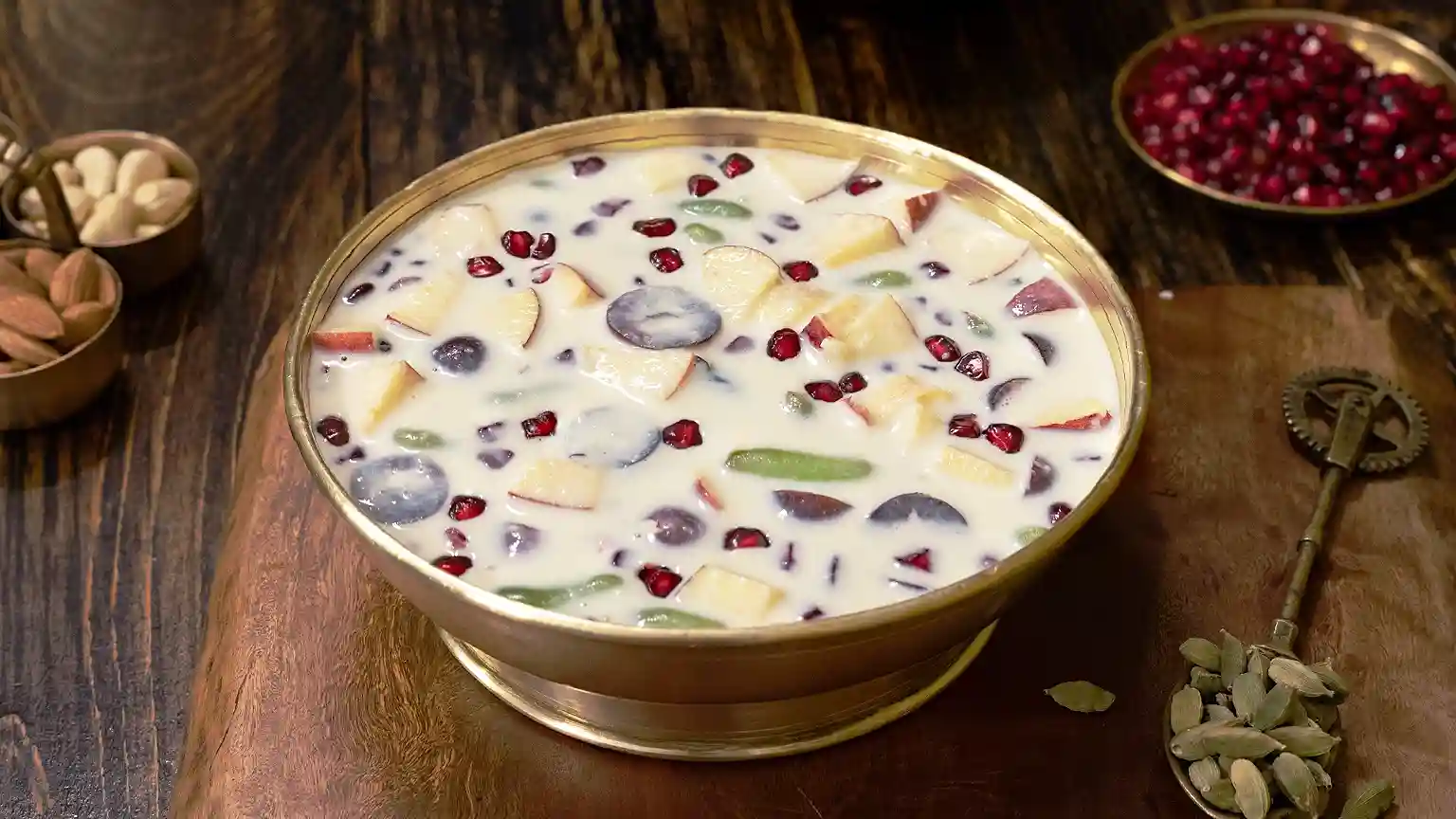
Equipment


Affiliate Disclosure: This post contains Amazon affiliate links, i.e., when you buy any product using the links below, we get commissions. but it doesn’t cost you anything extra. If you do purchase any product using the given links, we thank you in advance!
Nutrition Facts
Servings 6
- Amount Per Serving
- Calories 320kcal
- % Daily Value *
- Total Fat 11g17%
- Saturated Fat 5g25%
- Cholesterol 28mg10%
- Sodium 95mg4%
- Potassium 480mg14%
- Total Carbohydrate 50g17%
- Dietary Fiber 4g16%
- Sugars 34g
- Protein 9g18%
- Vitamin A 420 IU
- Calcium 260 mg
- Iron 1.6 mg
- Vitamin D 90 IU
- Phosphorus 210 mg
- Magnesium 60 mg
* Percent Daily Values are based on a 2,000 calorie diet. Your daily value may be higher or lower depending on your calorie needs.
Chettinad fruit payasam, Pazha payasam, Fruit kheer, Fruit payasam, South Indian fruit payasam