

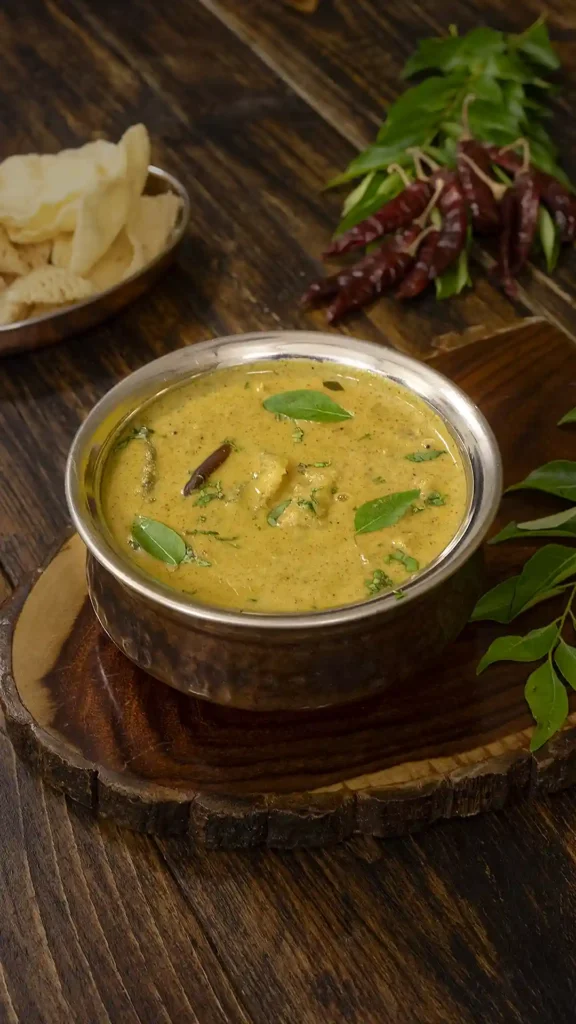

Ever noticed how some dishes instantly make you feel lighter?
That’s exactly what mor kuzhambu does.
This ash gourd mor kuzhambu is cooling, mildly tangy, and incredibly soothing, the kind of dish you crave when the weather is hot, your appetite is low, or you just want simple home food. No onion, no garlic, no heavy spices. Just clean flavors that work beautifully with hot rice.
If you grew up eating South Indian meals, this dish probably feels familiar. And if you’re making it for the first time, you’ll quickly realize why it’s a staple in so many homes.
Where Mor Kuzhambu Comes From
Mor kuzhambu is a traditional South Indian curd-based curry, especially popular in Tamil Brahmin and Andhra-Tamil households. It’s often cooked during summer because curd naturally cools the body and aids digestion.
What makes it special is the balance:
- Tang from curd
- Mild heat from pepper and green chillies
- Body from coconut and soaked dals
Different homes make it with different vegetables; ash gourd, okra, brinjal, or even just plain, but the base remains comforting and gentle.
This is not a “restaurant-style” dish.
It’s pure home food, the kind that feels right every single time.
Why This Ash Gourd Mor Kuzhambu Is So Good for You
If you’re looking for a dish that’s light yet satisfying, this one checks all the boxes.
- Cooling & summer-friendly
- Easy to digest
- Low oil, no deep frying
- Great for kids and elders
- Diabetic- and weight-loss friendly
Ash gourd itself is high in water content and known for its cooling properties, making it perfect for curd-based gravies.
Ingredient Breakdown: What Each One Brings to the Dish
This recipe uses simple pantry ingredients, but each has a purpose.
- Curd: The soul of mor kuzhambu — tangy, creamy, and cooling.
- Ash gourd: Soft, mildly sweet, and absorbs flavors beautifully.
- Soaked dals: Give body and thickness without heaviness.
- Pepper & green chillies: Gentle heat, not spice overload.
- Coconut: Adds smoothness and balances the tang.
- Fenugreek & cumin: Aid digestion and deepen flavor.
- Jaggery (optional): Just enough to balance sourness.
How Mor Kuzhambu Comes Together
You start by gently roasting spices in oil, nothing rushed, nothing browned too much. The pepper, fenugreek, coriander, and cumin release a warm aroma that sets the tone for the dish.
Once the soaked dals, ginger, green chillies, coconut, and curry leaves join in, everything smells nutty and comforting. The beaten curd is added gently and mixed on low heat; this step helps everything blend smoothly without splitting.
After cooling, this mixture is ground into a silky paste that becomes the backbone of the kuzhambu.
In a separate pot, mustard seeds crackle in oil, red chillies and curry leaves follow, and chopped ash gourd cooks slowly until soft and translucent. The ground masala is stirred in, water is added for consistency, and the kuzhambu is allowed to simmer gently, never boiled.
The result?
A light, pourable curry that smells fresh, tastes balanced, and feels incredibly satisfying.
Pro Tip 💡: Always use mildly sour curd, not very sour. Too much sourness can overpower the dish.
Vegan Swap 🌿: Replace curd with thick, unsweetened plant-based yogurt (like coconut curd). Keep the flame very low to avoid splitting.
What Problem This Recipe Solves
- Don’t want spicy food every day?
- Need a quick, one-pot lunch?
- Cooking without onion and garlic?
- Want something cooling for summer?
This is the kind of dish you can make even on tired days and still feel good about eating.
Diet & Allergen Notes
What Goes Best With Mor Kuzhambu
Mor kuzhambu is best enjoyed simply:
- Hot steamed rice
- A drizzle of ghee (optional)
- Papad or fryums
- A simple vegetable poriyal on the side
It doesn’t need elaborate accompaniments, simplicity is the charm.
How to Serve It Right
Serve warm, not piping hot. Mor kuzhambu tastes best when it’s gently heated and allowed to rest for a few minutes before serving.
Packing & Meal Prep Tips
- Ideal for lunchboxes (if eaten the same day)
- Make the masala ahead to save time
- Best prepared fresh, but manageable for short-term storage
How to Store Mor Kuzhambu
Store in an airtight container in the refrigerator for up to one day. Because it’s curd-based, it’s best not to keep it longer.
How to Reheat Without Splitting
Reheat on very low flame, stirring gently.
Do not boil. If needed, add a little water to loosen the consistency.
Common Mistakes to Avoid
- Boiling after adding curd
- Using very sour curd
- Cooking on high flame
- Skipping the soaking step for dals
Take it slow, Mor kuzhambu rewards patience.
Other Related Recipes You Might Like
- Vendakkai Mor Kuzhambu (Okra)
- Vellarikka Mor Kuzhambu (Cucumber)
- Murungakkai Mor Kuzhambu (Drumstick)
Ash Gourd Mor Kuzhambu
Description
This traditional Ash Gourd Mor Kuzhambu by Hema Subramanian is a classic Tamil Nadu recipe made with buttermilk, coconut, spices, and ash gourd. Light, comforting, and perfect with hot rice.
Ingredients
To make ground masala
To make ash gourd mor kuzhambu
Instructions
Prep Work
-
Soak dals
Soak toor dal and chana dal until soft
-
Chop vegetables
Chop ash gourd and ginger -
Prep chillies
Slit green chillies and break red chillies -
Beat curd
Beat curd until smooth without lumps -
Keep ingredients ready
Arrange spices and coconut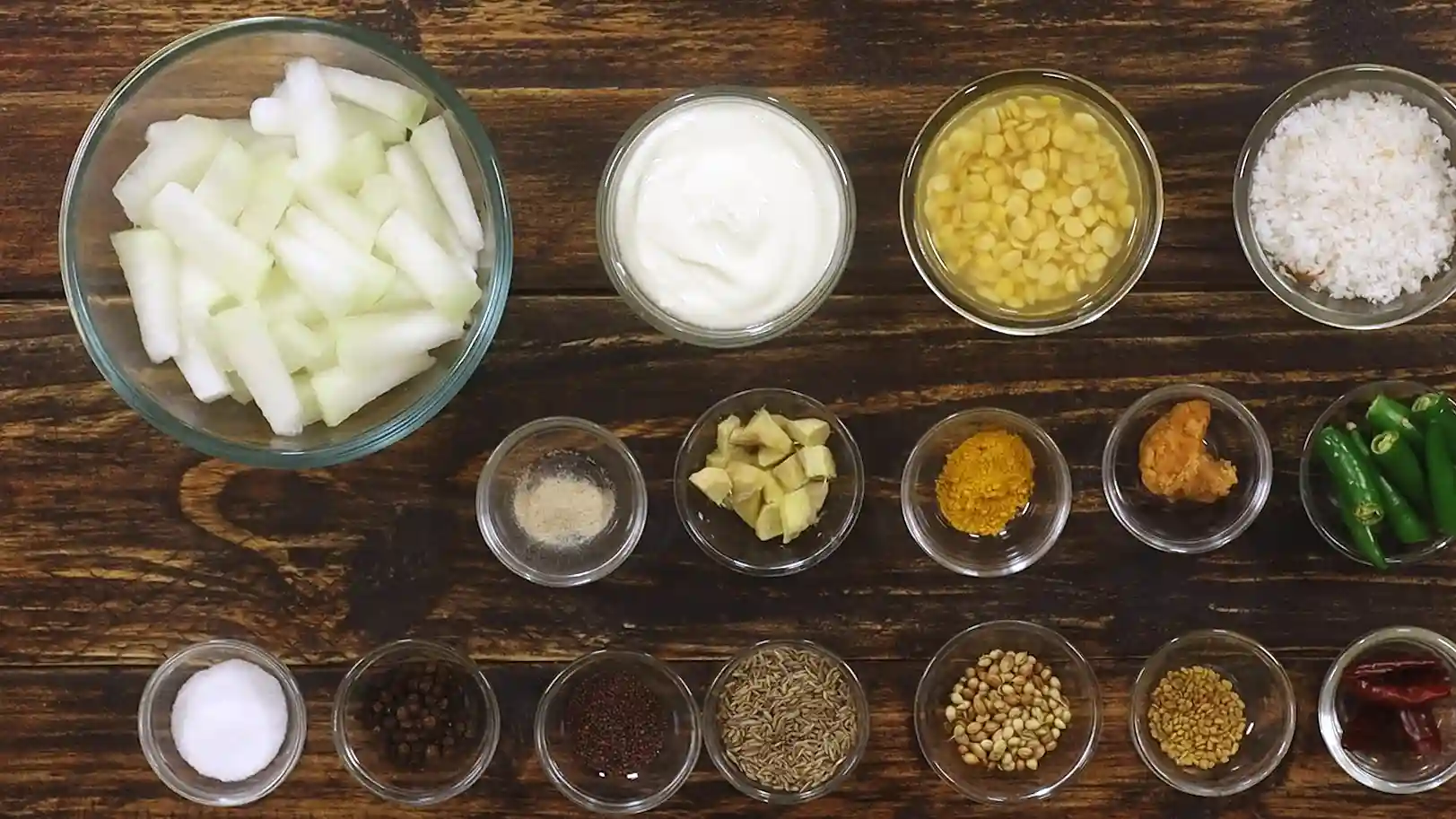
Method
-
Heat oil
Heat oil in a kadai for masala
-
Roast spices
Roast fenugreek and pepper until aromatic -
Add seeds
Add coriander and cumin seeds and roast gently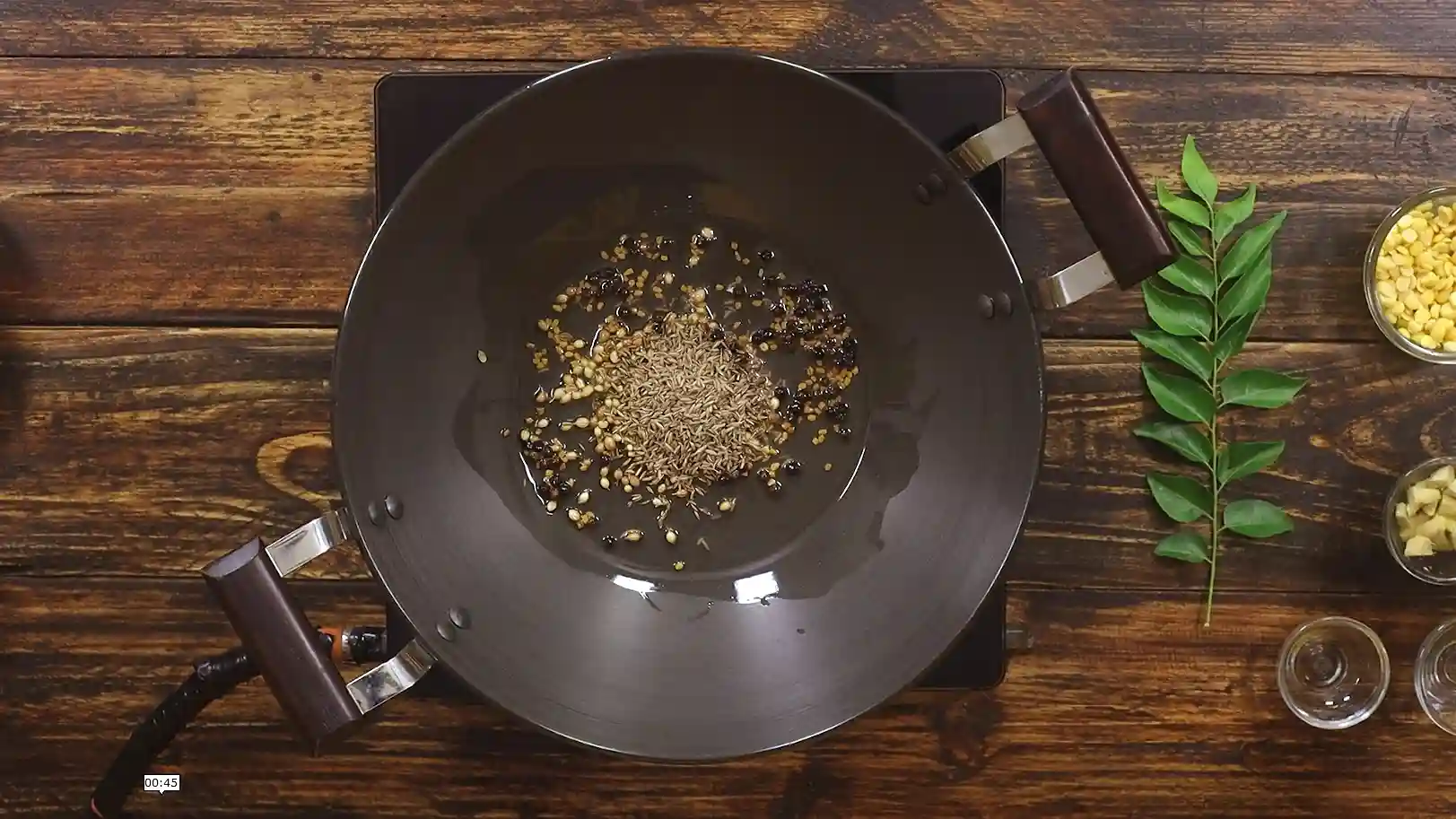
-
Add dals
Add soaked dals, ginger, and green chillies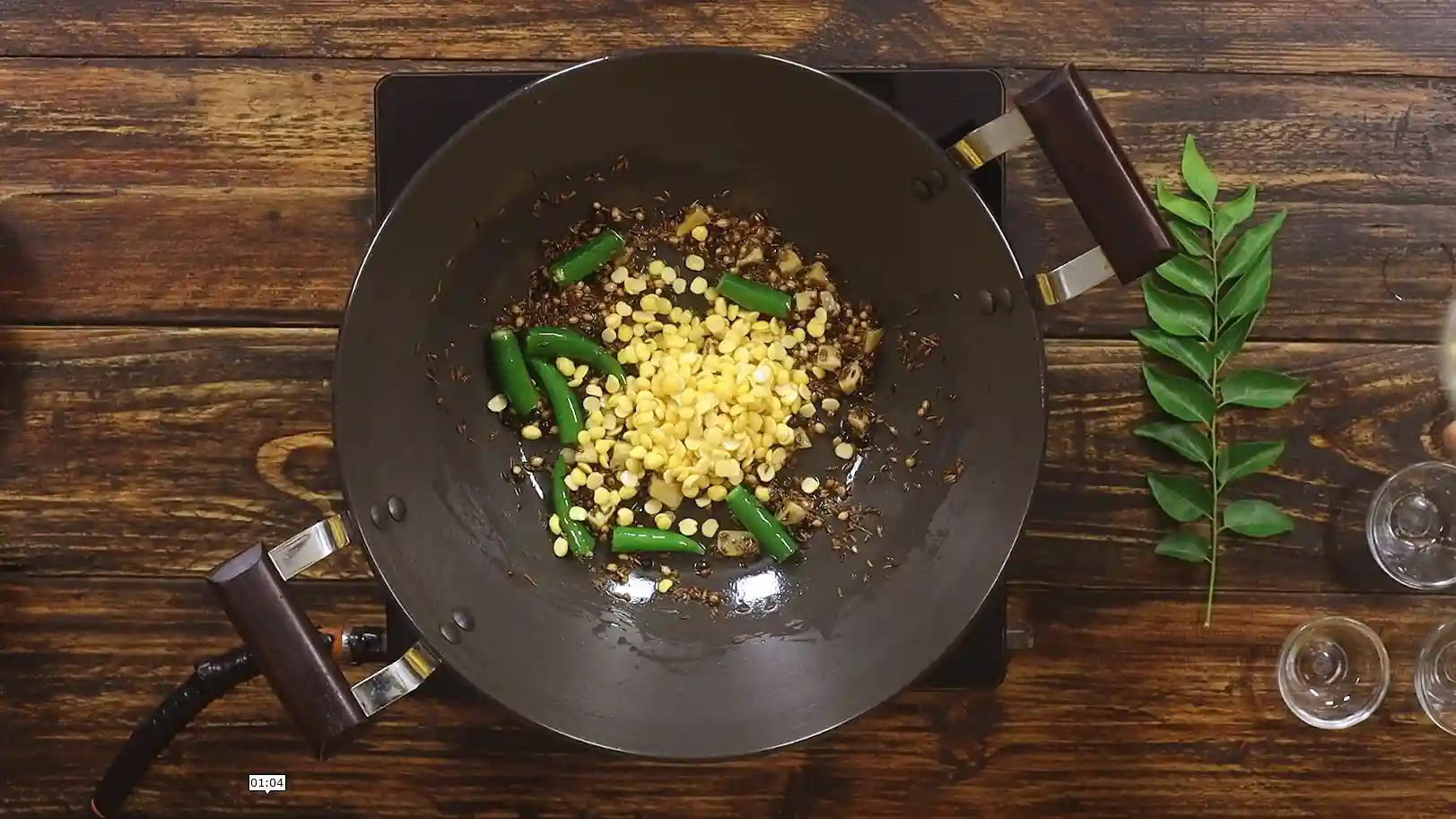
-
Add coconut
Add curry leaves, coconut, and hing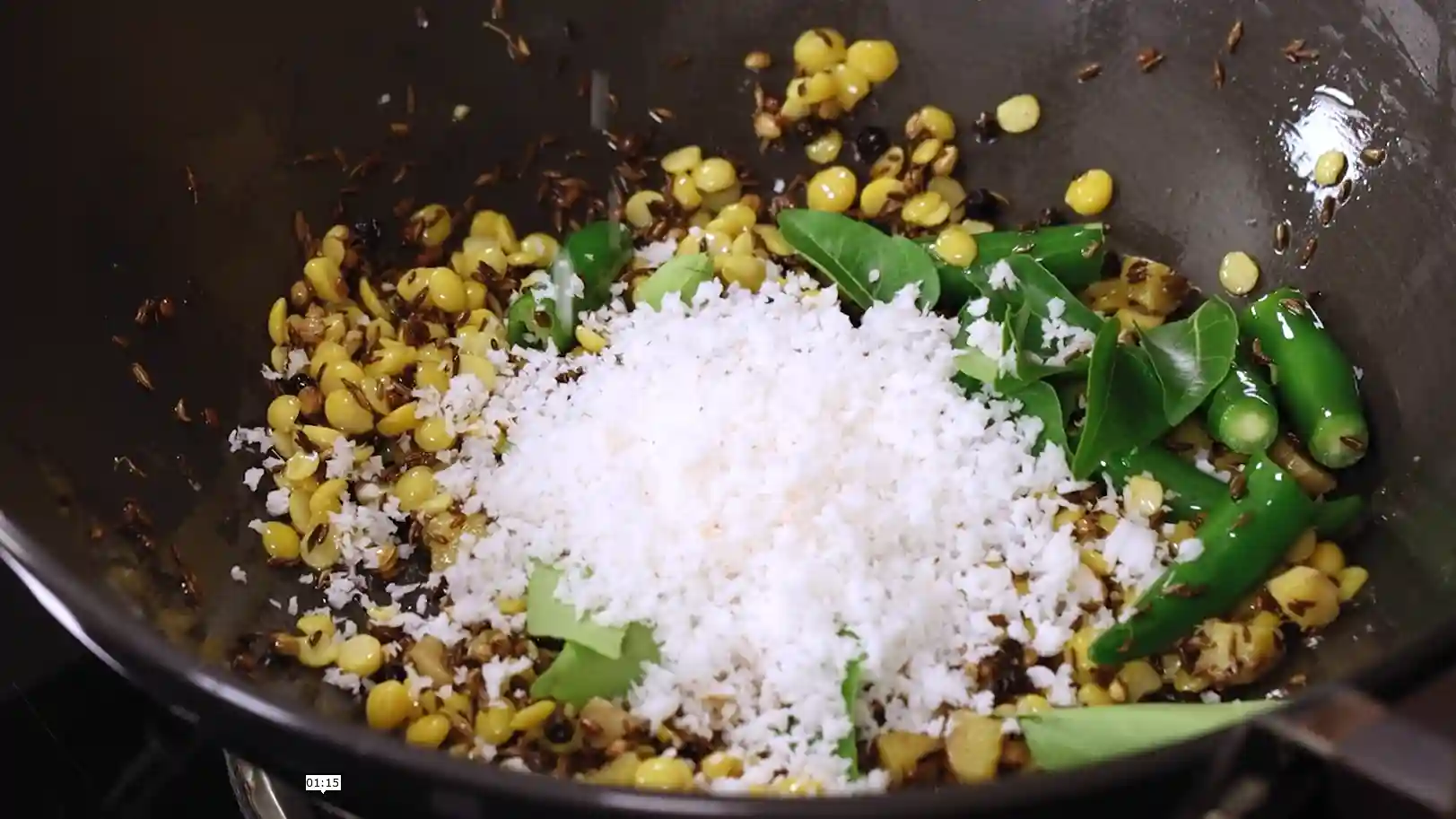
-
Add curd
Add beaten curd and mix gently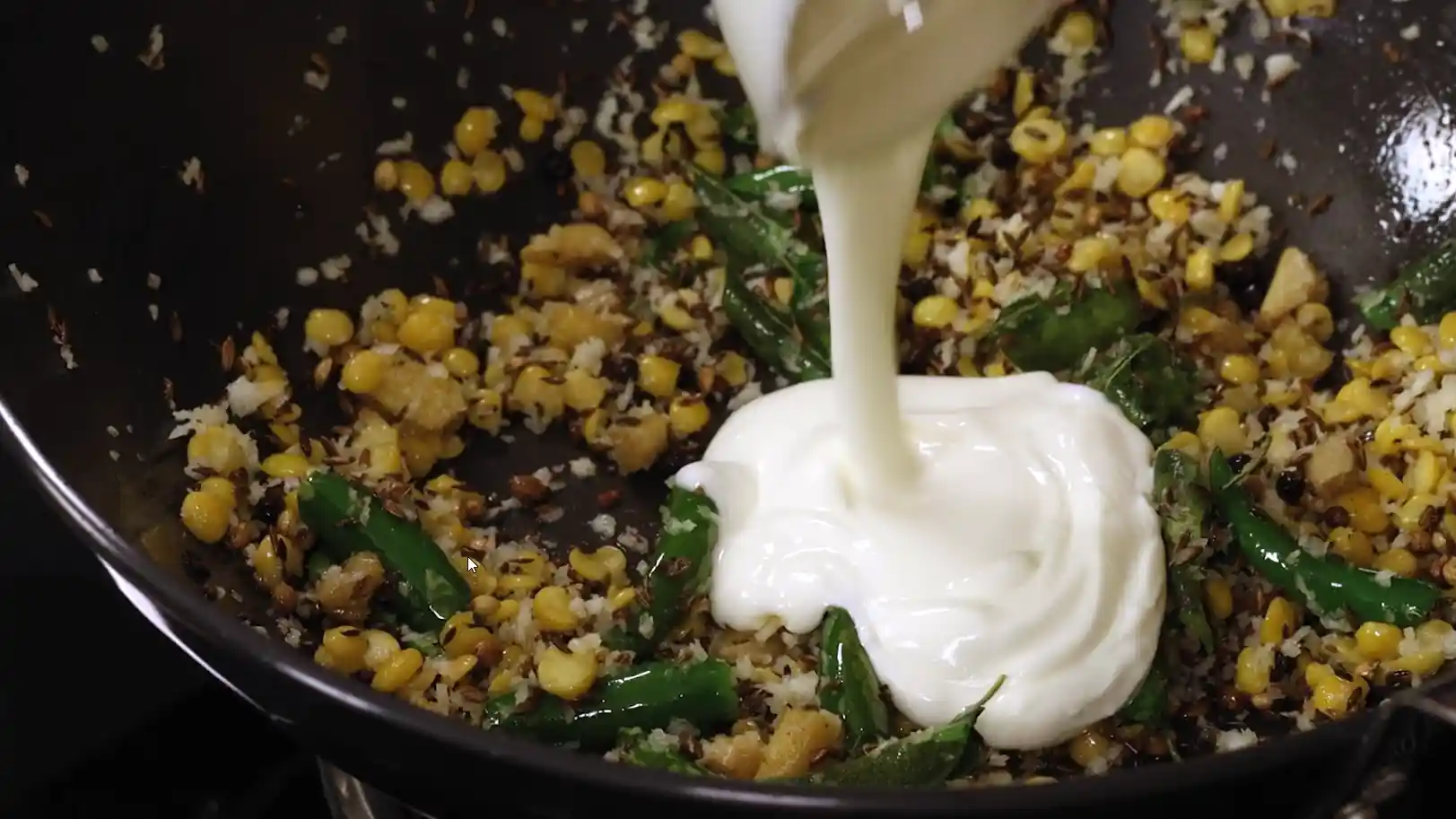
-
Cool and grind
Cool mixture and grind to smooth paste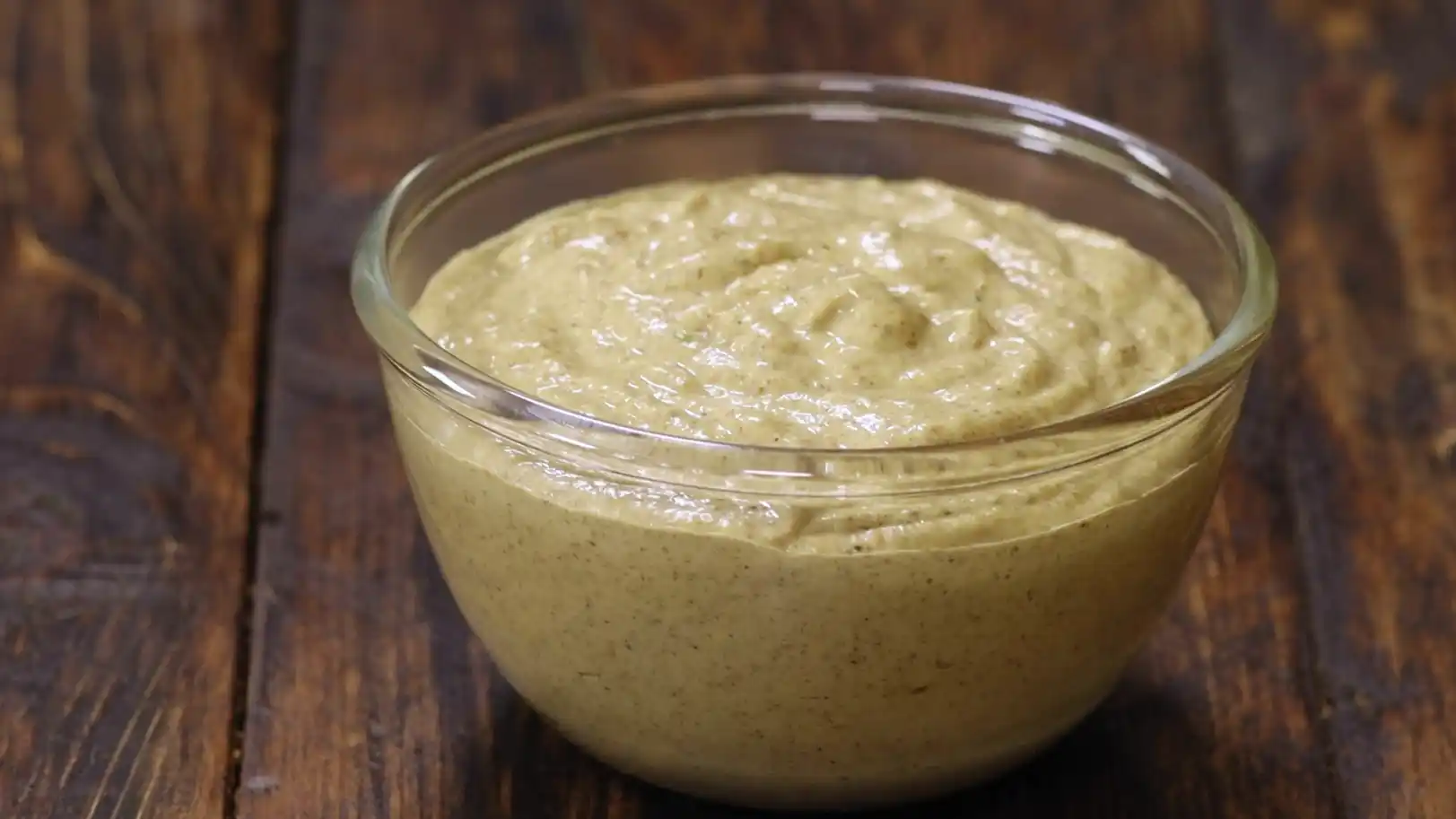
-
Temper base
Heat oil and add mustard, red chilli, hing, curry leaves -
Cook ash gourd
Add ash gourd, salt, turmeric, and water, cook covered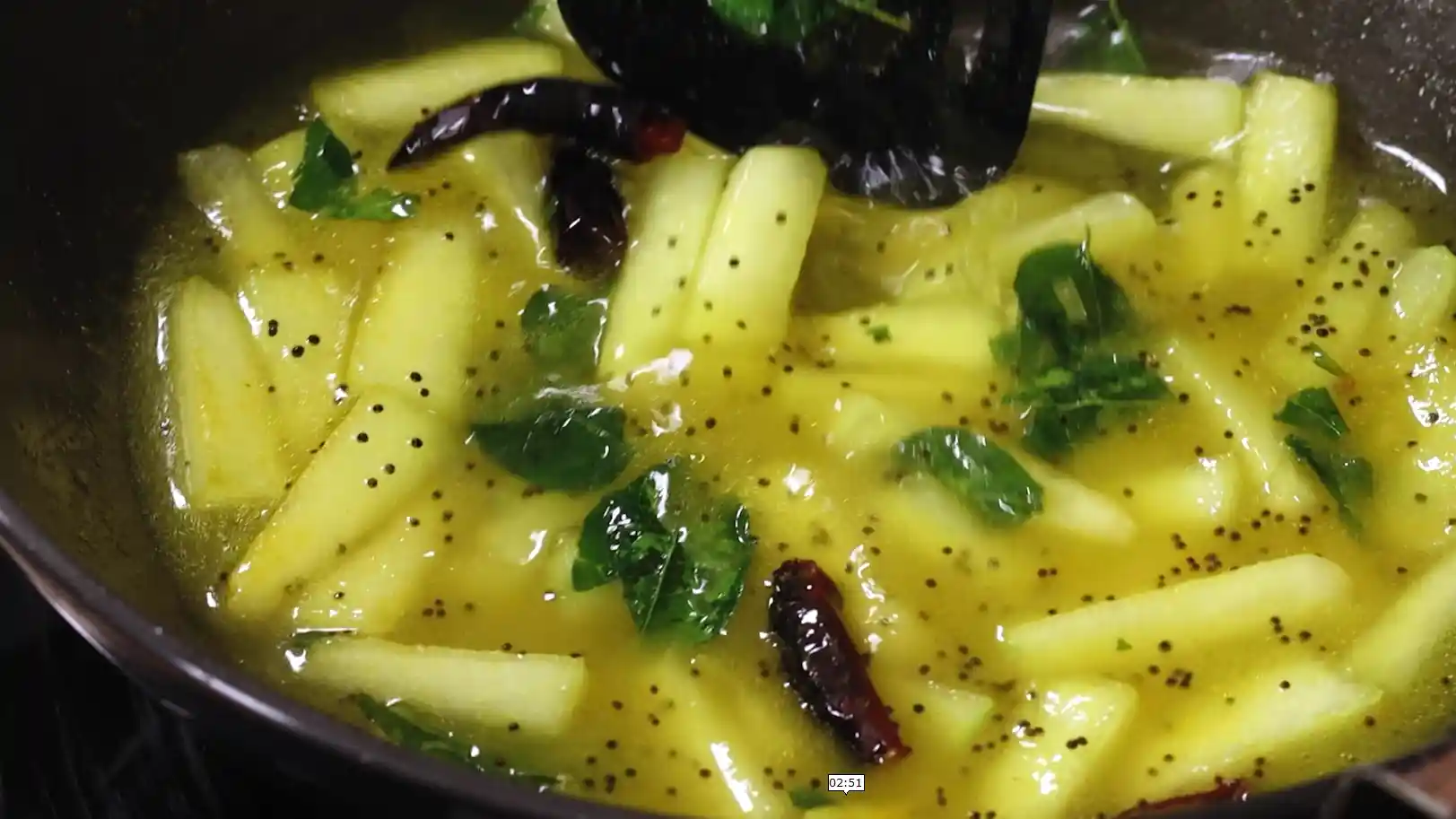
-
Add masala
Add ground masala and mix well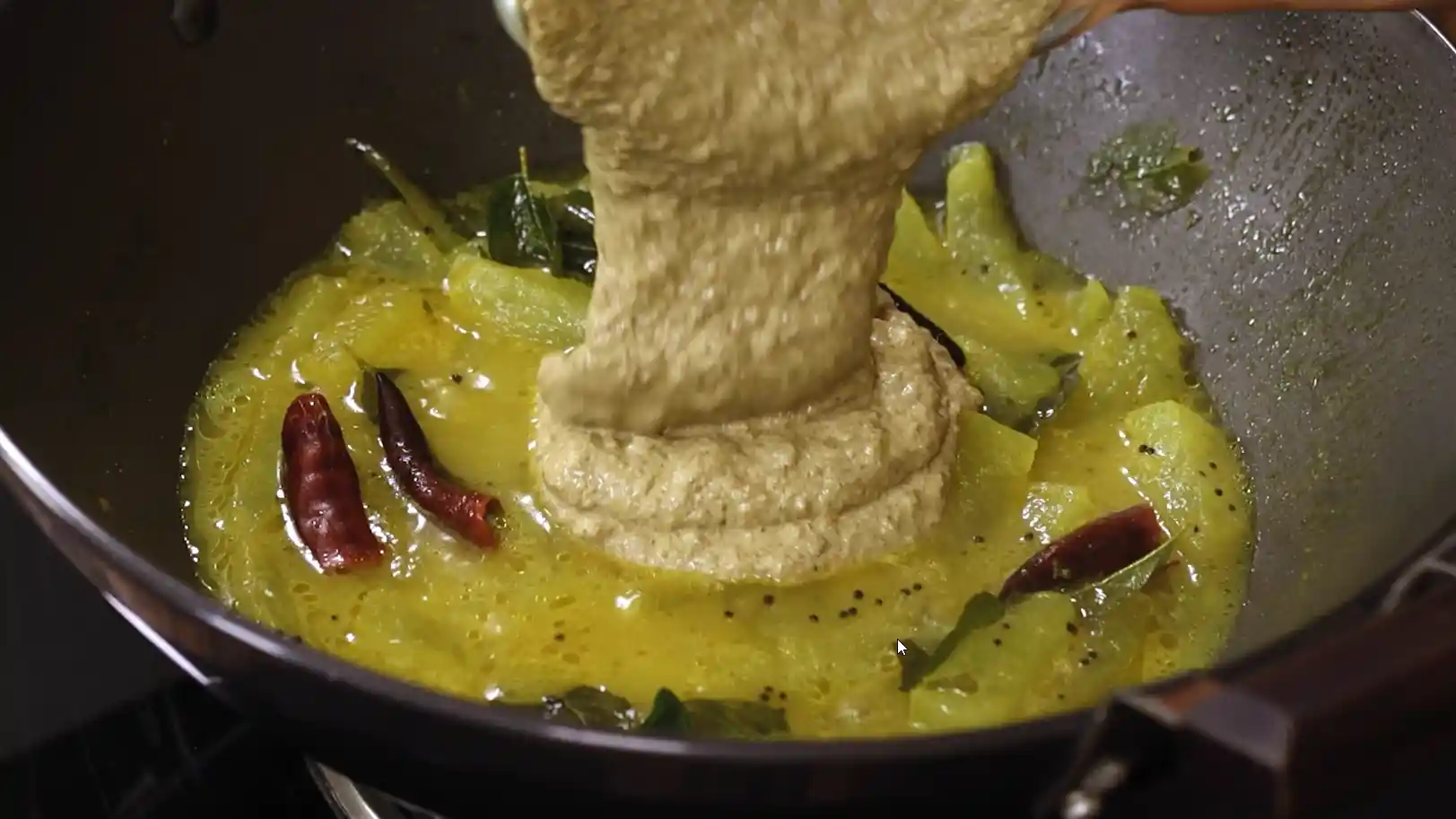
-
Simmer kuzhambu
Simmer until flavors blend -
Finish dish
Garnish with coriander and curry leaves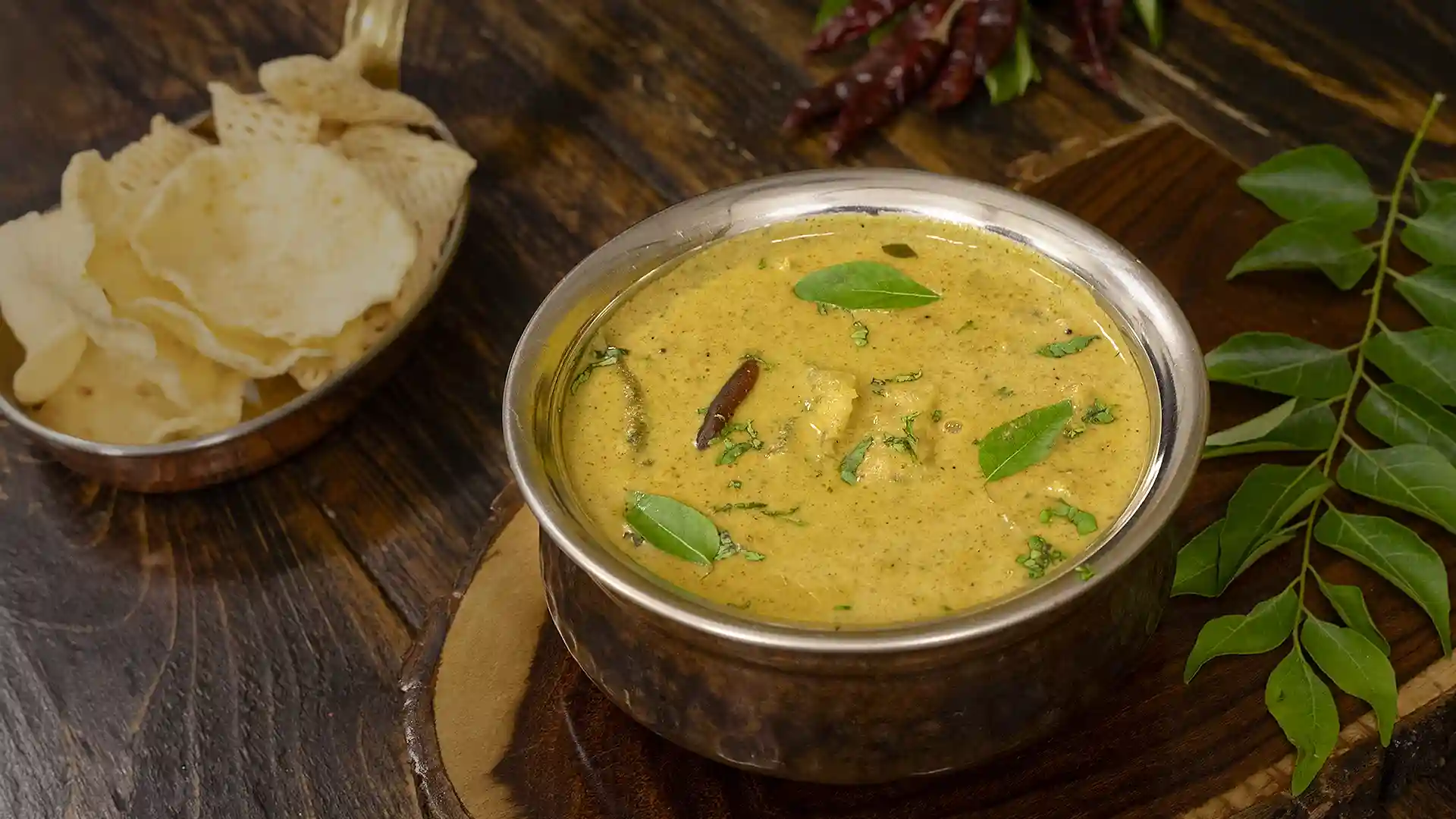
Equipment

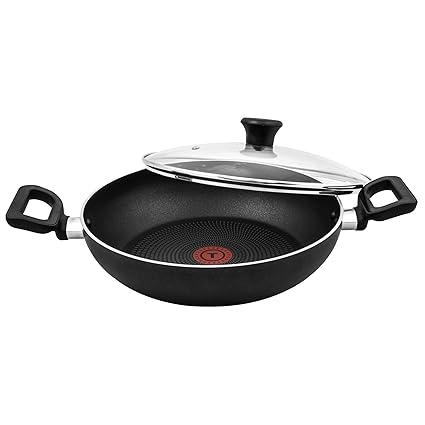
Affiliate Disclosure: This post contains Amazon affiliate links, i.e., when you buy any product using the links below, we get commissions. but it doesn’t cost you anything extra. If you do purchase any product using the given links, we thank you in advance!
Nutrition Facts
Servings 3
- Amount Per Serving
- Calories 180kcal
- % Daily Value *
- Total Fat 10g16%
- Saturated Fat 5g25%
- Cholesterol 15mg5%
- Sodium 540mg23%
- Potassium 420mg12%
- Total Carbohydrate 16g6%
- Dietary Fiber 3g12%
- Sugars 5g
- Protein 6g12%
- Vitamin A 2600 IU
- Vitamin C 14 mg
- Calcium 120 mg
- Iron 1.8 mg
- Magnesium 48 mg
* Percent Daily Values are based on a 2,000 calorie diet. Your daily value may be higher or lower depending on your calorie needs.